
Dirt lawyers, do you remember studying the cases in first year property classes in law school that defined navigable waters? We discussed the ebb and flow of tides. We talked about whether the water is presently used or had been used in the past or may be susceptible for use in the future for transportation. I remember discussing whether logs could float and how big a boat must be to make the property qualify as navigable.
When I was in private practice in Columbia representing real estate developers, I ran into significant issues on a routine basis involving the federal government’s jurisdiction over wetlands. One developer was required to add an eight-acre lake to a residential subdivision because a minor portion of the property was soggy. We dealt with the Army Corps of Engineers on these issues, and getting approval for development was tedious at best. And I promise you that those soggy areas were not navigable by any size boat.
The reach of the Clean Water Act (CWA) was significantly constricted when the United States Supreme Court on May 25 issued a decision that narrowed the scope of wetlands and other water subject to the CWA’s protections. The case, Sackett v. EPA*, involved a residential lot in Priest Lake, Idaho.
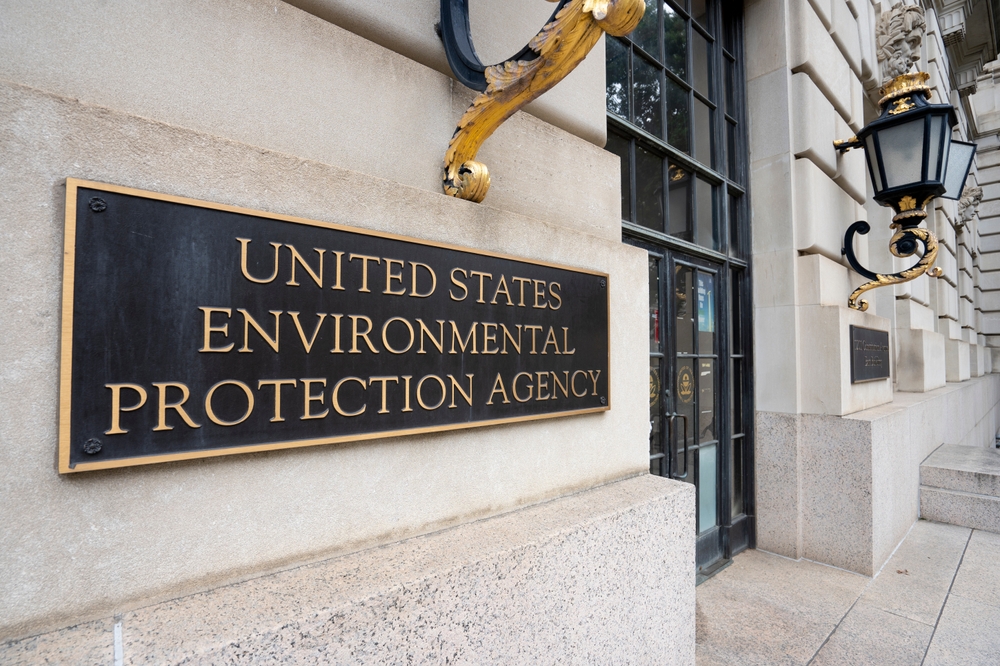
Mike and Chantell Sackett bought the lot in 2004 for $23,000, intending to build a modest three-bedroom family home. They began building in 2007, and the Environmental Protection Agency (EPA) demanded the construction be halted, claiming it violated the CWA because the property was a federally regulated “navigable water”.
That demand began a 16-year legal battle. The Sacketts sued the EPA, and the case has reached the Supreme Court twice. The first decision involved a procedural matter. The Court decided in 2012 that property owners are entitled to immediate judicial review of EPA compliance orders without waiting for agency to seek judicial enforcement to contest the assertion that properties contain “waters of the United States” subject to CWA jurisdiction.
The case then worked its way through the lower courts until the Supreme Court agreed in 2022 to consider the issue of whether the EPA can define “navigable waters” to include semi-soggy parcels of land.
In January 2023, while the Sackett case was pending, the EPA published a final rule adopting a new definition of “waters of the United States” (WOTUS) to include traditional navigable waters, tributaries, adjacent wetlands and other waters that are not themselves navigable but are either relatively permanent or have a significant nexus to navigable waters. The Sackett case probably invalidates this rule.
The five-person majority held that WOTUS include only: (1) relatively permanent, standing or continuously flowing bodies of water forming geographic features described in ordinary parlance as streams, oceans, rivers and lakes; and (2) adjacent wetlands with continuous surface connection to such waters so that wetlands, as a practical matter indistinguishable from the bodies of water. To prove jurisdiction over a wetland, the EPA must now show that the adjacent body of water constitutes WOTUS (a relatively permanent body of water connected to interstate navigable waters) and that the wetland has a continuous surface connection with that water, making it difficult to determine whether the water ends and the wetland begins.
As I type this, I sit outside on a screen porch listening to birds sing in the previously defined wetlands that adjoin two sides of our house. We bought the lot, in part, because of the beauty and peace provided by wetlands, including the birds, as opposed to human neighbors. I wonder whether our peace and quiet will change.
*U.S. Supreme Court Opinion 21-454 (May 25, 2023)


 Let's Talk Dirt