You have to love amusing HOA stories from Florida

Standard

Lots of entertaining real estate stories arise in the Sunshine State, and I say that fondly because I spent my middle school and high school years there. In fact, I’m heading down to Panama City for a milestone high school reunion in September.

This story was reported by ABC News and other sources. Florida passed legislation this year affecting homeowners’ associations that, among other consumer-protection efforts, prohibited associations from limiting the rights of owners to park personal vehicles, work vehicles, and assigned first responder vehicles in their driveways.

One news story I saw related the excitement of one resident of a restrictive HOA who was elated he could begin to park his work truck in his driveway. His alternative had been to park his truck almost a mile away from his home in a rented storage area and walk the distance in the Florida heat twice each workday.

But the legislation contained a “loophole” that allowed the HOA to keep the parking restrictions in place. The resident was crestfallen when he learned his neighborhood could keep rules in place that were effective when the legislation was enacted. He still has to park his truck a mile away and walk.

Another resident said she was upset because she must continue to pay $1,000 to park her Mercedes Sprinter that contains her mobile spa (the Maui Skin Bus) in a remote location and walk home after each break in her appointment schedule.

The goal of the HOA, according to its manager, is to keep the vision of the developer of the neighborhood in place. The developer saw beautiful homes, well-manicured lots, and only nice, personal vehicles parked in driveways.


Florida facing insurance concerns much like California

Standard

In May, this blog discussed the news that State Farm has pulled out of the state of California for new homeowners’ policy applications. I’m updating that blog to add similar concerns in Florida.

My family has a modest second home in North Litchfield Beach. It isn’t close to the ocean. My Fitbit clocks 700 steps to the beach, and most family members prefer to drive a golf cart for that reason. To call it a “raised beach house” is an understatement. Because of flood insurance concerns, the garage level of the house was required to be very tall when we built in 2011.

We can’t paint or power wash with the tallest ladders available to homeowners. If we had a big boat, we could park it in the garage.  My point is that the living area of our house is so far above ground, that if it floods, it is likely that inland Pawleys Island and Georgetown County will also flood.

Thinking all the way back to Hurricane Hugo in 1989, my extended Georgetown County family members evacuated to Columbia to stay with us. Much to everyone’s surprise, our property in Columbia suffered more damage than their properties in Georgetown.

Earlier this year, we received a letter from our insurance agency indicating that it would attempt to obtain insurance for us for the upcoming insurance year, but we should be prepared for difficulty because of the frequency of hurricanes in our area.  There is no reason our house should be difficult to insure other than its location on the beach side of Highway 17.  

I share this information with South Carolina dirt lawyers, particularly those who practice in our coastal counties, for discussion purposes only. I’m not pushing a panic button by any means. But the headlines I read in May about State Farm’s decision to pull out of California as to new homeowners’ applications certainly caught my attention.

State Farm pointed to wildfire risks and construction cost inflation to justify its decision. Everyone is suffering from the latter, and, as to the former, the company didn’t attempt to limit the impact of its decision to those areas most affected by wildfires. Other stated concerns were climate change, reinsurance costs affecting the entire insurance industry, and global inflation. All of those concerns also affect all locations.

The company pulled out of the entire state as to new applications. And some news articles reported that State Farm is the largest insurer based on premium.  The fact that the largest insurer pulled out of the third largest state seems impactful.

The announcement did state that existing customers will not be affected and that automobile insurance applications will continue to be accepted.

Now, we’re seeing similar headlines from Florida. Farmers has announced that it is discontinuing new coverage of auto, home and umbrella policies in an effort to manage risk exposure. News articles explain that Farmers is the fourth major insurer to leave the Florida market in the past year. Most companies cite the substantial risk of hurricanes.

There doesn’t appear to be anything we should do at this point, other than to keep our eyes and ears open as to developments in the area of insurance for ourselves and our clients.

Updates on dangerous high-rise condo projects

Standard

I have recommended previously that all South Carolina dirt lawyers subscribe to the DIRT listserv run by Professor Dale Whitman of the University of Missouri at Kansas City Law School. I emphasize that recommendation today and have two updates from that service to share with you. Both updates relate to the collapsed Surfside project in south Florida.

First, a 50-unit condominium building in Waukesha, Wisconsin, Horizon West, has been ordered to be demolished by the Waukesha City Council. Professor Whitman reports that the building’s steel structure has been compromised by water infiltration, much like the Surfside project, and is considered a risk for collapsing.

The residents don’t have the funds to pay for the demolition, and the insurance company is taking the position that the building should be repaired, not demolished. The cost of the demolition has skyrocketed because of the presence of asbestos.

The units were valued at $90,000 to $140,000 according to Zillow, prior to the discovery of the defects. During the current high-priced housing market, it is not likely that the property owners will be able to replace their housing even if they receive their full replacement costs from insurance. It is a very sad situation, but, of course, not as sad as an actual collapse resulting in the loss of lives.

Second, Florida’s legislature has passed a law that requires regular building inspections and requires homeowners’ associations to maintain reserves. The act was unanimously passed by both houses, and Governor DeSantis signed the bill into law on May 26th.

Under the new law, inspections are required when a condominium building reaches 30 years of age and every ten years thereafter. For buildings within three miles of the coast, the first inspection is required at 25 years of age.

In addition, mandatory structural integrity reserve studies are required every ten years under the new law, and reserves are required to be maintained based on the studies. The power of the HOA to waive reserves was removed, effective December 31, 2024.

This legislation is encouraging and should be considered in South Carolina, particularly because of the existence of our numerous high-rise coastal condominium projects.

The only downside I see about such legislation is that it will make condominium living more expensive and may price some retirees and lower-income individuals out of the market entirely. But, logically, the cost of maintenance should be factored into every residential property purchase. The ability of an owners’ association to waive reserves and thereby kick the maintenance can down the road is a dangerous proposition.

** Please note that the new inspection and reserve Florida legislation applies only to condominium and cooperative buildings of 3 stories and higher above ground. See more details from Florida attorney, Michael Gefland.

Florida town accidentally sells its water tower

Standard

I hope no dirt lawyer was involved in this transaction!

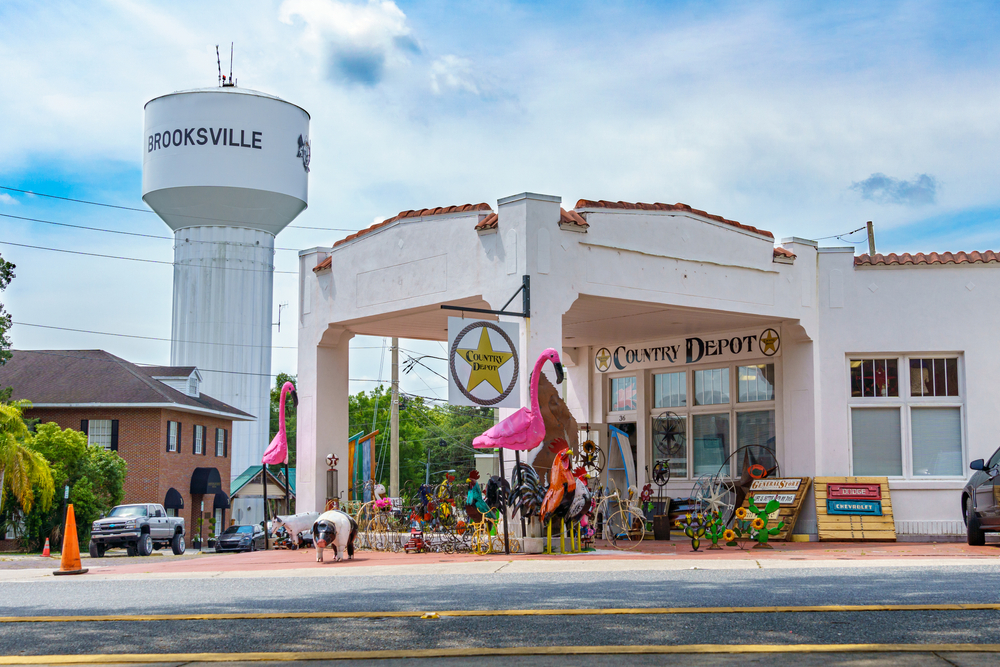
Two sources, The Tampa Bay Times and The Hill, have reported on a faulty legal description resulting in the accidental sale by the town of Brooksville, Florida, of its water tower. Brooksville is a picturesque town west of Orlando and north of Tampa.

According to the reports, the purchaser, Bobby Head, sought to buy a small building with a garage at the water tower’s base for redevelopment as a gym. The building had previously been used as storage for the city. The inquiry about buying the property led to discussions among and action by city leaders declaring the building surplus and subdividing the land. The City approved the transaction at a meeting on April 19. The sales price was set at $55,000, and the closing took place on May 5.

On the day of the closing, the purchaser told city officials that he thought the legal description included more property, but the deed was signed and delivered anyway. (I think I would have taken a breath and checked out the legal description!)

Several days later, Head went to Hernando County Assessor’s office to get an address for his new business location. He was told then that the property he bought included the city’s entire water tower site.

Head agreed to sign a deed to return the water tower to the city, and that deed was recorded on May 14. Once council member said to The Tampa Bay Times that he was not happy that mistakes had been made and he also believed the city had lost needed parking.

One official joked on Facebook, “Last month we accidentally sold the water tower. What should we do today?” The newspaper reports that the redevelopment agency director resigned. The Mayor joked, according to the paper, “We just need to be darn sure this doesn’t happen again.” The papers report that the incident caused quite a community uproar, as we can all imagine.

Thankfully, the purchaser was an honorable person who returned the property within a few days. As we can all attest, not all mistakes in real estate transactions are corrected so easily. I’m sending good vibes from South Carolina and hoping no real estate lawyer was involved in preparing the legal description!

Matthew Cox, notorious fraudster, resurfaces

Standard

Check out the August issue of The Atlantic

matthew cox

Picture courtesy of The Atlantic, August 2019 issue

I’ll never forget the name, Matthew Cox or the telephone call that tipped us off that we had a serious mortgage fraud situation here in Columbia. Long before the housing bubble popped, an attorney called to let us know what was going on that day in the Richland County ROD office. Representatives of several closing offices were recording mortgages describing the same two residential properties in Blythewood, as if the properties had been refinanced multiple times in the same day by different closing offices.

At first, we thought our company and our attorney agent were in the clear because our mortgage got to record first. South Carolina is a race notice state, and getting to record first matters. Later, we learned that deeds to the so called borrower were forged, so there was no safety for anyone involved in this seedy scenario. Thousands of dollars were lost.

Next, we learned about the two fraudsters who had moved to Columbia from Florida through Atlanta to work their mischief here. The two names were Matthew Cox and Rebecca Hauck. We heard that Cox had been in the mortgage lending business in Florida, where he got into trouble for faking loan documents. He actually had the guts to write a novel about his antics when he lost his brokerage license and needed funds, but the novel was never published. With funds running low, Cox and his girlfriend, Hauck, moved to Atlanta and then Columbia to continue their mortgage fraud efforts.

We didn’t hear more from the pair until several years later, when we heard they had thankfully been arrested and sent to federal prison.

For a much more colorful account of these criminal activities and Cox’s attempt to write “true crime” stories from the Coleman Federal Correctional Complex in Florida, I refer you to the comprehensive and entertaining article written by Rachel Monroe in the August issue of The Atlantic magazine. Please enjoy the full text of the article here.

Ms. Monroe said she had been contacted by Matthew Cox by email telling her he was attempting to write a body of work that would allow him to exit prison with a new career. He described himself as “an infamous con man writing his fellow inmates’ true crime stories while immersed in federal prison.”

The crimes perpetuated by Cox and Hauck were made easier by the housing bubble itself. Everything was inflated and values were hard to nail down. And closings were occurring at a lightening pace. This excellent article made my heart skip a beat as I was reminded of those times. I hope all of us in the real estate industry have learned valuable lessons that will similar prevent mortgage fraud in the future. Those of us who made it through the economic downturn are certainly older and hopefully wiser!