
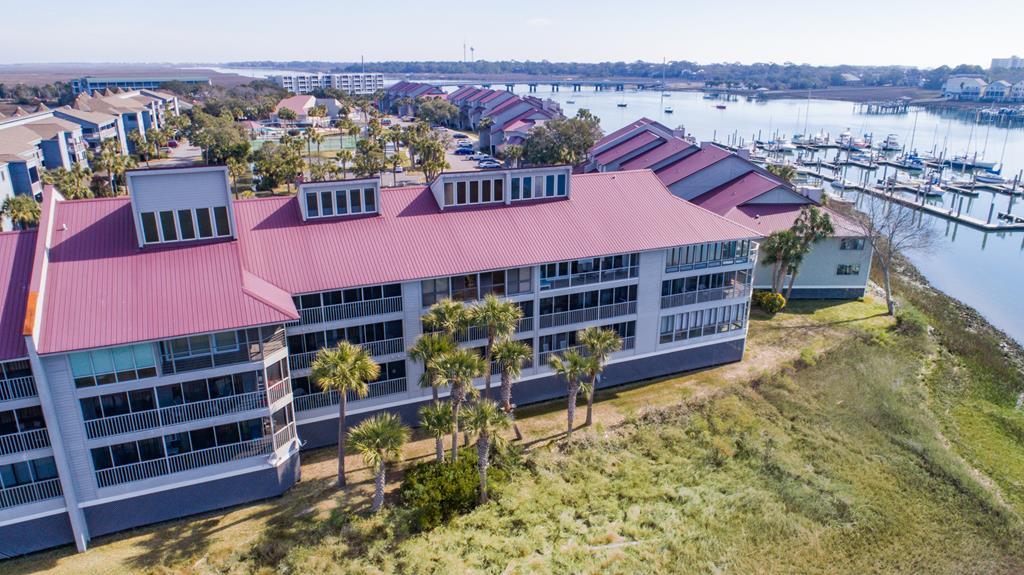
The SC Court of Appeals released a new decision this week confirming that a Developer of a Horizontal Property Regime (HPR) may not remove common elements from the regime once the right to the common elements has vested in the individual unit owner.
The facts are somewhat complicated, but I will try and simplify it as best as I can. The Developer of the fully constructed Mariner’s Cay Marina in Charleston committed the property to a HPR in 2006.
The Marina consisted of individual boat slips, a fuel dock with a wastewater pumping station, and a two-story Ship Store. The 88 individual boat slips were converted to separate units or apartments with a designated ownership percentage of the common elements. The first and second floors of the Ship Store were designated Commercial Units 1-A and 1-B respectively. The fuel pump and the attendant wastewater pumping station were designated as Commercial Unit 2. The Master Deed stated that the Commercial Units were “common elements or limited common elements [of the Regime].”
However, the Master Deed also provided that the Developer retained a right to “unilaterally amend the declaration for any purpose” for the earlier of 18 months or the point where it sold 90% of the unit, but not in such a way as to “adversely affect the title to any Unit unless the Owner shall consent in writing.”
In 2007, during its “unilateral” rights period, Developer amended the Master Deed by removing the language that designated the the Commercial Units as common elements or limited common elements. At the time of the Amendment, at least 39 individual units (slips) had been sold.
Shortly after recording the amendment to the Master Deed, Developer sold the Commercial Units to a third party, who in turn sold the property to another entity. This down the line entity borrowed money for construction at the Store, which it secured by a mortgage on the Commercial Units.
It would not make for a good story unless the mortgage went into default. Lender filed a foreclosure action naming the HPR as a defendant by virtue of its liens for assessments. The Court indicates that the HPR participated in the proceedings without contesting the foreclosure or the right of the Developer to have transferred these units in the first place. In February 2015 the property was sold at public auction. It eventually was sold again to the two LLCs that are the defendants in the ensuing litigation.
It appears that between 2006 and 2015, the slip owners had enjoyed free use of the waste-water pumping station on the fuel docks and of the restrooms in the Ship Store. However, the new Commercial Unit owners changed quite a few things after taking possession of the units. The Commercial Unit owners took action to bar the slip owners from the use of the pumping stations, forced the dock master to vacate the Ship Store where his office had been located, and denied access to the restrooms.
In response, several individual unit owners filed suit alleging that the Commercial Units were common elements of the HPR and that Developer did not have authority to change that status when it recorded the amendment to the Master Deed. In defense, the Commercial Unit owners argued that the Master Deed gave the Developer unilateral authority to amend the Master Deed and that the HPR waived the right (of all unit owners) to contest the Developer’s action when it acquiesced to the foreclosure proceedings.
The Court of Appeal focused its holding on its prior ruling in Vista Del Mar Condo. Ass’n v. Vista Del Mar Condos., LLC, 441 S.C. 223 (Ct App. 2023). In Vista Del Mar, a Developer originally committed a tract of land to a HPR pursuant to a multi-phase development plan. After construction of the initial phase, the Vista Developer changed its plan of development and determined that a portion of the undeveloped property committed to the HPR was no longer necessary to its intentions. The Master Deed had language giving the Vista Developer a unilateral authority to add or remove property from the regime on behalf of itself and as the agent for the individual unit owners.
Unit owners sued the Vista Developer arguing that common elements could not be conveyed. In issuing its opinion, the Court concluded that the Vista Developer had authority to convey the property because the unit owner’s rights in the particular property as common elements had not yet vested in the unimproved portion of the property, because the property was not scheduled to be a common element for recreation and the contemplated construction on the unimproved portion had not been commenced or completed.
In the current opinion, the Court found that the rights of the slip owners in the common elements at Mariner’s Cay had fully vested. Once the vesting occurred, Developer’s authority to remove common elements ended regardless of the provisions of the Master Deed. The Court ruled that the Master was correct in finding the Commercial Unit owners “wrongfully held title.”
The Court was not impressed with the argument that the HPR’s participation had waived the rights of individual unit owners to contest the transfer of the common elements. The Court ruled that the individual units were not parties to the foreclosure action. Not being parties, they could not be estopped by any failure of the HPR to assert defenses in the foreclosure hearing. Attorneys that litigate all kinds of cases against HPRs should take heed that the HPR Association does not necessarily have authority to bind individual unit owners.
While this new ruling is confirmation of prior standard concerning the vested rights of unit owners in common elements, practitioners may find that the devil is in the details concerning the point at which such rights vest. The Court was not exceptionally clear in laying out specific for determining whether a right to a common element vests, but it seems that it was important to the Court that the common elements were fully constructed, in active use by the slip owners. Perhaps too that fuel docks and pumping stations and restrooms have more obvious correlation to the expectation of slip owners in a Marina than unimproved property slated for future development might have had to unit owners in Vista Del Mar. Yet another distinction between the two case may have been what seems like much more explicit language in the Vista Del Mar Master Deed concerning the authority of the Developer in adding and subtracting property for use in future phases.

 Let's Talk Dirt