
Pay attention to ALTA’s new seller impersonation memo

Standard

American Land Title Association recently published a memorandum concerning seller impersonation fraud in real estate. You can read the memo in its entirety here.

We have always had to be on the lookout for fraudsters in real estate in South Carolina. Do you remember the infamous Matthew Cox who came to South Carolina after a fraud binge in Florida and Atlanta?

I’ll never forget the name, Matthew Cox, or the telephone call that tipped us off that we had a serious mortgage fraud situation here in Columbia. Long before the housing bubble popped, an attorney called to let us know what was going on that day in the Richland County ROD office. Representatives of several closing offices were recording mortgages describing the same two residential properties in Blythewood, as if the properties had been refinanced multiple times in the same day by different closing offices.

At first, we thought our company and our attorney agent were in the clear because our mortgage got to record first. South Carolina is a race notice state and getting to record first matters. Later, we learned that deeds to the so-called borrower were forged, so there was no safety for anyone involved in this seedy scenario. Thousands of dollars were lost.

Next, we learned about the two fraudsters who had moved to Columbia from Florida through Atlanta to work their mischief here. The two names were Matthew Cox and Rebecca Hauck. We heard that Cox had been in the mortgage lending business in Florida, where he got into trouble for faking loan documents. He had the guts to write a novel about his antics when he lost his brokerage license and needed funds, but the novel was never published. With funds running low, Cox and his girlfriend, Hauck, moved to Atlanta and then Columbia to continue their mortgage fraud efforts.

We didn’t hear more from the pair until several years later, when we heard they had thankfully been arrested and sent to federal prison.

The crimes perpetuated by Cox and Hauck were made easier by the housing bubble itself. Everything was inflated and values were hard to nail down. And closings were occurring at a lightening pace.

The new memo from ALTA says fraudsters are using owner’s Social Security and driver’s license numbers as well as notary credentials in these transactions. They, of course, use emails and text messages to mask their identity and commit fraud from any location.

The red flags remain the same:

  • Vacant real estate;
  • No outstanding mortgages;
  • For sale below market value;
  • Seller wants a quick sale;
  • Seller wants a cash buyer;
  • Seller refuses to attend the closing and claims to be out of the country;
  • Seller is difficult to reach by telephone;
  • Seller demands the proceeds be wired;
  • Seller refuses to complete multifactor authentication or identity verification;
  • Seller wants to use their own notary;

Be careful out there, dirt lawyers! Use your common sense and insist on verifications of identity.  ALTA’s memo has several useful tips.

Real estate lawyers: how are you feeling about SC’s 2023 housing market?

Standard

Earlier this year, several news sources reported that South Carolina’s 2023 housing market could return to a “normal” sales level, leaving behind the frenzy we have seen in previous years. We were anticipating the market may return to our ordinary seasonal ebbs and flows. Law firms have always had to adapt to those fluctuations from a staffing and other cost standpoint.

Redfin is reporting some interesting South Carolina statistics. Redfin’s website indicates that in May, home prices were up 2.1% year-over-year. During the same period, the number of homes sold fell 11.5% and the number of homes for sale rose 2.5%. The median sales price was $375,200, and 6,893 homes sold during that period. The median number of days on the market was 55, up 16 days year-over-year.

We all know that South Carolina is a primary destination for consumers looking for milder winters and following jobs at BMW, Volvo and other companies. We have recently learned that Scout Motors is establishing a manufacturing plant in Blythewood to build all-electric trucks and SUVs. We have heard the company is investing $2 billion and has the potential to create 4,000 permanent jobs. The future in South Carolina definitely does not appear to be dismal in the long run.

National economists seem to be predicting that home prices will continue to rise in 2023. Sales may be down and mortgage rates may be up, but home prices still seem to be rising because there are so few homes for sale. Rising prices are good news for home sellers, but not for cash-strapped home buyers. Inflation, of course, is causing major concerns for these potential home buyers. The Federal Reserve may or may not continue to raise rates to control inflation.

I never miss a chance to ask a South Carolina real estate professional about business. I’d love to know what you are seeing in your office this year and how you are thinking about what 2024 might bring.

South Carolina United Methodists agree to separate from 113 churches

Standard

Real estate related issues should be kept to a minimum

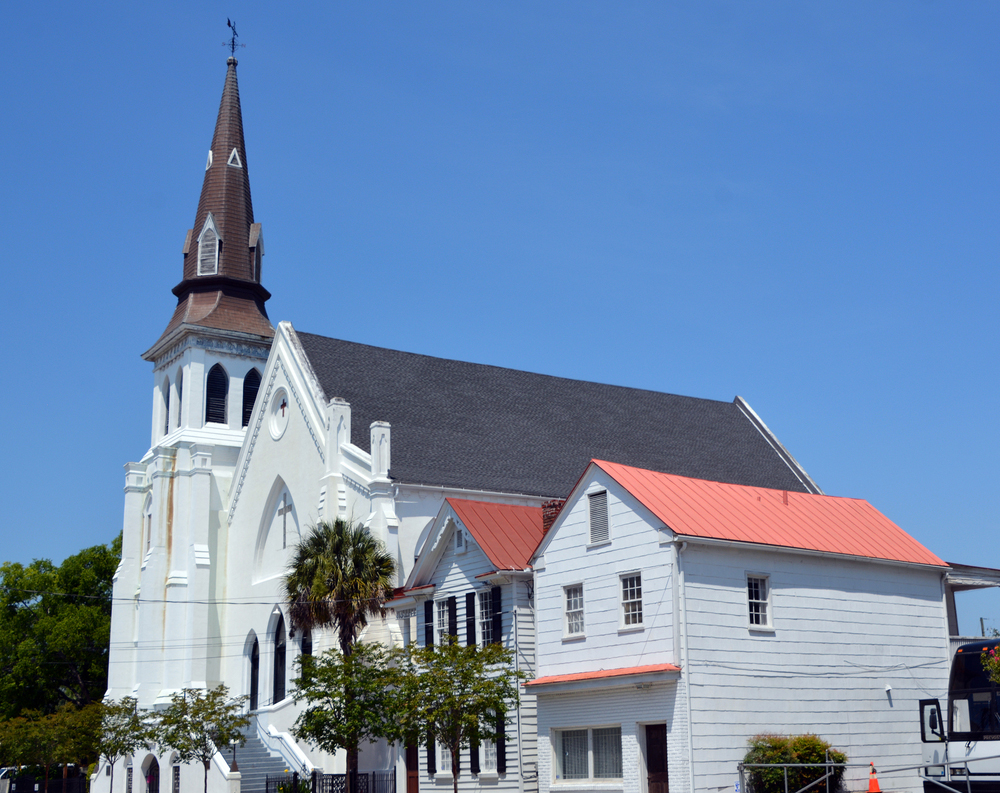
My husband and I just returned from the 2023 annual meeting of the South Carolina United Methodist conference. We attended as lay members from our church, but my eyes and ears were open, as always, for real estate issues.

Dirt lawyers in South Carolina witnessed the real estate issues raised by the schism in the Episcopal Church several years ago. We made lists of church properties that could be sold or mortgaged without the involvement of any entity beyond the local congregation. We made lists of properties involved in a hierarchical church structure requiring agreements and signatures of persons in distant locations. We advised real estate practitioners to work in close connection with underwriting counsel of the title insurance companies to avoid title issues.

I have no inside information on this matter, but my guess is that the Methodists were able to learn from the Episcopalians and managed to avoid the extensive litigation involved in that earlier schism.

United Methodist churches exist under a hierarchical structure. Anyone who has handled a closing involving a United Methodist property has learned that the District Superintendent must be involved in closing documents. The church properties are, in effect, owned by the conference.

When issues began to arise about LGBT members and pastors and it became apparent that there would be a separation of congregations, South Carolina’s Bishop and the administrators surrounding him negotiated with the churches who desired to leave the conference. After months of talks, the parties agreed to a payout that would free the real estate of the local church from the involvement of the conference.

Churches who wanted to leave the conference were required to pay ten percent of the value of their real properties and other assets. They were also required to pay some funds related to pastor pensions and some funds related to “apportionments” (the money paid to the conference to support the work of the conference as opposed to the work of the local congregation.)

Prior to the meetings this week, we had heard that several churches decided to leave the conference. But we were surprised to learn that there are, in fact, 113 churches who made arrangements with the conference to separate from United Methodism.  On the last day of the meetings, we were asked to vote to approve the separation. Thankfully, the meeting, although very sad, was handled in a respectful manner. We witnessed an amicable divorce.

If you are asked to handle any transaction involving a church that is or formerly was a United Methodist congregation, you should, of course, investigate the title issues as usual. You should involve the friendly underwriting counsel from your title insurance company. But, after these appropriate investigations, you should learn that there are no title issues arising from the involvement of the conference.

Never say never, though. I wouldn’t be shocked to learn that some of the 113 church congregations failed to tie up all the details of the separation. So be even more diligent than usual in examining the authority documents of the church. I assume that real estate practitioners will see numerous transactions as these churches, now separated from the administrative arm that supported them and having paid out substantial funds for the separation, will need real estate loans.

US Supreme Court redefines “waters of the United States”

Standard

Dirt lawyers, do you remember studying the cases in first year property classes in law school that defined navigable waters? We discussed the ebb and flow of tides. We talked about whether the water is presently used or had been used in the past or may be susceptible for use in the future for transportation.  I remember discussing whether logs could float and how big a boat must be to make the property qualify as navigable.

When I was in private practice in Columbia representing real estate developers, I ran into significant issues on a routine basis involving the federal government’s jurisdiction over wetlands. One developer was required to add an eight-acre lake to a residential subdivision because a minor portion of the property was soggy. We dealt with the Army Corps of Engineers on these issues, and getting approval for development was tedious at best. And I promise you that those soggy areas were not navigable by any size boat.

The reach of the Clean Water Act (CWA) was significantly constricted when the United States Supreme Court on May 25 issued a decision that narrowed the scope of wetlands and other water subject to the CWA’s protections. The case, Sackett v. EPA*, involved a residential lot in Priest Lake, Idaho.

Mike and Chantell Sackett bought the lot in 2004 for $23,000, intending to build a modest three-bedroom family home. They began building in 2007, and the Environmental Protection Agency (EPA) demanded the construction be halted, claiming it violated the CWA because the property was a federally regulated “navigable water”.

That demand began a 16-year legal battle. The Sacketts sued the EPA, and the case has reached the Supreme Court twice. The first decision involved a procedural matter. The Court decided in 2012 that property owners are entitled to immediate judicial review of EPA compliance orders without waiting for agency to seek judicial enforcement to contest the assertion that properties contain “waters of the United States” subject to CWA jurisdiction.

The case then worked its way through the lower courts until the Supreme Court agreed in 2022 to consider the issue of whether the EPA can define “navigable waters” to include semi-soggy parcels of land.

In January 2023, while the Sackett case was pending, the EPA published a final rule adopting a new definition of “waters of the United States” (WOTUS) to include traditional navigable waters, tributaries, adjacent wetlands and other waters that are not themselves navigable but are either relatively permanent or have a significant nexus to navigable waters. The Sackett case probably invalidates this rule.

The five-person majority held that WOTUS include only: (1) relatively permanent, standing or continuously flowing bodies of water forming geographic features described in ordinary parlance as streams, oceans, rivers and lakes; and (2) adjacent wetlands with continuous surface connection to such waters so that wetlands, as a practical matter indistinguishable from the bodies of water. To prove jurisdiction over a wetland, the EPA must now show that the adjacent body of water constitutes WOTUS (a relatively permanent body of water connected to interstate navigable waters) and that the wetland has a continuous surface connection with that water, making it difficult to determine whether the water ends and the wetland begins.

As I type this, I sit outside on a screen porch listening to birds sing in the previously defined wetlands that adjoin two sides of our house. We bought the lot, in part, because of the beauty and peace provided by wetlands, including the birds, as opposed to human neighbors. I wonder whether our peace and quiet will change.

*U.S. Supreme Court Opinion 21-454 (May 25, 2023)