Biden administration announces plans to lower housing costs

Standard

ALTA says the attack on title insurance offers a false promise of savings

This blog never intends to discuss politics, so don’t interpret this post to take a political position. The intent is to inform real estate lawyers of news affecting our industry.

Just ahead of the State of the Union Address, President Biden announced plans to lower housing costs, calling on federal agencies to take all available actions to lower costs of consumers at the closing table and to help more Americans access homeownership. You can read the President’s Fact Sheet here.

Congress is asked to pass a mortgage relief credit that would provide middle-class first-time homebuyers with an annual tax credit of $5,000 a year for two years. Congress is also asked to provide a one-year tax credit of up to $10,000 to middle-class families who sell their starter homes, defined as homes below the area median home price in the county, to another owner-occupant. The intent of this proposal is to offset the loss of a lower interest rate when a homeowner sells. Congress is also asked to provide up to $25,000 in down payment assistance to first-generation homebuyers.

The President also proposes an expansion of the Low-Income Housing Tax Credit to build or preserve 1.2 million more affordable rental units. He also proposes a new $20 billion competitive grant fund to support communities to build more housing and lower rents and homebuying costs. Each Federal Home Loan Bank will be asked to double its annual contribution to the Affordable Housing Program. The intent will be to support the financing, acquisition, construction, and rehabilitation of affordable rental units and homes for sale.

Honestly, a lot of this seems like government-speak. We will have to wait to see the language of the actual proposals to form opinions, but lowering housing costs and providing more housing for low-income consumers is a great theory.

The one proposal that should concern practitioners is a pilot program to reduce closing costs by waiving the requirement for lender’s title insurance. At this point, the proposal only covers refinances, and the Fact Sheet indicates closing costs would be reduced by an average of $750. American Land Title Association (ALTA) issued a press release on March 7 stating that this proposal is a false promise of savings.

When I was in private practice, the cost of title insurance was less than the cost of an attorney’s opinion letter, and I believe lawyers would have to raise their charges to cover the additional liability. I’ve spoken many times and written many articles about the advantages of title insurance over title opinions, and I won’t repeat these arguments here. I am confident ALTA and title insurance companies will make those arguments plainly in opposition to this plan.

Some IRS forms must be filed electronically as of January 1, 2024

Standard

Chicago Title recently published an update on an IRS regulation, and I wanted to make sure readers of this blog have the most current information. Dirt lawyers know that cash payments greater than $10,000 must be reported to the IRS through form 8300.

For a primer on this requirement, review IRS Publication 1544 here. The government’s stated goal in imposing this requirement is to detect money laundering and to catch tax evaders, terrorists and those who profit from the drug trade.

Effective January 1, 2024, the IRS updated its regulations to require businesses that file 10 total information returns (such as 1099, W2 and, now 8300) to files these forms electronically unless the business requests and receives a waiver each tax year. You can view the revised regulations here.

FinCEN’s proposed reporting rule targets residential real estate cash closings

Standard

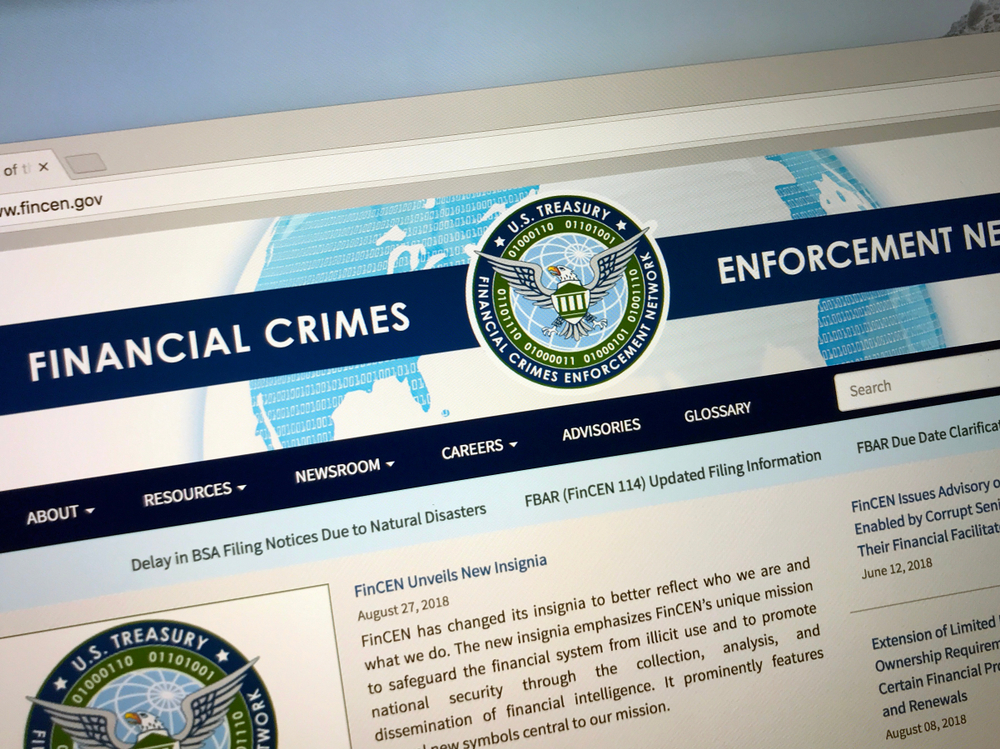
On February 7, the U.S. Department of Treasury’s Financial Crimes Enforcement Network (FinCEN) issued a Notice of Proposed Rulemaking for the stated purpose of combatting money laundering in residential real estate transactions. You can review the proposed rule and a related fact sheet here.

The proposed rule would require certain professionals, including attorneys, involved in real estate closings to report information to FinCEN about cash transfers of residential real estate to legal entities and trusts. The agency’s press release indicates the proposal is tailored to target transfers that are high-risk for money laundering. No reporting would be required for transfers to individuals.

The information to be reported would include:

  • Beneficial ownership information for the legal entity or trust receiving the property;
  • Information about individuals representing the transferee legal entity or transferee trust;
  • Information about the business filing the report;
  • Information about the real property being sold or transferred;
  • Information about the seller; and
  • Information about any payments made.

A Geographic Targeting Order program has been in place for several years requiring this type of reporting in certain high-priced locations. The new rule would replace the Geographic Targeting Order with nationwide reporting.

FinCEN recognizes that the beneficial ownership information required under this proposed rule is also collected under the new Corporate Transparency Act, but states that the information will serve two different purposes.

The proposed rule would require reporting on single-family houses, townhouses, condominiums and buildings designed for occupancy by one to four families. It would also require reporting on transfers on unimproved land that is zoned or permitted for occupancy by one to four families.

Transfers would be reportable regardless of price. Gifts and other transactions where no consideration is exchanged are reportable. Exempted transactions include easements, transfers resulting from the death of the property owner, transfers resulting from divorce, and transfers made to a bankruptcy estate.

The agency encourages written comments in response to the proposed rule for 60 days. Closing lawyers, I encourage you to read the information at the links above and to make comments.    

Professor Whitman provides update on legislative restrictions on foreign ownership of real estate

Standard

This blog has discussed legislation limiting the purchase of real estate by some foreigners twice. Remember the Chinese surveillance balloon the United States shot down off the coast of the Palmetto State last February?

That incident and other rising tensions between our government and China over several issues (the war in Ukraine, recognition of Taiwan, to name only two) have resulted in politicians proposing to broaden state law bans on foreign ownership of real estate.

Professor Whitman of the DIRT listserv has provided a New Year’s update on the legislation across the country. He said one of the most significant developments of 2023 in the real estate arena was the noticeable increase in restrictions on foreign acquisitions of US property.

Chicago Title published an Underwriting Memorandum on April 5 entitled “Foreign Ownership of Property in South Carolina” to advise agents of the pending legislation in our state.

For your information, here is a link to Professor Whitman’s email. He gives credit for some of the list to Womble Bond Dixon. And I, as always, recommend and give credit to the listserv. Professor Whitman and his colleagues attempt to keep all of us up to speed on real estate law and trends across the country.

If you encounter potential foreign purchasers in your transactions, consult your friendly and intelligent underwriting counsel.

Reminder: Corporate Transparency Act is effective January 1, 2024

Standard

This blog has discussed the new Corporate Transparency Act three times recently. This is a reminder that the CTA goes into effect on January 1, 2024.

For reporting companies formed prior to the effective date, beneficial owner information will need to be reported to FinCEN prior to January 1, 2025.

For companies formed or registered after January 1 2024 and before January 1,2025, reporting is required within 90 days of the acceptance of the company’s formation or registration filing. FOR NEW COMPANIES, YOU HAVE ONLY 90 DAYS TO REPORT!

If you missed the discussion of the Small Entity Compliance Guide FinCEN issued in September, here is the link.

On September 28, FinCEN issued a Notice  to extend the deadline for filing beneficial ownership information reports. You can read the notice here.

Please refer to the excellent September 2023 article in SC Lawyer entitled, “The Basic Ins and Outs of the Corporate Transparency Act” by Matthew B. Edwards and D. Parker Baker III.

This article provides an analysis of the basics of the Act, which is intended to help prevent money laundering, terrorist financing, corruption, tax fraud and other illicit activities. Many entities will be required to report information concerning beneficial owners to the Department of Treasury’s Financial Crimes Enforcement Network (FinCEN), identifying their beneficial owners and providing certain information about them.

The act may apply to virtually every commercial real estate transaction because of the use of multi-tier entity structures to achieve business objectives. Lawyers will need to review clients’ organizational structure charts to determine entity by entity whether an exemption is applicable. If not, organizational documents, stockholder agreements, operating agreements will have to be reviewed to determine beneficial ownership.

Reporting information will include the name, address, state of jurisdiction and taxpayer identification number of every beneficial owner. Other information may be required, such as passports and driver’s licenses. Penalties for failure to comply will include civil penalties of no more than $500 per day, fines of no more than $10,000 and imprisonment for no more than two years. A safe harbor is included for voluntarily and promptly correcting an inaccurate report within 90 days.

Everyone will get through this together, and it’s likely that experts will emerge to help. This blog will keep you posted on new developments.

Could you use some good news for the year end?

Standard

I no longer must spend six weeks of my life working on budgets each year, but I sympathize with the dirt lawyers who are in the throes of budgeting this time of year. The real estate economy picture may have been somewhat bleak in 2023, but some news I saw today makes me think 2024 may be a little better.

The New York Times is reporting that the Federal Reserve left the current interest rate unchanged and projects three quarter-point rate cuts for 2024. Federal policy makers are projecting that interest rates will be lowered to 4.6 percent by the end of 2024. This projection is down from the 5.1 percent estimate that was released in September.

Your 401(K) probably showed happy increases today. My personal financial planner got lucky because his holiday party is scheduled for tomorrow, and his clients should be happy after a period of uncertainty in the market.

Inflation has decreased, which is also very good news for all of us heading into the new year. Everyone seems to be feeling much better about the economy, which should signal a Merry Christmas and Happy New Year for all of us involved in real estate transactions! Let’s collectively keep our fingers crossed!

Conforming loan limit to increase in 2024

Standard

The Federal Housing Finance Agency (FHFA) issued a press release on November 28 announcing the conforming loan limit values for Fannie Mae and Freddie Mac mortgages in 2024 will increase.

For most locations, the new loan limit will be $766,550, an increase of $40,350 from 2023. The press release indicates that average home prices increased 5.56% between the third quarters of 2022 and 2023, and the conforming loan limit will increase by the same percentage.

In some areas with high housing values, the applicable loan limit will be doubled ($1,149,825). In addition, special statutory provisions require that the limit in Alaska, Hawaii, Guam, and the U.S. Virgin Islands must be set at 150% of the limit in other areas. That limit will be the same as in the high housing value areas ($1,149,825).

This is a map showing the 2024 conforming loan limits across the United States. And this is a list of FAQs the agency has answered.

More information on the Corporate Transparency Act

Standard

This blog has discussed the new Corporate Transparency Act twice recently. If you missed the discussion of the Small Entity Compliance Guide FinCEN issued in September, here is the link.

I wanted to share an additional piece of information. On September 30, FinCEN issued a Notice of Proposed Rulemaking to extend the deadline for filing beneficial ownership information reports. You can read the notice here.

This notice proposes to change the reporting deadline for new entities formed beginning in 2024 from 30 to 90 days. The press release indicates this extension is intended to reporting companies created or registered in 2024 additional time to understand their regulatory obligations under the new reporting rule. I think this change will be helpful, if implemented.

Please refer to the excellent September 2023 article in SC Lawyer entitled, “The Basic Ins and Outs of the Corporate Transparency Act” by Matthew B. Edwards and D. Parker Baker III.

This article provides an analysis of the basics of the Act, which is intended to help prevent money laundering, terrorist financing, corruption, tax fraud and other illicit activities. Many entities will be required to report information concerning beneficial owners to the Department of Treasury’s Financial Crimes Enforcement Network (FinCEN), identifying their beneficial owners and providing certain information about them.

The act may apply to virtually every commercial real estate transaction because of the use of multi-tier entity structures to achieve business objectives. Lawyers will need to review clients’ organizational structure charts to determine entity by entity whether an exemption is applicable. If not, organizational documents, stockholder agreements, operating agreements will have to be reviewed to determine beneficial ownership.

Reporting information will include the name, address, state of jurisdiction and taxpayer identification number of every beneficial owner. Other information may be required, such as passports and driver’s licenses. Penalties for failure to comply will include civil penalties of no more than $500 per day, fines of no more than $10,000 and imprisonment for no more than two years. A safe harbor is included for voluntarily and promptly correcting an inaccurate report within 90 days. FinCEN will issue rules prior the effective date.

Don’t panic. We have time. The effective date is January 1, 2024. For companies formed prior to the effective date, the initial report is due January 1, 2025. For companies formed on or after the effective date, the first report is due 30 days following formation. This new rule, if implemented, will change that time-frame to 90 days.  

I think everyone’s initial advice as to new entities will be to refrain from forming those entities until the effects of the Act are analyzed. Existing entities will need to be analyzed pursuant to FinCEN’s rules.

Everyone will get through this together, and it’s likely that experts will emerge to help. This blog will keep you posted on new developments.

Heads up real estate lawyers!

Standard

The new Corporate Transparency Act will apply to you and your clients!

This blog recently discussed the new Corporate Transparency Act. I’m repeating that blog in order to provide you with extra piece of information that should be helpful as you work to get ready for this new obligation of many clients. FinCen has recently published a compliance guide that you can read here.

Please refer to the excellent September 2023 article in SC Lawyer entitled, “The Basic Ins and Outs of the Corporate Transparency Act” by Matthew B. Edwards and D. Parker Baker III.

This article provides an analysis of the basics of the Act, which is intended to help prevent money laundering, terrorist financing, corruption, tax fraud and other illicit activities. Many entities will be required to report information concerning beneficial owners to the Department of Treasury’s Financial Crimes Enforcement Network (FinCEN), identifying their beneficial owners and providing certain information about them.

The act may apply to virtually every commercial real estate transaction because of the use of multi-tier entity structures to achieve business objectives. Lawyers will need to review clients’ organizational structure charts to determine entity by entity whether an exemption is applicable. If not, organizational documents, stockholder agreements, operating agreements will have to be reviewed to determine beneficial ownership.

Reporting information will include the name, address, state of jurisdiction and taxpayer identification number of every beneficial owner. Other information may be required, such as passports and driver’s licenses. Penalties for failure to comply will include civil penalties of no more than $500 per day, fines of no more than $10,000 and imprisonment for no more than two years. A safe harbor is included for voluntarily and promptly correcting an inaccurate report within 90 days. FinCEN will issue rules prior the effective date.

Don’t panic. We have time. The effective date is January 1, 2024. For companies formed prior to the effective date, the initial report is due January 1, 2025. For companies formed on or after the effective date, the first report is due thirty days following formation.

I think everyone’s initial advice as to new entities will be to refrain from forming those entities until the effects of the Act are analyzed. Existing entities will need to be analyzed pursuant to FinCEN’s rules during 2024.

Everyone will get through this together, and it’s likely that experts will emerge to help.

Section 8 of RESPA is alive and well

Standard

CFPB imposes $1.75 million fine for giving “things of value” in return for referrals

This blog often recommends the DIRT Listserv and today is no exception. Professor Dale Whitman reported on August 22 that the CFPB issued an order against Freedom Mortgage Corporation, a residential mortgage loan originator and servicer headquartered in Boca Raton, Florida, for providing things of value—including subscription services, events, and monthly marketing services agreement payments—in exchange for referrals of mortgage loans in violation of the Real Estate Settlement Procedures Act and its implementing Regulation X. The order requires Freedom to stop its unlawful activities and pay a $1.75 million civil money penalty.

You can read the order in its entirety here.

Professor Whitman noted that since RESPA Section 8 has been around for 50 years, one might think that such practices are a thing of the past.

These specific violations were noted:

  1. Freedom entered into agreements with local real estate agents for the agents to provide marketing services for Freedom’s mortgage activities. CFPB said the payments were really referral fees for the agents to refer mortgage loan customers to Freedom. Apparently, no “marketing services” were provided.
  2. Freedom gave the agents free access to valuable industry subscription services, which provided information concerning property reports, comparable sales, and foreclosure data. These subscriptions, which were worth thousands of dollars per month, were provided in return for the agents referring mortgage loan customers to Freedom.
  3. Freedom provided entertainment, food, and drinks at parties and other events to the agents that were referring loan customers to it. They also provided free tickets to sporting and charity events. They didn’t make similar distributions to agents who were not referring customers.

Professor Whitman questions whether a lender really cannot throw a pregame party or provide a skybox at a game for real estate agents. He suggests that there must be a de minimus exception. But the order doesn’t give much guidance on the boundaries of Section 8.

I agree with the Professor. If you represent clients that provide settlement services and rely on referrals, you should advise them to be very cautious about providing free services and entertainment persons who make the referrals.