Probate Problems: When Doing Things The Old-Fashioned Way Can Get Your Documents Rejected

Standard

This is not news, but we hear recording offices are beginning to reject documents.

Effective June 2, 2014, South Carolina Code §26-1-120 (E) 4, dealing with notarial certificates, was amended to require that a subscribing witness in a probate form must attest that he or she is not a party to or beneficiary of the transaction.

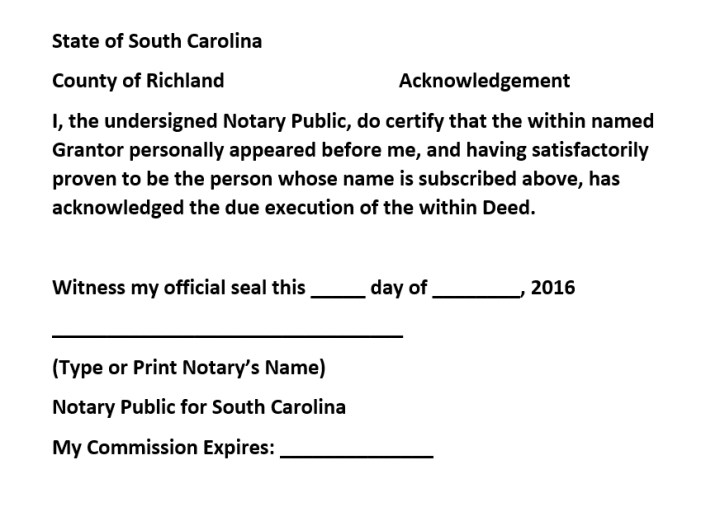
This is a correct version of the new probate form:

Screenshot 1

Probates are notoriously difficult to complete correctly, especially for documents sent out-of-state. It is probably always a better idea to use a simple acknowledgement form, particularly in light of the statutory change:Screenshot 2Note that South Carolina Code §26-1-90(B) now requires that the notary legibly type or print his or her name near the signature.

This is a technicality, but a technicality that can cause your documents to be rejected by recording offices. Don’t let that happen!

The SC-NC Boundary Legislation Passed!

Standard

SC law “clarifying” the boundary will be effective at the beginning of the year.

The long awaited and much debated legislation defining the boundary line between The Palmetto State and the Tar Heel State was signed by Governor Nikki Haley on June 10.  The effective date of the law is January 1, 2017.

The purpose of the law is “clarifying the original location of the boundary” with North Carolina along Horry, Dillon, Marlboro, Chesterfield, Lancaster, York, Cherokee and Spartanburg Counties and providing additional information about the plats describing the location along Greenville, Pickens and Oconee counties.  In other words, our legislature doesn’t believe the law establishes a new boundary line.

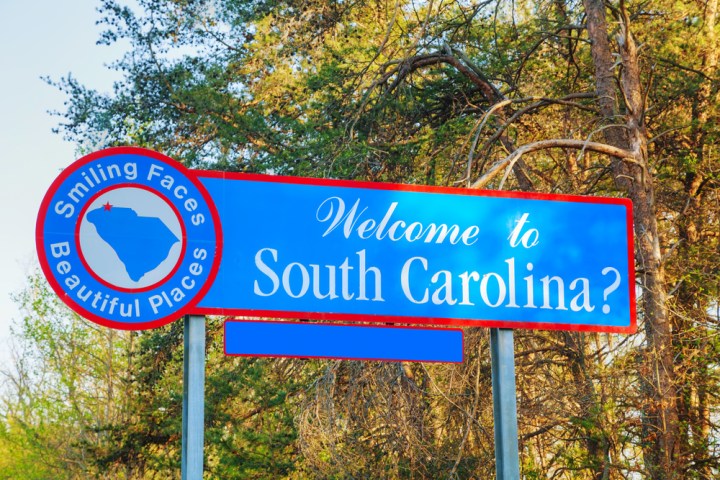
welcome to SC 2

As expected, much of the legislation deals with tax issues. The legislative intent is set out specifically, and includes the thought that no business or residence owner should be liable for back taxes to South Carolina nor refunds from South Carolina as a result of a change from one state to the other. And the Department of Revenue is given the authority to compromise taxes in cases that result in taxation in both states.

Several issues are of particular interest to dirt lawyers. For example, no deed recording fees or county filing fees may be charged for deeds recorded as a result of the boundary clarification.

On the effective date of the legislation, Registers of Deeds (and Clerks of Court in those affected counties that do not have ROD offices) will be required to file a Notice of State Boundary Clarification for each affected piece of property. The form is described specifically in the legislation and requires the legal description, tax map number, derivation (if available), the names of the owners of record and the “muniments of title”, a defined term meaning “documents of record setting forth a legal or equitable real property interest or incorporeal hereditament in affected lands of an owner”.

I’m a dirt lawyer of more years than I like to divulge, but I admit I had to investigate the meaning of that word. The learned source, Wikipedia, indicates a muniment of title is the written evidence a landowner can use to defend title, such as a deed, will, judgment or death certificate.

Apparently, lawyers in states with marketable title legislation may be familiar with this term. South Carolinians have neither the benefit of tidy legislation to correct our title problems nor the knowledge and widespread use of this nifty term, until now.  We will all need to use and pronounce the word, muniment, next year. A North Carolina colleague asked me where the RODs and Clerks of Court will obtain the information to supply the  muniments of title. My best guess is that somebody is going to have to do a lot of title work!

(Note to Professor Spitz:  I apologize if you taught me that term in law school. It’s been a long, long time!)

Also of interest to dirt lawyers are provisions relating to foreclosures. A foreclosing attorney will have to file and serve the summons and complaint along with the aforesaid Notice of Boundary Clarification and an attorneys’ certification “that title to the subject real property has been searched in the affected counties and the affected jurisdictions” on all parties having interest in the real property pursuant to the muniments of title.  Whew! The foreclosure can then proceed after thirty days. I’m not sure how all that will be sorted out. I assume South Carolina foreclosure lawyers will be hiring counterparts across the state line to assist in these title examinations.

How will dirt lawyers and title insurance companies deal with sales and mortgages for properties that change states?  I think we are going to take these issues on a case-by-case basis and work together to sort out the various issues that are surely to arise. Be sure to involve your title insurance underwriter in these decisions rather than going out on a limb alone!

Old McDonald Had a Farm

Standard

South Carolina Court of Appeals says partition actions in probate court require an open estate; sends action back to circuit court.

The South Carolina Court of Appeals held last week that probate courts in South Carolina have subject matter jurisdiction over partition actions only where open estates are involved.*

The dispute involved a farm in Darlington County originally owned by S.W. Byrd. Mr. Byrd died in 1923, and his estate was probated in Darlington County and finally closed in 1948. The estates of several of Mr. Byrd’s heirs were not subsequently probated, and in April of 2012, E. Butler McDonald filed an action for partition and the determination of heirs in the Darlington County Probate Court.

At that time, more than ten years had passed since the deaths of Mr. Byrd’s original heirs. Since §62-3-108 of the South Carolina Code establishes a time limitation of ten years after death for the administration of an estate, these estates could not be probated at the time Mr. McDonald filed his action.

farmlandThe Probate Court determined the heirs of S.K Byrd and their percentages of ownership. The Probate Court also found that no interested party had expressed a desire to purchase the property and that physical partition of the farm was impractical. The farm was ordered to be sold at a public auction, and Mr. McDonald’s reasonable attorneys’ fees were ordered to be paid.


On appeal by the other heirs, the Circuit Court affirmed. On appeal to the Court of Appeals, the appellants made several arguments, but the Court of Appeals focused on subject matter jurisdiction. Section 62-3-911 of the South Carolina Code establishes the jurisdiction for probate courts and specifically states that an heir may petition the probate court for partition prior to the closing of an estate. Since it was clearly established at trial that S.K. Byrd’s estate was closed in 1948, an action to partition his farm should have been brought in the circuit court, according to the Court of Appeals. The probate court’s determination of heirs and their percentages of ownership was affirmed, but the order was vacated as to the remaining issues.

*Byrd v. McDonald, S.C. Court of Appeals Case 5409 (June, 8, 2016)

Upscale Mt. Pleasant Condo Project Subject of Arbitration Clause Dispute

Standard

Court of Appeals sides with roofing supplier

The South Carolina Court of Appeals handed down a decision on June 1 that will delight the drafters of corporate contracts who imbed arbitration clauses within their warranty provisions.  Whether the South Carolina Supreme Court will approve remains to be seen.

The dispute arises over the construction of One Belle Hall, an upscale condominium community in Mt. Pleasant. Tamko Building Products, Inc. was the supplier of the asphalt shingles for the community’s four buildings, and placed a mandatory binding arbitration clause within its warranty provision. The warranty purported to exclude all express and implied warranties and to disclaim liability for all incidental and consequential damages.

roof shingles

At some point after construction was completed, the owners’ association determined that the buildings were affected by moisture damage, water intrusion and termite damage, all resulting from various alleged construction defects. The developer contacted Tamko to report a warranty claim on the roof shingles, contending they were blistering and defective.  Tamko sent the developer a “warranty kit”, requiring the claimant to provide proof of purchase, samples of the allegedly defective shingles and photographs. The developer failed to respond.

Two years later, the owners’ association filed a proposed class action lawsuit on behalf of all owners, alleging defective construction against the community’s various developers and contractors. Tamko filed for a motion to dismiss and compel arbitration.

Circuit Court Judge J. C. Nicholson, Jr. denied the motion and ruled that Tamko’s sale of shingles was based on a contract of adhesion and that the condominium owners lacked any meaningful choice in negotiating the warranty and arbitration terms. The trial court held the arbitration clause to be unconscionable and unenforceable because of the cumulative effect of several oppressive and one-sided terms in the warranty.

The Court of Appeals begged to differ. It held that the circuit court erred in finding the arbitration clause in the warranty was unconscionable. It stated that our supreme court has made it clear that adhesion contracts are not per se unconscionable. The underlying sale of Tamko’s shingles was stated to be a typical modern transaction for goods in which the buyer never has direct contact with the manufacturer to negotiate warranty terms.

The court found it significant that the packaging contained a notation: “Important: Read Carefully Before Opening” providing that if the purchaser is not satisfied with the terms of the warranty, then all unopened boxes should be returned. The court pointed to the standard warranty in the marketplace that gives buyers the choice of keeping the goods or rejecting them by returning them for a refund.

The appellate court also found it significant that the arbitration clause did facilitate an unbiased decision by a neutral decision maker and that the arbitration clause was separable from the warranty.

Consider the exact opposite approach of the CFPB’s recently-announced proposed rule that would ban financial companies from using mandatory pre-dispute arbitration clauses to deny consumers the right to join class action lawsuits. That proposed rule can be read here and is the subject of a May 12 blog entitled “CFPB’s proposed rule would allow consumers to sue banks”.

It’s interesting to see such different approaches by two authorities on an issue affecting consumers in the housing arena. I wouldn’t be surprised to see more to come from either ruling.

* One Belle Hall Property Owners Association, Inc. vs. Trammell Crow Residential Company, S.C. Ct. App. Opinion 5407 (June 1,2016)

What’s That Terrible Smell?

Standard

A Midlands landowner is forced to abandon his stinky property, and the SC Court of Appeals says Insurance Reserve Fund doesn’t need to pay.

The South Carolina Court of Appeals held on March 23 that the South Carolina Insurance Reserve Fund (the Fund) has no duty to defend or indemnify East Richland County Public Service District (the District) in connection with a claim by a property owner of inverse condemnation, trespass and negligence resulting from offensive odors*.stinky smell

In 2010, Coley Brown filed a complaint alleging the District had installed a sewage force main and air relief valve which released offensive odors on his property multiple times a day.

A District employee testified that a force main had been installed as a part of a larger project that included two nearby pump stations. The pump stations were designed to pump sewage through the force main when the sewage reached a certain level. Depending on the area’s water usage and weather, the pump stations might turn on as often as ten times per hour. The odor was a result of naturally occurring hydrogen sulfide-which smells like rotten eggs-and methane.

In response to the complaints, the District made several attempts to remedy the odors, including using a chlorine-based chemical, installing charcoal filters, and eventually using a granulated chemical media. When the District failed to cure the problem, Brown moved to a different location but was unable to sell the stinky property.

The District tendered Brown’s complaint to the Fund pursuant to its insurance policy, but the Fund denied coverage. Under the policy, the Fund is obligated to pay damages resulting from property damage caused by an occurrence, defined as an accident, including continuous or repeated exposure to conditions, which result in personal injury or property damage neither expected nor intended. The policy has a “pollution exclusion” that refers to gasses and fumes.

The Circuit Court found that the Fund had no duty to defend or indemnity the District in the underlying case, finding the policy’s policy exclusion to be valid despite the District’s argument that the exclusion conflicts the South Carolina Tort Claims Act. The Court of Appeals reviewed the Tort Claims Act and found no conflict. The Court also reviewed cases from other jurisdictions holding that foul odors are encompassed by such pollution exclusions.

The District then argued that an exception to the pollution exclusion applies if the discharge, dispersal, release or escape of pollutants is sudden and accidental. The Court was not persuaded by this argument, indicating the releases were not accidental and unexpected, but were a necessary function of the District’s normal operations.

* S.C. Insurance Reserve Fund v. East Richland Public Service District, Appellate Case No. 2014-000728, March 23, 2016)

Minimum Standards Revised for ALTA/NSPS Surveys

Standard

Celebrating the festival of Terminalia?

surveyorAmerican Land Title Association and National Society of Professional Surveyors have spent two years working on a new set of minimum standards for surveys. Their efforts resulted in the adoption of new 2016 Minimum Standard Detail Requirements for ALTA/NSPS Land Title Surveys which go into effect on February 23.  The standards can be found here.

A notable change is the title which acknowledges the merger of ASMC with NSPS. The list of atypical interests in real estate has been expanded to clearly include easements. And a surveyor should now be provided with the most recent title commitment. The term “record documents” has been abandoned in favor of referencing documents that are “to be provided to the surveyor”.

A significant change is the new duty of the surveyor to show “the location of each edge of the traveled way”, including divided streets and highways. The 2011 standards required showing the “width and location of the traveled way”. The change will require surveyors to show the width of the dedicated road in addition to the width of the asphalt.

The requirement to show water features has beefed up. Previously, surveyors were required to show springs, ponds, lakes, streams and rivers bordering or running through the property. Now surveyors must also show canals, ditches, marshes and swamps if any are “running through, or outside but within five feet of the perimeter boundary of the surveyed property.”

If a new legal description is prepared, the surveyor must include a note stating that the new description describes the same real estate as the record description, or if it does not, then the surveyor has to explain how the new description differs from the record description.

The surveyor must now show all observable evidence of both easements and utilities on his plat. Previously, there was some confusion as to whether both had to be shown.terminus 2

There are other modifications, most of which will assist surveyors while not diminishing the value of their surveyors to commercial practitioners and title insurers.

What’s the significance of the date? The Roman god Terminus protected boundary markers. The name “Terminus” was the Latin word for boundary marker. On February 23, Roman landowners celebrated a festival called Terminalia in honor of Terminus. Let’s throw a party!

Will Biltmore Estate’s Owners Get Their Fairytale Ending When IRS Is Done With Them?

Standard

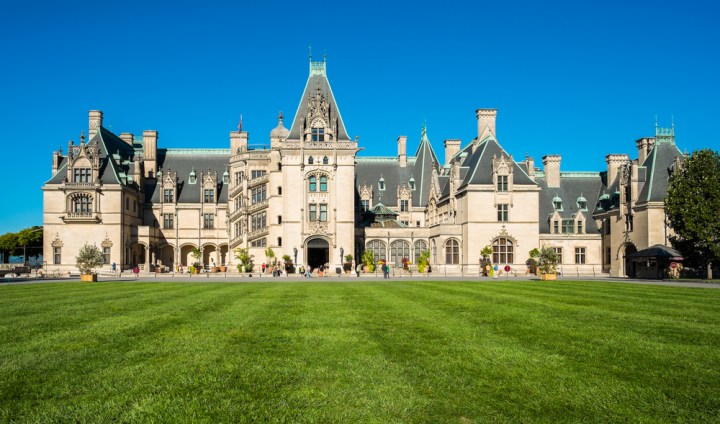
Biltmore EstateOne piece of real estate that fascinates most Carolinians is the picturesque Biltmore Estate in Asheville surrounded by the natural beauty of the Appalachian Mountains. According to articles in Law360*, a trial is scheduled for February 24 in the U.S. Tax Court that may determine whether the property continues to be privately owned and operated or whether portions of the real estate must be sold to developers to pay taxes.

The estate consists of 8,000 acres, 75 acres of formal gardens, and the largest privately owned house in the United States. The 255-room mansion was built between 1889 and 1895, in the Gilded Age, by George Washington Vanderbilt. Mr. Vanderbilt intended for the estate to be self-supporting, so he established a forestry program, poultry farms, cattle farms, hog farms, a dairy and a furniture business.

IMG_3884[1]George Vanderbilt had one child, Cornelia, who married British diplomat John Francis Amherst Cecil. Mr. and Mrs. Cecil worked with the City of Asheville to open the estate to the public in 1930 to spur tourism in the area during the Depression and to generate revenue to support the estate. The Cecil family turned the aging estate into a thriving tourist attraction, now including an inn, a farm, restaurants, gift shops and a winery, among other money-making ventures.

Most national treasures are operated by governmental agencies. According to the Law360 articles, the Cecils believe The Biltmore should be given special consideration because it operates as a business venture causing no drain on federal or state governments.

At issue now is a stock gift to the Cecils’ five grandchildren reported on 2010 tax returns at $20.88 million. The IRS claims the stock is worth $95 million. The family believes the stock should be valued as minority interests in a going concern.  But the IRS argues that the asset value is worth more than the value of the going concern, so a liquidation value should be used.

Lovers of this historic landmark will need to follow this story to determine whether the preferred destination of more than a million visitors per year will remain available as a vacation destination.

*Biltmore Owners Say IRS Is Stonewalling $95M Gift Row, 1/11/2016; Biltmore Owners Battle IRS over $95M Stock Gift, 7/7/2014.

(The Estate’s website is the source for many of the facts in this blog.)

The Big Short: Required Reading (and watching) for Dirt Lawyers

Standard

thebigshort

Super Bowl 50 was the big entertainment news of the weekend, but coming in at a personal close second were the book and movie The Big Short. I rushed to finish the former before dragging my husband to a Saturday matinee of the latter. Then, a friend pointed me to an NPR special “The Giant Pool of Money”, which provided a fascinating diversion for my Saturday afternoon walk.  (I confess to being easily entertained by all matters involving real estate.)

I encourage everyone involved with “dirt” to read the book, watch the movie and listen to the podcast. All relate to the 2008 financial crisis. At the center of the book (and movie) were several eccentric investors/money managers, who predicted the fall and brilliantly crafted a method to cash in on it. At the center of the podcast was the “giant pool of money”, the trillions of dollars in the economy that constantly need a place to be invested.

Locally, we heard the stories about real estate investors who lost properties and funds in the crash. In our office, we compared the crash to a game of musical chairs. The investors who sat in the chairs when the music stopped (the ones who held titles to the properties) were the ones who lost.

All areas of South Carolina were affected, but our coastal areas were hardest hit. Property values were phenomenal!  A contract on a yet-to-be-constructed residence might change hands several times at increasing prices before the final purchase. And loans were easy to procure at all income levels. No one thought property values would ever soften, and it didn’t matter if adjustable rate loans would reset in two years at staggeringly high fixed interest rates because refinances were readily available. Properties and mortgages churned like butter. There was apparently no end in sight.

The book’s author, Michael Lewis, who also wrote Moneyball and The Blind Side (back to football, which really is the center of the universe), said in explaining the mindset of the people who would borrow again and again, “How do you make poor people feel wealthy when wages are stagnate? You give them cheap loans”.

One of the money managers in The Big Short had his eyes opened by a story from his own household. His babysitter revealed she and her sister owned five townhouses in Queens. When he questioned asked how that possibly could have happened, she responded that after they bought the first townhouse, the value increased, and lenders suggested they refinance and take out $250,000, which they used to buy another townhouse. And so on….

The “giant pool of money” that at one time had been invested safely in boring assets like Treasury bonds, needed a place to land with higher interest rates. With mortgage rates being at 3.5% and higher, no better place could be found.

How did the money managers cash in?  They looked at pools of mortgages that were being sold on the secondary market, saw that the interest rates would collectively begin to reset in early 2007, and bet against the housing market.

They created a “credit default swap” market that bet against collateralized debt obligations. Huh?

One of the points of the book is that the financial markets created fancy terms that average individuals could not possibly understand. In this particular case, it turned out that that the big Wall Street firms, the people who ran them as well as their regulators, did not understand what was happening either.

“Credit default swap” is a confusing term because it is not a swap at all. It is an insurance policy, typically on a corporate bond, with semiannual payments and a fixed term. The money managers who predicted the subprime lending crisis bought credit default swaps that paid off, like insurance policies, when the market crashed.  These eccentric money men were able to predict that there would be a crash of the subprime mortgage market even if housing prices only stalled because borrowers would not be able to refinance or make payments.  When prices dropped, the money men were able to cash in at astonishing levels.

The most horrifying point of the book was that the government’s response to the crisis, the so-called bailout, will not prevent the crisis from happening again. We can only hope that we are all better educated the next time around. As I opened Outlook this morning, though, the first article that caught my eye was from Housingwire entitled “Risky home lending really on the comeback?”  Let’s collectively hope not!

County May Owe Duty to Lot Owners in Failed Subdivision

Standard

Infrastructure regulations were not followed

scales - blue backgroundOn January 6, the S.C. Court of Appeals reversed the Georgetown County Circuit Court’s directed verdict and remanded a case involving failed West Stewart Subdivision.* The developer, Harmony Holdings, LLC, went belly up in 2007, leaving the lot owners without roads and utilities after the County failed to follow its own regulations that provided a safety net for such catastrophes.

The plaintiff owned two lots in the subdivision, and filed a negligence action, arguing that Georgetown County had a “tort-like” duty to lot owners under the plain language of its development regulations. The County denied that it owed a duty to lot owners.

The County attorney explained the administrative issues at trial. He testified that in South Carolina, a developer is generally not allowed to sell lots that do not have infrastructure (roads, water and sewer). County regulations, however, allow the County to accept cash, bonds, financial guarantees or letters of credit to ensure money is available to complete infrastructure in case a developer fails.

Under the regulations in question, the County had discretion to accept a letter of credit equal to 125% of the cost estimate to complete the infrastructure. In this case, the developer posted a letter of credit on May 23, 2006 in the amount of $1,301,705 based on a cost estimate of $1,040,000.

Also under the regulations, the County had the power to approve reductions in the letter of credit upon receipt of an engineer’s certification that a certain amount of the work had been completed and sufficient funds were available for the remaining work. Other technical procedures were also required. The County allowed for a reduction in the letter of credit on July 20, 2006, October 9, 2006 and November 8, 2006, reducing the letter of credit to $553,370. In December of 2006, the County was advised that the estimated cost to complete the infrastructure was $1,153,205, which was higher than the original estimate. Despite this information, the letter of credit was reduced again on March 9, 2007 to $156,704.

The letter of credit expired in May of 2007, and the developer gave the county a check for $140,000. In August of 2007, the developer informed the County that it no longer had the financial means to complete the construction. Then the developer declared bankruptcy.

Repko described his lot as “woods” accessible by a path but inaccessible by a road. He testified that he believes his property is valued at “zero”. He said he pays property taxes on his lot, but the County will not allow him to build because of the absence of basic utilities.

The trial court directed a verdict in favor of the County on the grounds that the regulations do not create a private duty to lot owners. (Other issues were argued that will not be discussed here.) The Court of Appeals agreed with the lot owner that the County owed a special duty to him with respect to the County’s management of the financial guaranty that allowed the developer to sell lots.

inigo montoya memeThe County had relied on a 1993 Hilton Head case.** In that case, the preamble to the development ordinances stated, “The town council finds that the health, safety and welfare of the public is in actual danger….if development is allowed to continue without limitation.” When the development failed, a lot owner sued the Town, claiming it had negligently administered its ordinances. The Supreme Court held that the ordinances did not create a special duty to lot owners because their essential purpose, according to the preamble, was to protect the public from overdevelopment.

The Court of Appeals in the current case held that, unlike the Hilton Head ordinances, the Georgetown County regulations contained no express language declaring their purpose, but reviewing them as a whole, the purpose is to protect lot owners in the event the developer does not complete infrastructure.

I expect we have not seen the end of this case!

* Repko v. County of Georgetown, Opinion 5374, January 6, 2016.

** Brady Development Co. v. Town of Hilton Head Island, 312 S.C. 73, 439 S.E.2d 266 (1993).

Federal Housing Finance Agency Announces Conforming Loan Limits for 2016

Standard

The maximum remains the same in most markets

FHFA LogoSpeculation earlier this year was that the Federal Housing Finance Agency (FHFA) would increase the limits for conforming loans in 2016 above the current amount of $417,000. But FHFA recently announced that the current limit would remain in place for most of the country.

The limit is increased above $417,000 in only 39 counties in the United States. The so called “high cost” counties are located in the metro areas surrounding Denver, Boston, Nashville and Seattle as well as four counties in California.

By way of background, a conforming loan is a mortgage loan that meets the guidelines established by government-sponsored enterprises Fannie Mae and Freddie Mac. Conforming loans require uniform mortgage documentation and national standards dealing with loan-to-value ratios, debt-to-income ratios, credit scores and credit history. Conforming loans are repackaged to be sold on the secondary market. Because Fannie and Freddie do not purchase non-conforming loans, there is a much smaller secondary market for those loans.

The FHFA publishes conforming loan limits each year. Loans above the conforming limit are considered jumbo loans, which cannot be purchased by Fannie and Freddie and which typically have higher interest rates.

The Housing and Economic Recovery Act of 2008 established a baseline loan limit of $417,000 and required that after a period of housing price declines, the baseline loan limit cannot be increased until housing prices return to pre-decline levels.