This update furthers my effort to keep South Carolina dirt lawyers up to speed on the real estate agent commission cases that are proceeding through courts across the country. HousingWire is reporting that a judge in the Western District of Missouri has preliminarily approved a settlement with two corporate broker firms, RE/MAX and Anywhere Real Estate.
According to the article dated November 21, RE/MAX will pay $55 million, and Anywhere Real Estate will pay $83.5 million.
Settlement agreement provisions include no longer requiring agents to be members of the National Association of Realtors and that the brokerage firms will require or encourage agents to make it clear that commissions are negotiable. Agents will also have the flexibility to set or negotiate commissions as they see fit.
The parties are required to contact the court to schedule a final approval hearing before December 22.
Last week’s blog spoke to Housingwire’s November 10 article that Sauntell Burten has filed a lawsuit in the U.S. District Court for South Carolina alleging that the National Association of Realtors and Keller Williams colluded to artificially inflate agent commission rates.
The plaintiff is seeking class action status for all home sellers in South Carolina who have sold a home on the MLS with a Keller Williams agent since November of 2019. The 107-page complaint states that NAR’s “clear cooperation” policy leads to the commission problem because that policy requires agents to provide a blanket offer of compensation to the buyer’s agent to list a property on the MLS.
Real estate lawyers, let me know if you hear local updates on this situation.
This blog recently discussed the Missouri class action by residential real estate sellers against the National Association of Realtors (NAR), a real estate agent trade association, and several real estate agent entities, which resulted in a judgment of $1.8 billion. The plaintiffs argued that commissions are rarely negotiable and that the seller is required to pay commissions for both sides of transactions
A South Carolina lawyer posted on a listserv I read on the subject that litigation like this wouldn’t happen in South Carolina because standard residential contracts leave a blank for the percentage of the buyer’s agent’s commission. This poster was, sadly, wrong.
Housingwire reported on November 10 that Shauntell Burton has filed a lawsuit in the U.S. District Court for South Carolina alleging that the NAR and Keller Williams colluded to artificially inflate agent commission rates. You can read the story here.
The plaintiff is seeking class action status for all home sellers in South Carolina who have sold a home on the MLS with a Keller Williams agent since November of 2019. The 107-page complaint states that NAR’s “clear cooperation” policy leads to the commission problem because that policy requires agents to provide a blanket offer of compensation to the buyer’s agent to list a property on the MLS.
Apparently, similar suits are being brought in multiple states.
Dirt lawyers, what do you think about this? Is Keller Williams the only broker involved in the practice, or will other brokers be named in the future? Is it your experience that commissions paid by sellers to buyers’ agents are negotiated, as the poster mentioned above suggested? I’d love to hear your thoughts and learn from your experience.
Halloween brought a scary judgment in a Missouri class action by residential real estate sellers against the National Association of Realtors (NAR), a real estate agent trade association, and several real estate agent entities. The judgment of $1.8 billion will surely be appealed all the way to the Supreme Court. Appeals may take several years to be completed.
The sellers argued that commissions are rarely negotiable, and that the seller is required to pay commissions for both sides of transactions. I heard a seller interviewed by Lester Holt on NBC Nightly News on November 1. He said that he must pay commission to a real estate agent he never met, will never meet and who did no work for him.
The plaintiffs also argued that this commission structure keeps home prices artificially high.
At least two real estate agent entities settled for large sums prior to the judgment. And similar lawsuits are pending in other jurisdictions.
Dirt lawyers, how do you project this suit may ultimately affect our industry? I wonder if any type of injunction will be put into place pending appeal. I wonder whether the Department of Justice will see the necessity to become involved. I wonder whether commissions will ultimately become negotiable and whether buyers will be required to pay their agents up front or at closing. If that happens, I can imagine extensive negotiations with sellers to pay more of their buyer’s closing costs than customary. I even wonder whether buyer agents may become obsolete.
I hate to report that any South Carolina law firm has fallen victim to fraud, but my friend and successor at Chicago Title, Jennifer Rubin, tells me that fraud is a daily challenge for closing attorneys in South Carolina. I am going to discuss this case delicately, because I believe this might happen to anyone who handles closings. I have sympathy for each closing law firm because they remain under constant pressure. But I also believe that everyone needs all the warnings we can collectively muster! This blog is yet another warning.
First, let me thank my friend, Bill Booth, Columbia attorney who keeps me posted on cases he follows. I appreciate being kept informed. This is an unpublished South Carolina Court of Appeals case* Bill brought to my attention. Bill said, “The fraudster was very clever in how he changed the seller’s email by a single letter.” Clever indeed! I stared at the real email address and the fraudulent email address for several minutes and failed to find the discrepancy. I handed the opinion to my husband and asked him to see if he could find it. He did, but it took him awhile.
Here are the two email addresses: mail4marvin@gmail.com vs. mail4rnarvin@gmail.com. Do you see it? The “m” in marvin was changed to “rn”. The Court of Appeals called this discrepancy “cunning”. I’ll say!
At trial, the seller was awarded a $10,306 verdict against the law firm, and the Court of Appeals affirmed. I assume the law firm will appeal to the South Carolina Supreme Court, and we may get further guidance.
Here are the facts. In 2016, Marvin Gipson contracted to sell his property to Clyde and Betty Williamson for $12,000. Gipson lived in Texas, and his local real estate agent recommended the closing firm, which represented both sides. Gipson testified that his only contact with the law firm was by mail, telephone, and email, mostly with an assistant.
Prior to closing, according to Gipson, the assistant told Gipson that she had received wiring instructions. Gipson testified he told her that he had never sent wiring instructions and expected to receive a check. He said he never received a phone call informing him that the closing had been completed and never received the check. He waited eleven days before contacting the law firm to report that he hadn’t received his seller’s proceeds.
Investigation revealed that the assistant had emailed the fraudulent address that the closing had taken place. By return email, she received fraudulent wiring instructions.
At trial, the law firm presented expert witness testimony to the effect that the law firm’s server was not hacked, and that the theft was facilitated by a “man in the middle attack”, wherein the thief was privy to information possibly obtained through a breach of Gipson’s or the real estate agent’s systems or by overhearing information. But the law firm was held liable at the trial level and by the Court of Appeals.
Lawyers, here is my advice. Please give your closing paralegals time. They need time to discover issues. They need time to investigate discrepancies. Please also give them training, not just once but weekly or even daily. They need to know about this case! No amount of training is too much. Talk to your title company. They have resources to assist! Use those resources! Stay up to date yourself! We spent three years in law school learning to spot issues. Apply those skills to your closing practices to spot those difficult issues.
This blog has previously discussed MV Realty PBC, LLC. South Carolina title examiners report they are discovering “Homeowner Benefit Agreements”, or “Exclusive Listing Agreements” filed in the public records as mortgages or memoranda of agreement. The duration of the agreements purports to be forty years, and a quick search revealed hundreds of these unusual documents filed in several South Carolina counties. The documents indicate that they create liens against the real estate in question.
The company behind these documents is MV Realty PBC, LLC which appears to be doing business in the Palmetto State as MV Realty of South Carolina, LLC. The company’s website indicates the company will pay a homeowner between $300 and $5,000 in connection with its Homeowner Benefit Program. In return for the payment, the homeowner agrees to use the company’s services as listing agent if the decision is made to sell the property during the term of the agreement. The agreements typically provide that the homeowner may elect to pay an early termination fee to avoid listing the property in question with MV Realty.
In response to numerous underwriting questions on the topic, Chicago Title sent an underwriting memorandum last year to its agents entitled “Exclusive Listing Agreements”. Chicago Title’s position on the topic was set out in its memorandum as follows: “Pending further guidance, Chicago Title requires that you treat recordings of this kind like any other lien or mortgage. You should obtain a release or satisfaction of the recording as part of the closing or take an exception to the recorded document in your commitments and final policies.”
Several states have sued this company or passed legislation making the contracts unenforceable. South Carolina is not one of those states. On September 6, United States Senators Casey, Brown and Wyden (Chairmen of Special Committee on Aging, Committee on Banking, Housing, and Urban Affairs and Committee on Finance, respectively) wrote a comprehensive letter setting out the legal concerns and seeking information. You can read the letter in its entirety here.
Now, MV Realty of South Carolina has filed for Chapter 11 Bankruptcy reporting assets of $1 – $10 million and debts of $1-$50 million.
Dirt lawyers, pay attention to this situation. We will certainly see updates. If you see these contracts in your chains of title in the meantime, contact your underwriting counsel for guidance.
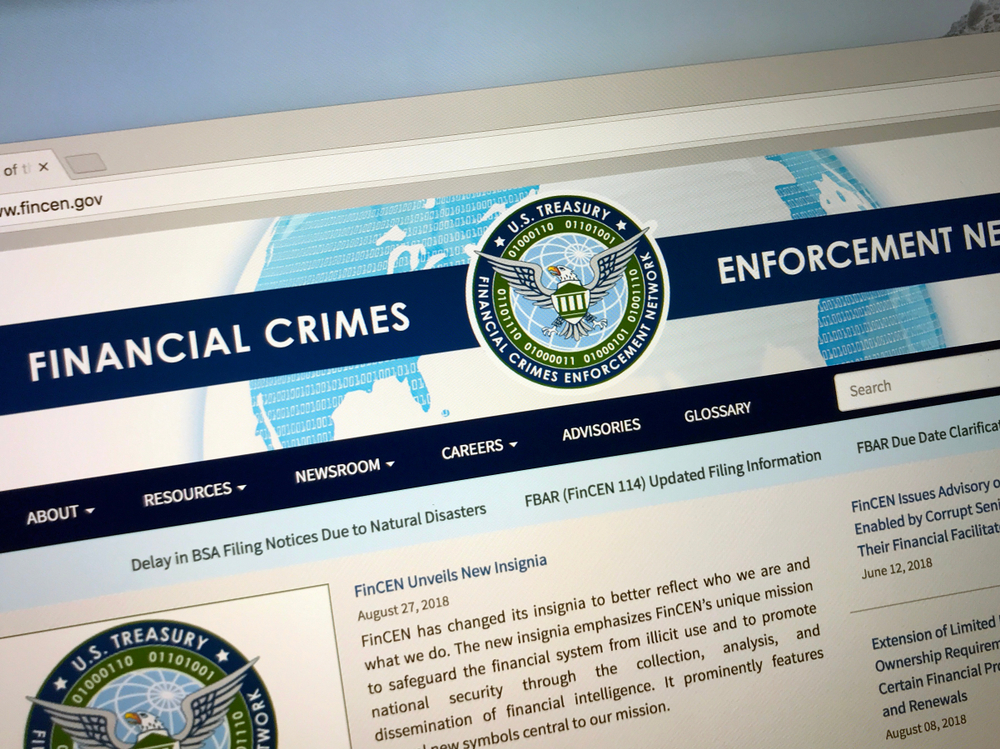
This blog has discussed the new Corporate Transparency Act twice recently. If you missed the discussion of the Small Entity Compliance Guide FinCEN issued in September, here is the link.
I wanted to share an additional piece of information. On September 30, FinCEN issued a Notice of Proposed Rulemaking to extend the deadline for filing beneficial ownership information reports. You can read the notice here.
This notice proposes to change the reporting deadline for new entities formed beginning in 2024 from 30 to 90 days. The press release indicates this extension is intended to reporting companies created or registered in 2024 additional time to understand their regulatory obligations under the new reporting rule. I think this change will be helpful, if implemented.
Please refer to the excellent September 2023 article in SC Lawyer entitled, “The Basic Ins and Outs of the Corporate Transparency Act” by Matthew B. Edwards and D. Parker Baker III.
This article provides an analysis of the basics of the Act, which is intended to help prevent money laundering, terrorist financing, corruption, tax fraud and other illicit activities. Many entities will be required to report information concerning beneficial owners to the Department of Treasury’s Financial Crimes Enforcement Network (FinCEN), identifying their beneficial owners and providing certain information about them.
The act may apply to virtually every commercial real estate transaction because of the use of multi-tier entity structures to achieve business objectives. Lawyers will need to review clients’ organizational structure charts to determine entity by entity whether an exemption is applicable. If not, organizational documents, stockholder agreements, operating agreements will have to be reviewed to determine beneficial ownership.
Reporting information will include the name, address, state of jurisdiction and taxpayer identification number of every beneficial owner. Other information may be required, such as passports and driver’s licenses. Penalties for failure to comply will include civil penalties of no more than $500 per day, fines of no more than $10,000 and imprisonment for no more than two years. A safe harbor is included for voluntarily and promptly correcting an inaccurate report within 90 days. FinCEN will issue rules prior the effective date.
Don’t panic. We have time. The effective date is January 1, 2024. For companies formed prior to the effective date, the initial report is due January 1, 2025. For companies formed on or after the effective date, the first report is due 30 days following formation. This new rule, if implemented, will change that time-frame to 90 days.
I think everyone’s initial advice as to new entities will be to refrain from forming those entities until the effects of the Act are analyzed. Existing entities will need to be analyzed pursuant to FinCEN’s rules.
Everyone will get through this together, and it’s likely that experts will emerge to help. This blog will keep you posted on new developments.
The new Corporate Transparency Act will apply to you and your clients!
This blog recently discussed the new Corporate Transparency Act. I’m repeating that blog in order to provide you with extra piece of information that should be helpful as you work to get ready for this new obligation of many clients. FinCen has recently published a compliance guide that you can read here.
Please refer to the excellent September 2023 article in SC Lawyer entitled, “The Basic Ins and Outs of the Corporate Transparency Act” by Matthew B. Edwards and D. Parker Baker III.
This article provides an analysis of the basics of the Act, which is intended to help prevent money laundering, terrorist financing, corruption, tax fraud and other illicit activities. Many entities will be required to report information concerning beneficial owners to the Department of Treasury’s Financial Crimes Enforcement Network (FinCEN), identifying their beneficial owners and providing certain information about them.
The act may apply to virtually every commercial real estate transaction because of the use of multi-tier entity structures to achieve business objectives. Lawyers will need to review clients’ organizational structure charts to determine entity by entity whether an exemption is applicable. If not, organizational documents, stockholder agreements, operating agreements will have to be reviewed to determine beneficial ownership.
Reporting information will include the name, address, state of jurisdiction and taxpayer identification number of every beneficial owner. Other information may be required, such as passports and driver’s licenses. Penalties for failure to comply will include civil penalties of no more than $500 per day, fines of no more than $10,000 and imprisonment for no more than two years. A safe harbor is included for voluntarily and promptly correcting an inaccurate report within 90 days. FinCEN will issue rules prior the effective date.
Don’t panic. We have time. The effective date is January 1, 2024. For companies formed prior to the effective date, the initial report is due January 1, 2025. For companies formed on or after the effective date, the first report is due thirty days following formation.
I think everyone’s initial advice as to new entities will be to refrain from forming those entities until the effects of the Act are analyzed. Existing entities will need to be analyzed pursuant to FinCEN’s rules during 2024.
Everyone will get through this together, and it’s likely that experts will emerge to help.
The new Corporate Transparency Act will apply to you and your clients!
Please refer to the excellent September 2023 article in SC Lawyer entitled, “The Basic Ins and Outs of the Corporate Transparency Act” by Matthew B. Edwards and D. Parker Baker III.
This article provides an analysis of the basics of the Act, which is intended to help prevent money laundering, terrorist financing, corruption, tax fraud and other illicit activities. Many entities will be required to report information concerning beneficial owners to the Department of Treasury’s Financial Crimes Enforcement Network (FinCEN), identifying their beneficial owners and providing certain information about them.
The act may apply to virtually every commercial real estate transaction because of the use of multi-tier entity structures to achieve business objectives. Lawyers will need to review clients’ organizational structure charts to determine entity by entity whether an exemption is applicable. If not, organizational documents, stockholder agreements, operating agreements will have to be reviewed to determine beneficial ownership.
Reporting information will include the name, address, state of jurisdiction and taxpayer identification number of every beneficial owner. Other information may be required, such as passports and driver’s licenses. Penalties for failure to comply will include civil penalties of no more than $500 per day, fines of no more than $10,000 and imprisonment for no more than two years. A safe harbor is included for voluntarily and promptly correcting an inaccurate report within 90 days. FinCEN will issue rules prior the effective date.
Don’t panic. We have time. The effective date is January 1, 2024. For companies formed prior to the effective date, the initial report is due January 1, 2025. For companies formed on or after the effective date, the first report is due thirty days following formation.
I think everyone’s initial advice as to new entities will be to refrain from forming those entities until the effects of the Act are analyzed. Existing entities will need to be analyzed pursuant to FinCEN’s rules during 2024.
Everyone will get through this together, and it’s likely that experts will emerge to help.
In May, this blog discussed the news that State Farm has pulled out of the state of California for new homeowners’ policy applications. I’m updating that blog to add similar concerns in Florida.
My family has a modest second home in North Litchfield Beach. It isn’t close to the ocean. My Fitbit clocks 700 steps to the beach, and most family members prefer to drive a golf cart for that reason. To call it a “raised beach house” is an understatement. Because of flood insurance concerns, the garage level of the house was required to be very tall when we built in 2011.
We can’t paint or power wash with the tallest ladders available to homeowners. If we had a big boat, we could park it in the garage. My point is that the living area of our house is so far above ground, that if it floods, it is likely that inland Pawleys Island and Georgetown County will also flood.
Thinking all the way back to Hurricane Hugo in 1989, my extended Georgetown County family members evacuated to Columbia to stay with us. Much to everyone’s surprise, our property in Columbia suffered more damage than their properties in Georgetown.
Earlier this year, we received a letter from our insurance agency indicating that it would attempt to obtain insurance for us for the upcoming insurance year, but we should be prepared for difficulty because of the frequency of hurricanes in our area. There is no reason our house should be difficult to insure other than its location on the beach side of Highway 17.
I share this information with South Carolina dirt lawyers, particularly those who practice in our coastal counties, for discussion purposes only. I’m not pushing a panic button by any means. But the headlines I read in May about State Farm’s decision to pull out of California as to new homeowners’ applications certainly caught my attention.
State Farm pointed to wildfire risks and construction cost inflation to justify its decision. Everyone is suffering from the latter, and, as to the former, the company didn’t attempt to limit the impact of its decision to those areas most affected by wildfires. Other stated concerns were climate change, reinsurance costs affecting the entire insurance industry, and global inflation. All of those concerns also affect all locations.
The company pulled out of the entire state as to new applications. And some news articles reported that State Farm is the largest insurer based on premium. The fact that the largest insurer pulled out of the third largest state seems impactful.
The announcement did state that existing customers will not be affected and that automobile insurance applications will continue to be accepted.
Now, we’re seeing similar headlines from Florida. Farmers has announced that it is discontinuing new coverage of auto, home and umbrella policies in an effort to manage risk exposure. News articles explain that Farmers is the fourth major insurer to leave the Florida market in the past year. Most companies cite the substantial risk of hurricanes.
There doesn’t appear to be anything we should do at this point, other than to keep our eyes and ears open as to developments in the area of insurance for ourselves and our clients.
Dirt lawyers hear stories of dysfunctional homeowners’ associations routinely. I have one for you!
My husband and I built a second home at the beach in a relatively modest subdivision in 2011. Many of the houses are owner occupied, but many are on rental plans. My twenty-something daughter met a neighbor who asked her two questions, (1) “Is this your family’s first vacation home?” and (2) Your parents aren’t going to rent this house, are they?” It wasn’t a good start to our relationship.
We had several issues with ARB approvals during the building process, which were handled by our builder. At one point, he threw his hands in the air in frustration and said, “These people need to understand this isn’t DeBordieu.” In other words, the ARB seemed to believe the subdivision is much more affluent than it is.
When we attended our first (and only as it turns out) annual meeting of the owners, the president of the board promptly threw one of our neighbors out of the meeting for asking a question! It was during the first five minutes of the meeting. We were shocked and vowed to steer clear of those meetings.
During our first winter, we received a very nasty letter telling us we had a dead tree that must be removed immediately. We were in Columbia, didn’t know about the dead tree, and even when we investigated, we decided the tree didn’t look any worse than the other winter trees. But we quickly took it down! We heard another neighbor received a similar letter telling him his mailbox was dirty and needed to be cleaned immediately.
We decided that we were going to be good neighbors and properly maintain our house and yard, but we would enjoy the beach and the gatherings of our growing family (including the four grandchildren we’ve been blessed with since we built the house) without getting involved with the neighbors.
Believe it or not, this story has a happy ending. Apparently, all the problems were caused by one homeowner who managed to get herself elected to the board and the ARB. She roamed the streets looking for rules violations and wrote the letters herself. About the time we figured out the problem, she and her husband, thankfully, moved. The trouble among the neighbors immediately improved. Now, we have delightful neighborhood parties and enjoy getting to know our neighbors. And it seems everyone has a story about the bad neighbor. We stand around drinking beer and telling stories.
My guess is that our earlier bad HOA is like the one described in Buckholder v. Palisades Park Owners Ass’n, Inc.*, a Virginia case where the HOA imposed an assessment on all owners to fund the cost of inspecting each property for the purpose of finding violations of the HOA rules. Homeowners sued to have the assessment declared invalid.
Virginia has a statute that provides, “(e)xcept as expressly authorized by the Act, the declaration or as otherwise provided by law, no association shall…make an assessment or impose a charge against a lot owner unless the charge is a fee for services provided or related to use of the common area.”
The court invalided the assessment and remanded the case to the lower court.
I read about this interesting case on the DIRT listserv that I recommend routinely. You won’t be sorry if you sign up for the emails!
Professor Dale Whitman who moderates the listserv commented that this is the sort of thing that gives HOAs a bad name. He also commented, “While most states won’t have a statute exactly like Virginia’s, the lesson of the case remains applicable. If an HOA or condo board is going to impose an assessment to be used on anything other than the common areas (or reserves that will ultimately benefit the common areas), it needs to be certain that it has the legal power to do so, either by virtue of an applicable statute or its own declaration. This is particularly true if the assessment is almost certain to irritate and raise the hackles of some owners, as this one was.”
Several lawyers commented about the nature of folks who like to serve on HOA boards. Read the comments if you need a good laugh. The listserv is searchable.
I think I’ll share the case with my neighbors at the beach.