Here’s a gift, SC dirt lawyers: Your official recording fee list!

Standard

calculator house

This blog reported on May 29 that South Carolina Governor McMaster signed House Bill 3243 into law on May 16. This legislation, called the Predictable Recording Fee Act (S.C. Code §8-21-310), will streamline document filing in ROD offices by creating predictable fees for many commonly recorded documents such as deeds and mortgages. The new law will take effect on August 1, 2019. You and your staff will no longer have to count pages for documents to be recorded!

You can read the short but effective statute here.

My friend and colleague, Jennifer Rubin, was instrumental in the creation and passage of this legislation. Jennifer drafted the legislation and spearheaded Palmetto Land Title Association’s efforts to get the bill passed. Since the legislation was enacted, Jennifer has worked with members of South Carolina Court Administration, as well as leaders in ROD offices throughout the state, to draft a uniform recording fee schedule.  Attached is the newly created official recording fee list.

This law should simplify and streamline your practice and result in significant time and money savings for you and your clients.

SC Court of Appeals provides lis pendens primer

Standard

Termination on the merits is required for malicious prosecution claim

gavel house

A lis pendens is a handy tool for real estate lawyers. When litigation is brought affecting title to real estate, a lis pendens gives notice to third parties that sales, loans and construction draws should, most likely, come to a screeching halt until the issues affecting title are resolved.

Back in the days when I was in private practice, malicious prosecution claims arose relatively routinely when lis pendens were filed in cases where the title to real estate was not in question. That situation is the subject of a Court of Appeals case from early this year.*

The case involved Somerset Point at Lady’s Island, a subdivision in beautiful Beaufort County. The developer, Coosaw, and River City, one of the construction companies building homes in the subdivision, became involved in a dispute about design and construction standards. River City accused Coosaw of failing to enforce the standards with other builders, and Coosaw, in turn, accused River City of failing to comply with the standards.

River City brought suit in 2011 alleging causes of action for breach of fiduciary duty, breach of contract, and unfair trade practices. Coosaw counterclaimed and crossclaimed against River City for violating the design standards and sought a temporary injunction against continued construction. Coosaw also filed a lis pendens describing one property, Lot 16, in Somerset Point.

River City moved to strike the lis pendens on the ground that title to Lot 16 was not at issue. The master-in-equity agreed and struck the notice of lis pendens. On reconsideration, the master stated, in part, that striking the lis pendens would allow River City’s construction lender to resume providing construction draws and would allow River’s City’s project to be completed. Coosaw appealed but ultimately withdrew the appeal after River City’s sale of Lot 16 rendered the issue moot.

In late 2014, River City filed the lawsuit at issue, alleging causes of action for malicious prosecution and abuse of process based on Coosaw’s filing the lis pendens in the 2011 action. River City argued the cause of action for malicious prosecution was proper because the lis pendens had been terminated in its favor.

The Court of Appeals listed the elements of malicious prosecution to include termination of the proceedings in the plaintiff’s favor. River City argued that a lis pendens is an ancillary proceeding, and termination of an ancillary proceeding will support a malicious prosecution claim. The Court of Appeals held, however, that a lis pendens is not an ancillary proceeding but is simply a notice of the proceeding.

Citing earlier cases, the Court reviewed the law of lis pendens:

  • A lis pendens is a statutory doctrine designed to inform prospective purchasers or encumbrancers that a particular piece of property is subject to litigation.
  • A properly filed lis pendens binds subsequent purchasers or encumbrancers to all proceedings evolving from the litigation.
  • Generally, the filing of a lis pendens places a cloud on title which prevents the owner from freely disposing of the property before the litigation is resolved.
  • The lis pendens mechanism is not designed to aid either side in a dispute between private parties. Rather, the lis pendens is designed to protect third parties by alerting them of pending litigation that may affect title.
  • When no real property is implicated, no lis pendens should be filed.
  • A lis pendens is merely a form of pleading that does not provide any substantive right. It is simply a notice.

The Court held that the termination of a lis pendens to support a malicious prosecution cause of action must be a victory on the merits of the litigation, not a termination based solely on technical or procedural considerations. In the case at hand, the underlying merits remained pending after the termination of the lis pendens. The Court held that the subject action is, therefore, premature.

In short, the Court held that a maliciously filed lis pendens can act as the primary basis for a malicious prosecution claim, provided the plaintiff can establish a favorable termination of the lis pendens reflective of the merits of the underlying action.

*Gecy v. Somerset Point at Lady’s Island Homeowners Association, Inc., South Carolina Court of Appeals Opinion 5622 (January 30, 2019).

Flat recording legislation passes!

Standard

August 1, 2019 is the effective date for this time-saving law

businessman thought bubble scales

On May 16, 2019, Governor Henry McMaster signed House Bill 3243 into law. You can read the short but effective statute here. House Bill 3243, better known as the Predictable Recording Fee Act (S.C. Code §8-21-310), will streamline the filing of documents in the register of deeds offices across the state by creating predictable fees for many commonly recorded documents such as deeds and mortgages. The new law will take effect on August 1, 2019. You and your staff will no longer have to count pages for documents to be recorded!

My friend and colleague, Jennifer Rubin, began work on this predictable recording Bill in the fall of 2016 when she was the President of the Palmetto Land Title Association. Our Agent and friend, Cynthia Blair, who is currently the American Land Title Association President, asked for Jennifer’s help in crafting, drafting and helping to turn the idea of predictable filing fees into law. Accepting that challenge and with the help and support of Chicago Title and PLTA, Jennifer began work on the Bill and began coordinating with the various stakeholders who were: The American Land Title Association, The South Carolina Association of Clerks of Court and Register of Deeds, The Association of Counties, The South Carolina Association of Realtors, The South Carolina Bankers Association, The Mortgage Bankers of the Carolinas, The South Carolina Bar Association, and the American Resort Developers Association on various versions of the Bill.

Jennifer said she was particularly thankful for the efforts of PLTA’s Legislative Committee led by attorney John Langford and the major contributions of her friend Julie Stutts, the deputy RMC for Aiken County.  She also appreciated the advocacy, guidance and support of lobbyists James Knox, Sharon Wilkerson, Neil Rashley, and Kali Turner and their respective groups.  Without everyone pushing this bill forward along and along, the creation of this law would not have been possible.

This new law will finally allow South Carolina real estate attorneys to fully comply with TRID regulations, provide clients and other parties with accurate final closing costs, and keep our bank accounts orderly. Please note that while the new law does not go into effect until August 1st, there is no grace period. So if you have closings on or near the first of August, please be sure to review the new statute to ensure that you’ve collected the correct amount for recording fees.

Nat Hardwick ordered to pay $40M in restitution

Standard
Nat Hardwick

Nathan E. Hardwick IV

This blog discussed Nat Hardwick, a name familiar to many South Carolina real estate lawyers, last fall when he was convicted of embezzling more than $25 million from his former companies, including his former law firm, Morris Hardwick Schneider. He was discussed again in February when he was sentenced to 15 years in prison. His co-conspirator and controller, Asha Maurya, was sentenced to seven years after she cooperated with the government. On May 9, Hardwick and Maurya were ordered to pay $40 million in restitution.

Nathan E. Hardwick IV, 53, described himself as the face of Morris Hardwick Schneider, an Atlanta residential real estate and foreclosure firm that grew into sixteen states, including South Carolina. The firm once had more than 800 employees and boasted of offices in Charleston, Hilton Head, Columbia and Greenville.

On October 12, Hardwick was convicted in federal court in Atlanta of 21 counts of wire fraud, one count of conspiracy to commit wire fraud, and one count of making false statements to a federally insured financial institution. In federal court, sentencing is typically delayed, and the convicted person is released and allowed to get his affairs in order. In this case, however, Hardwick had been released pending trial on bond. After his conviction, he was described by the U.S. Attorney who prosecuted him as a flight risk and was handcuffed and taken to jail immediately.

This story hits close to home. My company was one of the victims of the crimes and one of the parties awarded restitution because it funded the firm’s escrow accounts when the losses were discovered.

The prosecutor described an extravagant lifestyle that Hardwick enjoyed at the expense of others. The case was said to be particularly troubling because the illegal activity was orchestrated by a lawyer who swore an oath to uphold the law and represent his clients with integrity. The U.S. Attorney said he hoped the case sent the message that the FBI and the U.S. Attorney’s office will not tolerate this type of white-collar crime.

According to the evidence, from January 2011 through August 2014, Hardwick stole more than $26 million from his law firm’s accounts, including its trust accounts, to pay his personal debts and expenses. The firm’s audited financial statements showed that the firm’s net income from 2011 through 2013 was approximately $10 million. During that time, according to the evidence, Hardwick took more than $20 million from firm accounts.

Asha Maurya, who managed the firm’s accounting operations, reached an agreement last May with the U.S. Attorney’s office and pled guilty. She was expected to testify at the trial, but was unexpectedly not called as a witness. Her lawyer argued at the restitution hearing that she should be liable for only $900,000, the amount she admitted taking from the firm for her own benefit. She had agreed to pay restitution in that amount as a part of her plea bargain.

During the trial, Hardwick did take the stand in his defense and attempted to blame Maurya with the theft. He said that he trusted her to his detriment, that he was entitled to the funds, and that he was unaware that the funds were wired from trust accounts. Hardwick testified for more than a day and explained that he believed Maurya followed proper law firm procedures.

On the stand, Hardwick, described as the consummate salesman, said that he gave his cellphone number to almost everyone. He said he returned calls and messages within a few hours and instructed his employees to do the same. He apparently believed himself to be a master in marketing and customer service and prided himself in focusing on the firm’s expansion strategy. He hoped to expand to all fifty states and make money through a public stock offering.

With his ill-gotten gains, Hardwick bought expensive property, made a $186,000 deposit for a party on a private island, spent $635,000 to take his golfing friends to attend the British Open in 2014, paid off bookies, alimony obligations, and sent more than $5.9 million to various casinos, all according to trial evidence. Hardwick’s activities lead to the loss of his law license and the bankruptcy of his firm.

Hardwick’s former partners, Mark Wittstadt and his brother, Gerald Wittstadt, were each awarded $6 million in restitution, and Art Morris, a retired member of the firm, was awarded $5 million.  All claim damage to their reputations in addition to substantial monetary losses.

Court of Appeals affirms Circuit Court in “nefarious conduct” Awendaw annexation case

Standard

awendaw

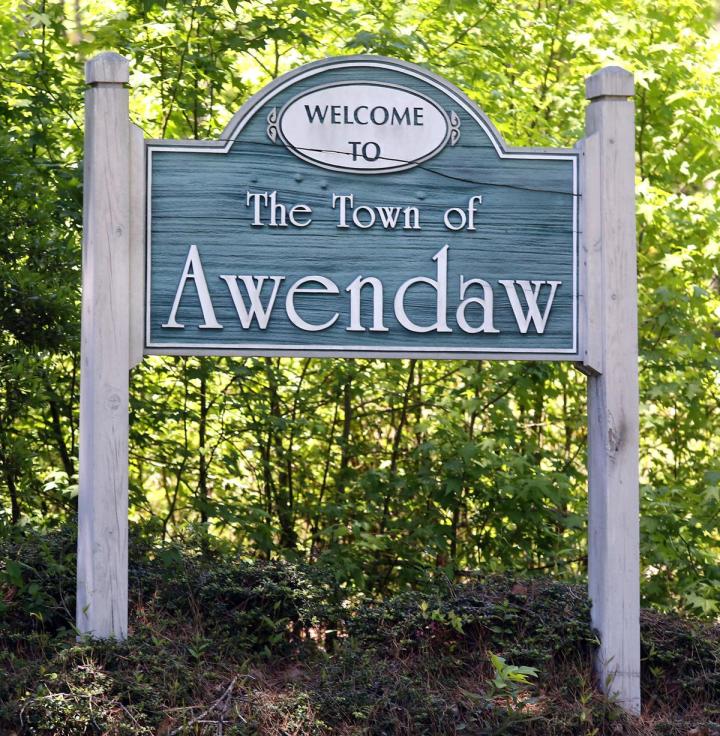
In December of last year, this blog discussed a South Carolina Supreme Court case in which the Court called the Town of Awendaw’s annexation attempt “nefarious conduct”.* The case was remanded to the Court of Appeals, which affirmed the Circuit Court’s decision that the annexation attempt was void ab initio.**

The Town of Awendaw’s annexation of a ten-foot wide, 1.25 mile-long parcel of land within beautiful Francis Marion National Forest was challenged by two individuals and the South Carolina Coastal Conservation League.

The sole question before the Supreme Court last year was whether the challengers had standing to contest the annexation in a case where the “100 percent method” of annexation is used, meaning all property owners petition the municipality to have their property annexed.

The case involved three parcels of land serving as links in a chain necessary to satisfy the contiguity requirement of annexation. The first link is the ten-foot strip managed by the United States Forest Service. The second link is owned by the Mt. Nebo AME Church, and the third link is approximately 360 acres of unimproved real estate surrounded by the National Forest on three sides and owned by Defendant EBC, LLC.

In the fall of 2003, the Town sought to annex the ten-foot strip which required a petition signed by the Forest Service. Town representatives sent the Forest Service four letters seeking approval. Through verbal discussions, the Town learned the Forest Service was opposed to annexations because of their impact on the Service’s ability to conduct controlled fire burns. Additionally, the Forest Service indicated any petition would have to come from Washington, D.C., officials, a process that might take several years.

The Town annexed the property anyway in 2004, relying on a 1994 letter from a Forest Service representative, stating it had “no objection” to annexing several strips of property in the same vicinity. However, the Town had previously stated that it realized this letter was unclear.

In 2009, EBC, LLC requested that Awendaw annex its property, and the Town passed an ordinance annexing that property and simultaneously rezoning it as a “planned development” to permit residential and commercial development. In annexing the EBC property, the Town relied on the ten-foot National Forest strip as well as the church property. Without either component, there would be no contiguity and annexation would be impossible.

In November of 2009, the petitioners filed a complaint against the Town and EBC alleging, among other things, that the Town lacked authority to annex the ten-foot strip of National Forest property because the Forest Service never submitted an annexation petition. The Town and EBC moved for partial summary judgment contending the petitioners lacked standing and that the statute of limitations had run.

At trial, a surveyor testified that the 1994 Forest Service letter referred to a different strip of land. The Town’s administrator responded that the Town had used the 1994 letter at least seven times, and that he believed the letter incorporated the property in question. The petitioners testified they were concerned about potential harm caused by developing the property, including damage to unique species of animals. They testified that they were also concerned that the proposed development would threaten the Forest Service’s ability to conduct the controlled burns necessary to maintain the health of the forest.

The trial court found that the petitioners had standing and concluded that the annexations were void because the Town never received the required petition from the Forest Service. The Court of Appeals concluded that the petitioners lacked standing.

In analyzing the standing issue, the South Carolina Supreme Court discussed its prior cases that held “non-statutory parties” (meaning, non-property owners of the annexed properties) lacked standing to challenge a purportedly unauthorized annexation. Those cases, however, were premised on good faith attempts by annexing bodies, according to the Court.

The Supreme Court did not believe the General Assembly intended in establishing the statutory framework for annexation to preclude standing where there is a credible allegation that the annexing body engaged in “deceitful conduct”. The Court held that a party that can demonstrate the annexing body engaged in “nefarious conduct” has standing to challenge the annexation.

The Court also discussed the public importance exception to the standing rule. This exception states that standing may be found when an issue is of such public importance as to require its resolution for future guidance. The Court stated that the petitioners had satisfied the “future guidance” prong of the public importance exception because the Town had used the 1994 letter numerous times and fully intended to use it again.

The case was remanded to the Court of Appeals to address the Towns’ remaining arguments. The Court of Appeals, apparently noting the Supreme Court’s strong language and robust opinions, reversed course and affirmed the lower court’s ruling that the annexation was void.


*Vicary v. Town of Awendaw, South Carolina Supreme Court Opinion No. 27855 (December 19, 2018).

**South Carolina Court of Appeals Opinion No. 5645 (May 1, 2019).

Court of Appeals decides interesting estate case

Standard

From a “dirt” point of view, it seems cases where I am able to agree with the South Carolina Court of Appeals are few and far between these days. But an estate case was handed down on April 3 that should make perfect sense to all dirt lawyers*.

last will and testament

The case involved the will of William Paradeses who lived in Richland County and died in early 2016. The will, which was executed in 2008, was discovered in the home of the deceased shortly after his death.

The will contained a strikeout of Item IV(2), which originally provided for a $50,000 bequest to Fay Greeson, the respondent in this case. Next to the deletion was a handwritten note: “Omit #2 W.D. Paradeses.”  The will also contained a handwritten addition to Item IV(1), which placed a condition on Paradeses’ bequest of his interest in the Saluda Investment Company. That notation stated: “A.D. and J.D. Paradeses will have control until it is sold and no one else.” There were no witnesses to either of these changes. A.D. and J.D. Paradeses agreed to comply with the Testator’s second notation.

Georganna Paradeses, the personal representative, filed a petition for a declaratory judgment seeking an order from the probate court declaring the rights of the parties and the effect of the notations. Faye Greeson filed an answer denying the deletion of her bequest was made by the testator and asserting the deletion failed because of improper attestation. The remaining family answered and alleged the testator made the notations with the intent to change his will.

The probate court found that the addition and deletion were consistent with a codicil and required proper execution. The probate court therefore held that the bequest of $50,000 to Faye Greeson remained valid. The remaining notation on the will was not in dispute.

The Court of Appeals relied on South Carolina Code §62-2-502, which states that a will may be freely modified or revoked by a mentally competent testator until death, and §62-2-506(a), which states that a will may be revoked by executing a subsequent will or by burning, tearing, canceling, obliterating or destroying the document with the intent to revoke it.

The appellants argued that the deletion in the will amounted to a partial revocation, which should have been allowed by §62-2-506(a) despite the absence of witnesses. They cited a 1912 South Carolina Supreme Court case** which held a strikeout in a will amounted to a revocation of the stricken provision.

The Court of Appeals, however, relied on another South Carolina Supreme Court case** that decided changes to a will with both an addition and a deletion were more akin to a codicil, which requires the normal formalities of the execution of a will. The testator’s notes in the case at hand were held by the Court of Appeals to amount to a codicil, and the bequest to Faye Greeson stood.

Dirt lawyers like certainty, and, for that reason, we like this case!


*In the Matter of Paradeses, South Carolina Court of Appeals Opinion 5635 (April 3, 2019)

**Citations omitted.

SC Court of Appeals takes a deep dive into developer duty case

Standard

Was I’On Village’s developer obligated to convey specific amenities to the HOA?

IOnLafayette

Photo courtesy of Iioncommunity.com

This case was called “convoluted” by our Court of Appeals, and I couldn’t agree more with that characterization! The February 27 decision involved I’On Village in Mt. Pleasant. * The community, founded in 1995, was named for the first mayor of the Town of Sullivan’s Island, Jacob Bond I’On and is a mixed use “new urbanist development”, meaning it consists of charming walkable neighborhoods containing a wide range of housing and job types.

At the heart of the case is the developer’s alleged promise to convey certain amenities in a residential community to the homeowners’ association. Specifically, homeowners allege the developers promised to convey a community dock and creekside park on a lot containing a boat ramp to the owners’ association but instead sold those amenities to a third party. The developers alleged that they promised to convey and did convey a “generic” community dock and creekside park to the association, but not the specific ones located on the boat ramp lot.

This blog will attempt to stay out of the weeds of this 27-page case in an effort to point out only those decisions of the Court that may be of interest to real estate practitioners.

Does a developer have a fiduciary relationship with the homeowners’ association and its members requiring it to convey common areas?

The Court’s answer is “yes”, but the duties of the developer should be determined by a careful reading of the restrictive covenants.

The developer had argued that the “business judgment” rule would control, and that absent a showing of bad faith, dishonesty or incompetence, the judgment of the developer should not be set aside in a judicial action. The Court rejected the argument that the business judgment rule precludes the existence of a fiduciary relationship. Citing an earlier case, the Court stated that the business judgment rule is compatible with the good faith requirement for fiduciaries.

The Court said a confidential or fiduciary relationship exists when one reposes a special confidence in another, so that the latter, in equity and good conscience, is bound to act in good faith with due regard to the interests of the one imposing the confidence.  Citing a second case, the Court said anyone acting in a fiduciary relationship shall not be permitted to make use of that relationship to benefit his own personal interests, specifically, a developer in control of an owners’ association may not make decisions that benefit the developer’s own interest at the expense of the association and its members.

However, the Court held, South Carolina precedent does not impose on developers a generic fiduciary duty to convey title to a subdivision’s common areas to the owners’ association in every case. Rather, the restrictive covenants of the subdivision controls. The Court decided that the record in the case did not support the duty of the developers to convey to the association the specific amenities demanded.

Does the after-acquired property doctrine apply to a recreational easement in South Carolina?

The Court’s answer is “no”.

In February of 2000, the developer conveyed to the owners’ association a “Recreational Easement and Agreement to Share Costs”. Curiously, the developer did not obtain title to the property in question until six months later. At trial, the circuit court issued an order declaring the document invalid and void ab initio.

The developer argued on appeal that the after-acquired property doctrine would have acted to ratify the easement when title was obtained, but the Court of Appeals, finding no South Carolina authority for the proposition that this doctrine applies to the grant of an easement, declined to apply the doctrine to the recreational easement in question.

 May a derivative action be filed by property owners when a developer-controlled owners’ association fails to protect the interests of the owners?

The Court’s answer is “maybe”, but only if the complaint properly outlines the efforts made by the owners to obtain the action sought from the board of directors of the association and the reasons for failure to obtain the action or for not making the effort. The pleadings in this case did not satisfy the “demand requirement” to the Court’s satisfaction nor did they allege facts indicating a demand on the board of directors would have been futile. So the Court rejected the derivative action.

Litigators may find fascinating long discussions about statutes of limitations in various causes of action, abuse of process, amalgamation of parties and awards of attorney’s fees, but I’m opting to spare dirt lawyers any discussion of those issues. Read the case if you find those issues captivating. This litigation is not over as the Court of Appeals remanded the case for consideration of several issues by the trial court. My guess is that we will probably visit this case again.

 *  Walbeck v. The I’On Company, LLC, South Carolina Court of Appeals Opinion 5588 (February 27, 2019)

Supreme Court calls Awendaw’s annexation efforts “nefarious conduct”

Standard

Conduct results in standing for challengers

awendaw

The Town of Awandaw’s annexation of a ten-foot wide, 1.25 mile-long parcel of land within beautiful Francis Marion National Forest was challenged by two individuals and the South Carolina Coastal Conservation League in a recent South Carolina Supreme Court case.*

The sole question before the Court was whether the challengers had standing to contest the annexation in a case where the “100 percent method” of annexation is used, meaning all property owners petition the municipality to have their property annexed.

The case involved three parcels of land serving as links in a chain necessary to satisfy the contiguity requirement of annexation. The first link is the ten-foot strip managed by the United States Forest Service. The second link is owned by the Mt. Nebo AME Church, and the third link is approximately 360 acres of unimproved real estate surrounded by the National Forest on three sides and owned by Defendant EBC, LLC.

In the fall of 2003, the Town sought to annex the ten-foot strip which required a petition signed by the Forest Service. Town representatives sent the Forest Service four letters seeking approval. Through verbal discussions, the Town learned the Forest Service was opposed to annexations because of their impact on the Service’s ability to conduct controlled fire burns. Additionally, the Forest Service indicated any petition would have to come from Washington, D.C., officials, a process that might take several years.

The Town annexed the property anyway in 2004, relying on a 1994 letter from a Forest Service representative, stating it had “no objection” to annexing several strips of property in the same vicinity. However, the Town had previously stated that it realized this letter was unclear.

In 2009, EBC, LLC requested that Awendaw annex its property, and the Town passed an ordinance annexing that property and simultaneously rezoning it as a “planned development” to permit residential and commercial development. In annexing the EBC property, the Town relied on the ten-foot National Forest strip as well as the church property. Without either component, there would be no contiguity and annexation would be impossible.

In November of 2009, the petitioners filed a complaint against the Town and EBC alleging, among other things, that the Town lacked authority to annex the ten-foot strip of National Forest property because the Forest Service never submitted an annexation petition. The Town and EBC moved for partial summary judgment contending the petitioners lacked standing and that the statute of limitations had run.

At trial, a surveyor testified that the 1994 Forest Service letter referred to a different strip of land. The Town’s administrator responded that the Town had used the 1994 letter at least seven times, and that he believed the letter incorporated the property in question. The petitioners testified they were concerned about potential harm caused by developing the property, including damage to unique species of animals. They testified that they were also concerned that the proposed development would threaten the Forest Service’s ability to conduct the controlled burns necessary to maintain the health of the forest.

The trial court found that the petitioners had standing and concluded that the annexations were void because the Town never received the required petition from the Forest Service. The Court of Appeals concluded that the petitioners lacked standing.

In analyzing the standing issue, the South Carolina Supreme Court discussed its prior cases that held “non-statutory parties” (meaning, non-property owners of the annexed properties) lacked standing to challenge a purportedly unauthorized annexation. Those cases, however, were premised on good faith attempts by annexing bodies, according to the Court.

The opinion at hand stated that the Court did not believe the General Assembly intended in establishing the statutory framework for annexation to preclude standing where there is a credible allegation that the annexing body engaged in “deceitful conduct”. The Court held that a party that can demonstrate the annexing body engaged in “nefarious conduct” has standing to challenge the annexation.

The Court also discussed the public importance exception to the standing rule. This exception states that standing may be found when an issue is of such public importance as to require its resolution for future guidance. The Court stated that the petitioners had satisfied the “future guidance” prong of the public importance exception because the Town had used the 1994 letter numerous times and fully intended to use it again.

The case was remanded to the Court of Appeals to address the Towns’ remaining arguments.

*Vacary v. Town of Awendaw, South Carolina Supreme Court Opinion No. 27855 (December 19, 2018).

Deadline approaching for new HOA recording requirement

Standard

“Governing documents” should be recorded by January 10

gavel house

The South Carolina Homeowners Association Act, an amendment to Title 27 of the South Carolina Code which included new §27-30-130, was signed into law by Governor Henry McMaster and became effective on May 17.

The act states that in order to continue to be enforceable, a homeowners association’s governing documents must be recorded in the county where the property is located by January 10, 2019 for associations in place on the effective date of the legislation. For new associations or for amendments to governing documents, recording must take place by January 10 of the year following the adoption or amendment of the documents.

The requirement to record Master Deeds is, of course, not new to South Carolina practitioners. We have recorded Master Deeds and their required attachments since the creation of Horizontal Property Regimes became possible in South Carolina. The new requirement applies to rules, regulations and bylaws of associations, including amendments to rules, regulations and bylaws. Practitioners have not routinely recorded these documents. It is interesting that recording rules, regulations and bylaws will not be subject to the requirement of witnesses and acknowledgements of §30-5-30.

A memorandum from the Register of Deeds of Horry County states that these documents will be accepted electronically and across the counter. Documents recorded across the counter must contain an original wet signature plus the printed name and title of the signatory. Horry County will also require contact information (address, email address or telephone number) of the person recording the document, the Homeowners Association’s name and the physical address or legal description of the property. Horry County also highly recommends, but does not require, the book and page number of the recorded Master Deed. This additional information may be included in a cover sheet.

The law also creates a new duty to disclose whether real property being sold is part of a homeowners association and a duty to disclose the condition of floors, foundations, plumbing, electrical and other components of the property. Real estate practitioners may be called upon to assist with these newly-created disclosures.

Another requirement of the legislation includes a 48-hour notice for meetings that are intended to increase budgets by more than ten percent. A requirement for access to community documents by owners was also added. This requirement was previously in place for associations that are created as non-profit corporations. The new law makes it clear that all homeowners associations must provide similar access to documents for owners. The law also gives magistrate’s courts concurrent jurisdiction for monetary disputes of up to $7,500 involving homeowners association disputes.