
Let’s collectively start a trend in South Carolina: Shifting home closings away from the end of the month

Standard

I’m going on the record with a strong second to my friend, Gary Pickren’s blog!

end of month calenda NOPE.

Gary Pickren, an excellent residential real estate attorney with an outstanding law firm, Blair|Cato|Pickren|Casterline, here in Columbia posted a blog on May 12 entitled “Save Yourself a Huge Headache!!!!” You can read Gary’s blog in its entirety here.

Gary was apparently reacting to a crazy month-end for his office in April. He reported 25 closings on Tuesday, April 30 as opposed to 3 or 4 on Wednesday, May 1. And the closings that occurred on May 1 were a result of late loan packages from lenders. He was asking his real estate agents to save themselves headaches by scheduling closings throughout the month.

Closings at the end of the month are not a new phenomenon. As far back as I can remember (and that’s a long way back), real estate agents have scheduled closings at the end of the month. Why? Because interim interest has to be paid for only one day, reducing the funds the buyer has to bring to the closing.

Does closing at the end of the month save the buyer money? No! Interest will be paid from the date of the closing regardless. The only difference is the amount of the interim interest, the funds brought to the closing table. If interest is not brought to the closing, it is paid with the first payment.

I sent Gary’s blog around to my office members and got some unexpected strong reactions!

TAnderson

Troyce Anderson, who was formerly a closing paralegal in Greenville, said scheduling closings throughout the month would probably reduce claims because law firms would be able to close with less stress and avoid common mistakes.

 

MTucker

Melissa Christensen, who was formerly a closing paralegal in the Myrtle Beach area, said her daughter, Savannah, was born on May 30, and the family always has to schedule birthday parties in early June.


SSigwart 2018

Speaking of birth issues, Sara Sigwart, who was formerly a closing paralegal in Hilton Head and Charleston, said that one of her fellow closing paralegals successfully searched for a doctor who would schedule a delivery of her child on the 20th of the month so she could celebrate birthdays with her child on the actual birth date.  Sara’s other reply to Gary’s blog was “PREACH!”


DSeay


Denise Seay, who was formerly a real estate paralegal in Hilton Head said, “Oh good grief-we used to say Realtors only knew one day in the month!”


If our office staff reacted this strongly, imagine how strongly your paralegals, who are currently in the closing trenches, would react. Think about how much easier it would be to manage your office and everyone’s schedules! Your holidays and vacations would even be more manageable.

Gary’s blog calls the end of the month in a residential closing office “organized chaos”.  It might also be termed a huge “traffic jam” for lenders, real estate agents, closing attorneys, paralegals, abstractors, and even buyers and sellers. Let’s follow Gary’s advice and spread closings throughout the month!

You don’t have to be the “bad guy” by using your own words to pass this thought on to real estate agents. Send them this blog!
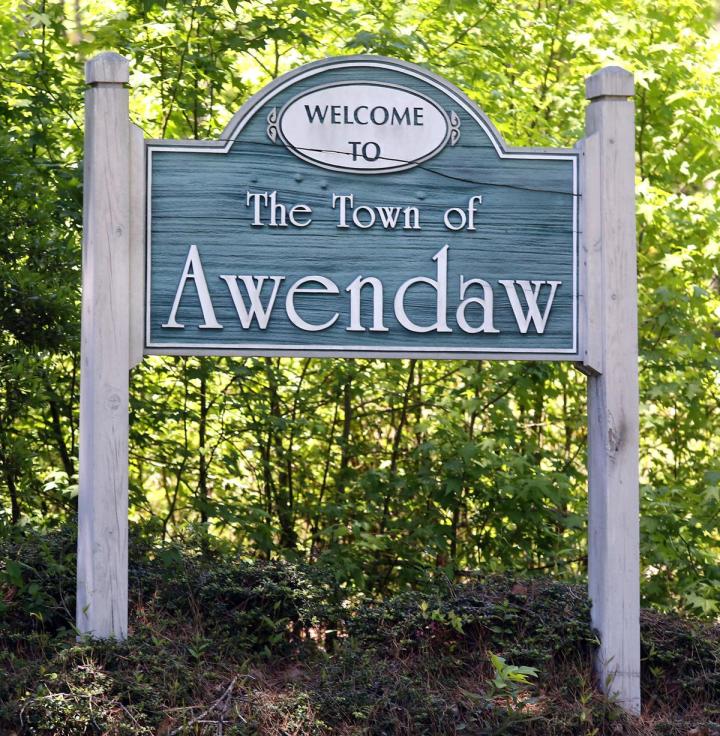

Court of Appeals affirms Circuit Court in “nefarious conduct” Awendaw annexation case

Standard

awendaw

In December of last year, this blog discussed a South Carolina Supreme Court case in which the Court called the Town of Awendaw’s annexation attempt “nefarious conduct”.* The case was remanded to the Court of Appeals, which affirmed the Circuit Court’s decision that the annexation attempt was void ab initio.**

The Town of Awendaw’s annexation of a ten-foot wide, 1.25 mile-long parcel of land within beautiful Francis Marion National Forest was challenged by two individuals and the South Carolina Coastal Conservation League.

The sole question before the Supreme Court last year was whether the challengers had standing to contest the annexation in a case where the “100 percent method” of annexation is used, meaning all property owners petition the municipality to have their property annexed.

The case involved three parcels of land serving as links in a chain necessary to satisfy the contiguity requirement of annexation. The first link is the ten-foot strip managed by the United States Forest Service. The second link is owned by the Mt. Nebo AME Church, and the third link is approximately 360 acres of unimproved real estate surrounded by the National Forest on three sides and owned by Defendant EBC, LLC.

In the fall of 2003, the Town sought to annex the ten-foot strip which required a petition signed by the Forest Service. Town representatives sent the Forest Service four letters seeking approval. Through verbal discussions, the Town learned the Forest Service was opposed to annexations because of their impact on the Service’s ability to conduct controlled fire burns. Additionally, the Forest Service indicated any petition would have to come from Washington, D.C., officials, a process that might take several years.

The Town annexed the property anyway in 2004, relying on a 1994 letter from a Forest Service representative, stating it had “no objection” to annexing several strips of property in the same vicinity. However, the Town had previously stated that it realized this letter was unclear.

In 2009, EBC, LLC requested that Awendaw annex its property, and the Town passed an ordinance annexing that property and simultaneously rezoning it as a “planned development” to permit residential and commercial development. In annexing the EBC property, the Town relied on the ten-foot National Forest strip as well as the church property. Without either component, there would be no contiguity and annexation would be impossible.

In November of 2009, the petitioners filed a complaint against the Town and EBC alleging, among other things, that the Town lacked authority to annex the ten-foot strip of National Forest property because the Forest Service never submitted an annexation petition. The Town and EBC moved for partial summary judgment contending the petitioners lacked standing and that the statute of limitations had run.

At trial, a surveyor testified that the 1994 Forest Service letter referred to a different strip of land. The Town’s administrator responded that the Town had used the 1994 letter at least seven times, and that he believed the letter incorporated the property in question. The petitioners testified they were concerned about potential harm caused by developing the property, including damage to unique species of animals. They testified that they were also concerned that the proposed development would threaten the Forest Service’s ability to conduct the controlled burns necessary to maintain the health of the forest.

The trial court found that the petitioners had standing and concluded that the annexations were void because the Town never received the required petition from the Forest Service. The Court of Appeals concluded that the petitioners lacked standing.

In analyzing the standing issue, the South Carolina Supreme Court discussed its prior cases that held “non-statutory parties” (meaning, non-property owners of the annexed properties) lacked standing to challenge a purportedly unauthorized annexation. Those cases, however, were premised on good faith attempts by annexing bodies, according to the Court.

The Supreme Court did not believe the General Assembly intended in establishing the statutory framework for annexation to preclude standing where there is a credible allegation that the annexing body engaged in “deceitful conduct”. The Court held that a party that can demonstrate the annexing body engaged in “nefarious conduct” has standing to challenge the annexation.

The Court also discussed the public importance exception to the standing rule. This exception states that standing may be found when an issue is of such public importance as to require its resolution for future guidance. The Court stated that the petitioners had satisfied the “future guidance” prong of the public importance exception because the Town had used the 1994 letter numerous times and fully intended to use it again.

The case was remanded to the Court of Appeals to address the Towns’ remaining arguments. The Court of Appeals, apparently noting the Supreme Court’s strong language and robust opinions, reversed course and affirmed the lower court’s ruling that the annexation was void.


*Vicary v. Town of Awendaw, South Carolina Supreme Court Opinion No. 27855 (December 19, 2018).

**South Carolina Court of Appeals Opinion No. 5645 (May 1, 2019).

SC Supreme Court “debars” two lawyers for UPL violations

Standard

Mortgage modification practices get out-of-state lawyers in trouble

red card - suit

On April 24th, two out-of-state lawyers were debarred by the South Carolina Supreme Court.* If the word “debar” isn’t familiar to you, don’t feel alone. Miriam-Webster indicates the definition of the word, used in a legal sense is, “to bar from having or doing something.” Our Supreme Court uses the word to mean to preclude a lawyer from another state from practicing law or seeking any form of admission to practice law in South Carolina, including pro hac vici admission, without first obtaining an order of the Supreme Court.

What did these two lawyers do to cause the wrath of our Court? They were both involved in mortgage modification schemes in multiple states. Naderi was licensed in California and provided legal services operation as the Pacific National Law Center (PNLC).

Ochoa was previously licensed in Florida but was disbarred in 2018 for misconduct involving lack of competence, failure to keep clients’ property safe, and conduct involving dishonest, fraud, deceit, or misrepresentation. He operated a solo practice and entered into an agreement with a non-attorney owned company (NVA) to market his legal services on the internet. Through NVA’s advertisements, he specifically targeted South Carolina residents seeking to negotiate modifications of their home loans.

Let’s look at just one example of the activities of these lawyers from the Naderi case. The Court refers to this scenario as “The J. H. Matter.” In December of 2013, Naderi was hired by J.H. a South Carolina resident, homeowner and veteran, to assist him in negotiating a modification of his home loan. Individuals from PNLC assured J.H. that the firm could get his loan modified and decrease his mortgage payments by securing both a balance reduction and a lower interest rate. J.H. was promised that the firm would work diligently and return his telephone calls within 48 hours.

J.H. signed several forms provided by PNLC staff members, including an “Attorney Client Retainer Agreement” and a “Third Party Authorization and Release Form”. The release form permitted the lender to discuss the loan with PNLC. Naderi was specifically named as the individual permitted to discuss the loan on behalf of J.H., but, interestingly, the form listed Naderi’s title as “Paralegal”.

The retainer agreement provided that, in exchange for $2,995, PNLC would provide “legal services” including “representation…for negotiation and resolution of disputes with current lender(s) regarding the subject real property and mortgage loan(s).” But litigation services were excluded from the scope of representation.

The agreement also provided that the fees were not conditioned on the outcome of the case and restricted J.H.’s ability to cancel the agreement and seek a refund after five days. Disputes arising after five days were to be handled by the guidelines and standards adopted by the California Bar.

In January, February and March of 2014, J.H. made payments totaling $2,995 via counter deposits into PNLC’s bank account. PNLC staff members told J.H. not to worry, that the law firm would secure the loan modification, and his lender would not take his home. Shortly after making his last payment, J.H. began experiencing difficulties reaching anyone at PNLC. PNLC never obtained a loan modification or offered J.H. any other solutions.

J.H. received notice of a foreclosure hearing, but he was unable to reach anyone at PNLC. J.H. appeared by himself and eventually hired another lawyer to file bankruptcy.

J.H. testified that he was unaware of any contact PNLC made with his lender. He believed he had been scammed and thought the wrongdoer should be in jail or disbarred.

Other matters were similarly described in both cases. It sounds as if the services were to collect fees only, and not to, in fact, perform legal work. The fact that these schemes cause delays when homeowners are in trouble with their loans make them particularly egregious. Dirt lawyers who are legitimately licensed by the South Carolina Supreme Court should be aware of these schemes and should be in a position to advise clients to avoid them with a vengeance!


* In the Matter of Naderi, South Carolina Supreme Court Opinion 27881 (April 24, 2019); In the Matter of Ochoa, South Carolina Supreme Court Opinion 27881, (April 24, 2019).

Dirt Lawyers: beware of these assessor antics

Standard

and be aware of a tool for fighting back!

tiny detectives

The South Carolina Bar maintains a great listserv for members of the Real Estate Practices Section through which lawyers can ask questions and share information via email. I recommend that South Carolina real estate practitioners join the section and the list. Both provide opportunities for staying in touch with fellow practitioners and keeping up with news and trends.

Recently, the list contained this entry from a wonderful practitioner in Myrtle Beach whose name I’m withholding from this blog:

“Good morning Listmates,

Is every County going through the same audit of principal residence discounts for their taxpayers? Or is it just in Horry County? I have run into multiple back-charged properties and even ran into one where it was back-charged between when we did the title search and when we recorded the Deed. (And, yes, the Assessor refused to abate the new bills for the new owner.)

So what we have now is that on any given day the assessor can back charge multiple years’ worth of taxes (and you know how big the discount is, so these bills aren’t tiny!) regardless of whether or not we have searched the title, whether the property is in foreclosure, or even whether or not the property owner is dead. (Yes – my situation involved a deceased person in foreclosure – who do I go after for that tax bill payment??)

Add to this that our title abstractors who update the title work prior to recording are looking for judgments, liens, Deeds, Mortgages….but they are not looking for new tax bills, because tax bills come out in the Fall, right? Not anymore.

I imagine the buyers who get stuck with these bills could make a title insurance claim, but ultimately that will come back to the attorney because we “missed it” and then the E&O premiums go up and the client is lost to us because we look incompetent.

I guess the moral of this story is to instruct your abstractors to check for taxes before recording any Deeds. If you have a seller on the hook at least you can get the taxes paid at the closing. (Or if you have a deceased foreclosed party, at least you’ll know before the next tax year…)”

Horry County is, of course, a vacation haven. Many, many homeowners use Horry County properties as second homes and investment properties. Primary resident discounts amount to the difference in a 6% and a 4% mileage rate, so, as the astute lawyer suggested in her e-mail to fellow real estate practitioners, the differences are “not tiny”. Thus, all the coastal counties are vigilant about policing the discounts for primary residents.

(I know a guy who lives in an interior county in North Carolina and owns a second home in the Outer Banks. He votes where his beach house is located and has his mail delivered there, resulting in multiple trips to retrieve the mail. I don’t know exactly how the North Carolina statute on the primary residence discount reads, but I don’t recommend this tactic without the advice of a tax expert.)

Luckily for us in South Carolina, the Palmetto Land Title Association worked on this problem several years ago. Teri Callen of our office was Legislative Chair of PLTA at a time when the Association lobbied to “fix” the situation outlined above.

The Association, through intense lobbying efforts, was able to obtain a statutory amendment to the effect that a tax bill is final and that a “surprise” change in the 4% eligibility would only result in a personal liability so as not to affect title to the real property.

Most buyers are protected because they are bona fide purchasers for value without notice. (The lawyer’s problem, above, with the deceased property owner in foreclosure might not see the benefit of the statute.) The amendment went into effect in 2016, and counties will typically withdraw their surprise tax bills when they are provided with the statutory language.

Section 12-43-220(c)(2)(vii) of the South Carolina code now reads:

“(A) if a person signs the certification, obtains the four percent assessment ratio, and is thereafter found not eligible, or thereafter loses eligibility and fails to notify the assessor within six months, a penalty is imposed equal to one hundred percent of the tax paid, plus interest on that amount at the rate of one-half of one percent a month, but in no case less than thirty dollars nor more than the current year’s taxes. This penalty and any interest are considered ad valorem taxes due of the property for the purposes of collection and enforcement.

(B) If property had undergone an assessable transfer of interest as provided pursuant to Section 12-37-3150 and the transferee is a bona fide purchaser for value without notice, penalties assessed pursuant to subsection (vii)(A) and the additional property taxes and late payment penalties are solely the personal liability of the transferor and do not constitute a lien on and are not enforceable against the property in the hands of the transferee…”

Thanks to Teri Callen and Palmetto Land Title Association for this statutory “fix”! If you are faced with the problem outlined in the email above, provide your assessor’s office with the statute and remind them that the Code does not allow a “re-do” of tax bills that affect third party purchasers.

Also, consider joining Palmetto Land Title Association. It fights for us!

Court of Appeals decides interesting estate case

Standard

From a “dirt” point of view, it seems cases where I am able to agree with the South Carolina Court of Appeals are few and far between these days. But an estate case was handed down on April 3 that should make perfect sense to all dirt lawyers*.

last will and testament

The case involved the will of William Paradeses who lived in Richland County and died in early 2016. The will, which was executed in 2008, was discovered in the home of the deceased shortly after his death.

The will contained a strikeout of Item IV(2), which originally provided for a $50,000 bequest to Fay Greeson, the respondent in this case. Next to the deletion was a handwritten note: “Omit #2 W.D. Paradeses.”  The will also contained a handwritten addition to Item IV(1), which placed a condition on Paradeses’ bequest of his interest in the Saluda Investment Company. That notation stated: “A.D. and J.D. Paradeses will have control until it is sold and no one else.” There were no witnesses to either of these changes. A.D. and J.D. Paradeses agreed to comply with the Testator’s second notation.

Georganna Paradeses, the personal representative, filed a petition for a declaratory judgment seeking an order from the probate court declaring the rights of the parties and the effect of the notations. Faye Greeson filed an answer denying the deletion of her bequest was made by the testator and asserting the deletion failed because of improper attestation. The remaining family answered and alleged the testator made the notations with the intent to change his will.

The probate court found that the addition and deletion were consistent with a codicil and required proper execution. The probate court therefore held that the bequest of $50,000 to Faye Greeson remained valid. The remaining notation on the will was not in dispute.

The Court of Appeals relied on South Carolina Code §62-2-502, which states that a will may be freely modified or revoked by a mentally competent testator until death, and §62-2-506(a), which states that a will may be revoked by executing a subsequent will or by burning, tearing, canceling, obliterating or destroying the document with the intent to revoke it.

The appellants argued that the deletion in the will amounted to a partial revocation, which should have been allowed by §62-2-506(a) despite the absence of witnesses. They cited a 1912 South Carolina Supreme Court case** which held a strikeout in a will amounted to a revocation of the stricken provision.

The Court of Appeals, however, relied on another South Carolina Supreme Court case** that decided changes to a will with both an addition and a deletion were more akin to a codicil, which requires the normal formalities of the execution of a will. The testator’s notes in the case at hand were held by the Court of Appeals to amount to a codicil, and the bequest to Faye Greeson stood.

Dirt lawyers like certainty, and, for that reason, we like this case!


*In the Matter of Paradeses, South Carolina Court of Appeals Opinion 5635 (April 3, 2019)

**Citations omitted.

Tax lien legislation signed by Governor McMaster

Standard

Tax liens will no longer be filed locally when the system is implemented

tax-lien.jpgSouth Carolina Governor Henry McMaster signed tax lien legislation on March 28 that may change the way titles are examined.

The legislation, an amendment to South Carolina Code §12-54-122, is intended to allow the Department of Revenue (DOR) to implement a statewide system of filing and indexing tax liens centrally, that is, “accessible to the public over the internet or through other means”. Once the new system in in place, the clerks of court and registers of deeds will be relieved of their statutory obligation to maintain newly filed tax liens.

The stated effective date of the legislation is July 1, 2019, but nothing in the legislation sets a deadline for the DOR to act, and, in fact, the statute indicates the DOR “may” implement a statewide system.

The new law states that it is not to be construed as extending the effectiveness of a tax lien beyond ten years from the filing date, as set out in South Carolina Code §12-54-120.

When the new system is implemented, the law requires a notice to be posted in each county where liens are generally filed providing instructions on how to access the DOR’s tax lien database.

HUD accuses Facebook of housing discrimination

Standard

facebook-dislike-thumb.jpgThe U.S. Department of Housing and Urban Development (HUD) announced last week that it has filed a civil complaint against Facebook, Inc. alleging violations of the Fair Housing Act as a result of Facebook’s ad-targeting system. Twitter, Inc. and Google have been notified that their similar practices are under scrutiny.

Facebook’s ad-targeting system allows advertisers the ability to direct messages to target audiences with precision.  HUD charges this system has allowed real estate companies to unlawfully discriminate on the basis of race, nationality, religion, color familial status, sex and disability.

The complaint alleges Facebook is guilty of “encouraging, enabling and causing” unlawful discrimination when it allows advertisers to exclude users by certain characteristics, for example, whether they are interested in Hispanic culture and food, whether they are parents and whether they are non-citizens or non-Christians. Some ads are only shown to women. Other ads may exclude neighborhoods or geographic areas like ZIP codes. Secretary of HUD Ben Carson said using a computer to limit a person’s housing choices can be just as discriminatory as slamming a door in that person’s face.

HUD alleges Facebook mines users’ extensive personal data and uses characteristics protected by law to determine who can view housing ads.

This is not the first time Facebook has been in trouble for ad-targeting. An earlier investigation by ProPublica found the advertising practices acted to exclude African American, Latinos and Asian Americans. HUD had filed an earlier complaint last August alleging ethnic groups were excluded from viewing some ads. Facebook took action by removing 5,000 ad target options.

The ACLU was not happy with that result and filed a lawsuit. That lawsuit was settled recently with Facebook announcing substantial changes to its platform including withholding a wide array of demographic information often used as indicators of race. Facebook also agreed to create a tool that would allow users to search for housing ads whether or not the ads could be viewed in individual news feeds.

HUD was apparently dissatisfied with the settlement as not going far enough to remedy housing discrimination and responded with the current complaint.

Landlords may have “sweeping” new duty to protect tenants in SC

Standard

Apartments’ courtesy officer program may create liability

It is not uncommon for apartment complex managers to exchange reduced rent for the casual services of resident law enforcement officers. These services may include parking law enforcement vehicles on the property, answering security calls regarding incidents in the complex, and walking the property in uniform. A recent South Carolina Supreme Court case* may have imposed liability on apartment complexes employing these tactics to protect tenants from criminal acts of third parties.

Denise Wright was abducted and robbed at gunpoint by two assailants in the common area of Wellspring apartment complex within the Harbison community near Columbia. The incident took place after Wright left choir practice at her church at around 10 o’clock on a September night in 2008. The assailants were never apprehended. Wright had lived at Wellspring since 2003. She became interested in Wellspring because of its proximity to her job and because of recommendations from several church members. She testified that security was an important factor in her decision.

Image may contain: plant, flower and outdoor

Photo courtesy of Facebook.

Wright testified that at the time she signed her lease, a Wellspring manager told her there were security officers on duty. The defendants conceded this fact. Wright testified this representation made her believe Wellspring would be a safe place to live.

An internal Wellspring employee manual stated, “We generally do not provide security for our residents, and employees should never indicate that we do so.” Wellspring had designed a courtesy officer program allowing residents affiliated with law enforcement to receive reduced rent in exchange for spending a minimum of two hours daily of their off-duty time walking the property, answering calls regarding incidents on the property and submitting daily reports to the property manager. The parameters of these agreements were not revealed to other tenants. Wellspring published a “security pager” number in a monthly tenant newsletter. The newsletter also prominently noted that security was a top priority with the complex and advised tenants to call the security pager or Richland County Sheriff’s Department if they saw “anything suspicious”.

There were no courtesy officers at Wellspring on the night of the abduction and robbery; in fact, the last time a courtesy officer had been employed was the previous July. Wellspring had continued to publish the pager number in its monthly newsletter. The tenants were not informed that there were no courtesy officers.

Wright argued, among other things, that Wellspring was negligent in failing to execute its courtesy officer program in a reasonable manner. The defendants argued that they did not owe Wright a duty to provide security and that, even if they did, that duty was not breached, and even if the duty was breached, their alleged negligence was not a proximate cause of the harm. The trial court granted the defendants’ motion for summary judgment. A divided Court of Appeals affirmed. On a writ of certiorari, the sole question before the Supreme Court was whether the Court of Appeals erred in failing to apply section 323 of the Restatement (Second) of Torts, which provides:

“One who undertakes, gratuitously or for consideration, to render services to another which he should recognize as necessary for the protection of the other person or things, is subject to liability to the other for physical harm resulting from his failure to exercise reasonable care to perform his undertaking, if

  1. his failure to exercise such care increases the risk of harm, or

  2. the harm is suffered because of the other’s reliance upon the undertaking.”

The Supreme Court stated that it is well settled in South Carolina that a landlord generally does not owe an affirmative duty to a tenant to provide security. An “affirmative acts” exception exists, however, where one assumes to act even though under no obligation to do so. Wright’s brief acknowledged that South Carolina case law is not clear as to how the “affirmative acts” exception differs from the “undertaking” exception of the Restatement. The Supreme Court found that Wright’s negligence cause of action invoked the undertaking exception and held that summary judgment should not have been granted. The Court stated that there are questions of fact that a jury must resolve to ascertain whether a duty of care arose in this case.

Justice Kittredge’s strongly worded dissent said that the majority took the common existence of an apartment complex’s security officer program and morphed that limited undertaking into a sweeping duty to protect tenants from unforeseen criminal acts of third parties. The dissent found particularly troubling a lack of proximate cause.

Dirt lawyers who represent owners or managers of apartment complexes should take a careful look at this case with their clients.

*Wright v. PRG Real Estate Management, Inc., South Carolina Supreme Court Opinion 27868 (March 20, 2019)

Interested in buying a pristine SC island near Charleston?

Standard

The price is $15 million; and the buyer may not be able to develop it

The Charleston Post and Courier reported on March 9 that Long Island, a large, private island between James Island and Folly Beach off the coast of South Carolina is for sale. You can read the article here and the listing here.

long island sc

Long Island, SC. (Photo credit: The Post and Courier)

According to the article, the current owners would like to find a buyer who would put the land under a conservation easement.  This easement would purportedly fit well with Folly Beach’s recent efforts to stem development in vulnerable areas.

The listing indicates the size of the island is about 4,600 acres, including approximately 147 acres of high land, and touts views of Morris Island Lighthouse and the Arthur Ravenel, Jr. Bridge.

Called a once-in-a-lifetime opportunity for outdoor enthusiasts to own a unique slice of coastal paradise, the purchase would include an archaeological site eligible for The National Register of Historic Places featuring Civil War artifacts. On the west end of the island is Star Battery, an earthen fort used by Union Forces during the Civil War. The remains of a causeway that leads to nearby Oak Island and dates back to the Civil War, is said to be dry during low tide.

The listing states that the high land is potentially developable and would be an outdoor paradise for fly fishing, wildlife viewing, kayaking and paddle-boarding.

A 2014 article in Forbes states that the island contains an interior roadway providing access to all parts of the island including the archeological site, but it can only be reached by boat. This article indicates the price was $29 million in 2014. The Post and Courier article says the island is almost entirely undisturbed, with no electricity, water service or roads.

The Post and Courier article states that there was an attempt by a builder to develop this island in 1999 into more than 200 home sites. But the proposal would have required a new bridge, the plan for which was rejected.

A challenge now would be to convince a conservation organization to participate, considering the high price tag. The current owners would like to recoup as much of their investment as they can, while protecting the island, if possible, according to the article. It sounds like quite a challenge!

ALTA’s Board approves revision to Best Practices

Standard

Change would require ALTA ID

alta registry

The Board of Governors of American Land Title Association approved a motion on February 21 to revise the Title Insurance & Settlement Company Best Practices to include a requirement for companies to be listed in the ALTA Registry. The amendment is under a 30-day review period ending April 12. Comments may be sent to bestpractices@alta.org.

The proposed amendment to Pillar 1 of Best Practices includes the following requirement:

  • “Establish and maintain a unique ALTA Registry Universal ID (ALTA ID) using the ALTA Registry platform for each settlement office location (subject to those business entity types supported by the ALTA Registry).

ALTA, the national trade association of the land title insurance industry, formally launched the national ALTA Registry in 2017, allowing title insurance agents and settlement companies to communicate with underwriters to confirm their company name and contact information.

Using the ALTA Registry, lenders and their vendors are able to identify title agents, title underwriters and other participants in the closing process and communicate in a timely and consistent manner throughout the mortgage transaction.

Because there has been no unique ID number used across the industry to help match provider records in different databases, communication has often been difficult and costly for the title industry and its customers. This is especially important with new regulations driving vendor oversight requirements and the need for collaboration.

The ALTA Registry is a free, searchable online database of underwriter-confirmed title agent companies and underwriter direct offices. The registered information includes the title agent’s legal entity name, location and contact information. ALTA offers a unique 7-digit identifier, the ALTA ID, which is automatically assigned to each new database record as a permanent ID number and is never changed, reassigned or reused. ALTA ID numbers are available free of charge to title agents and real estate attorneys.

ALTA’s Best Practices is designed to assist lenders in managing third-party vendors. Pillar 1 requires title companies (closing attorneys in South Carolina) to maintain licenses for doing business in the title industry. This includes the license required by the South Carolina Department of Insurance and the ALTA policy forms license. The registry helps lenders determine they are working with legitimate title providers.