
A Zoning Battle Ignites in Fort Mill over Silfab Solar

Standard

There is yet another hot button zoning conflict in the Palmetto state that has attracted much public attention in Fort Mill, SC. It has spawned several lawsuits, an Attorney General inquiry, and legislators filing bills up at the State House that certainly would have major impact on S.C. dirt lawyers if they were to pass. 

The controversy centers around Silfab Solar’s ongoing construction of a solar panel manufacturing factory near Fort Mill, SC. The company is renovating a warehouse in an existing industrial park there that is jointly operated by York and Chester counties. The industrial park is located near several residential developments, but most notable in recent press coverage is the elementary school located on the adjacent parcel to the proposed Silfab site.  

In 2022, in connection with recruitment by the S.C. Department of Commerce, Silfab requested zoning verification from York County that its proposed operation would be in compliance with local zoning ordinances. The York County zoning staff ultimately determined that the manufacture of solar panels fit within the permitted use of “computer and electronic productions manufacturing” which was permitted in the “Light Industrial” zoning classification assigned to the industrial park. Notably, there was no appeal of the zoning verification.

With the zoning verification in hand, Silfab decided to move forward with the project and entered into a fee in lieu of tax (FILOT) Agreement with York County. The County passed an ordinance approving the FILOT agreement in September 2023, in effect ratifying the proposed project at its proposed location. Silfab thereafter obtained building and environmental permits and started construction at the site

But at some point in the process, the public became aware of the project and that hazardous gases and chemicals would be used as part of the manufacturing process of the panels. As concerns grew, a neighboring landowner filed a request for a zoning interpretation inquiring whether solar panel manufacturing was actually a permissible use under the zoning ordinance. In 2024, the York County Board of Zoning Appeals (BZA) found that solar panel manufacture is not permitted within the Light Industrial zoning classification, which effectively overruled the prior determination of the zoning staff. 

Silfab appealed the BZA ruling but construction has continued under the existing zoning verification and permits. In response to growing public outcry, York County issued statements that its interpretation of state law and its ordinance is that BZA zoning interpretations only apply prospectively and that the County does not have authority to revoke previously given permits or to issue a stop work order.

But the controversy really expanded into an issue of statewide concern in March when Silfab reported two separate chemical leaks within a three day period. While the leaks were contained and were reportedly of no danger to the outside community, DHEC ordered Silfab to pause its use of previously permitted chemicals pending a review. Silfab has since entered into an agreement with DHEC not to bring any more dangerous chemicals into its site or proceed with manufacturing until the investigation is completed.

The leaks also drew the attention of Attorney General Alan Wilson who issued inquiries to York County concerning the propriety of the zoning approval and to Silfab concerning the cause and extend of the leaks. The gubernatorial candidate appears to be closely monitoring the situation as events unfold.

The South Carolina General Assembly is also involved in the debate. Local legislators have introduced proposed bills in the House and Senate that would amend the Code to give Counties the power to revoke permits and stop work on projects when the project is found to be in violation of zoning ordinances. 

While these bills are unlikely to pass before the end of the current session, there have been a number of other bills advanced in the State House in recent years that have sought to give local authorities the ability to have something of a “do-over” concerning prior approvals of development. Often these bills have been provoked by growing public outrage over major projects that were passed by local authorities without much initial fanfare.  

While the Court’s pending review of the BZA appeal may result in restoring the original zoning interpretation and making much of the present controversy moot, there is always the chance of additional appeals. Further, with the national debate over data centers expanding into South Carolina in recent months the salience of the Silfab controversy may impact future debates concerning whether government entities should be able to change their mind about prior zoning decisions even after property owner’s have formed plans and made investments relying upon them. 
Charlotte TV station reports on Fort Mill HOA “service fee”

Standard

Charlotte television station WSOCTV (Channel 9) published a story on May 23 delving into an HOA fee from Baxter Village in Fort Mill. The story, entitled “South Carolina HOAs can charge substantial fee to leave neighborhood”, focuses on a residential seller who was shocked to find a more than $1,700 charge from her owners’ association on her closing statement.

The line item read “HOA Service Fee to Baxter”, and the fee was almost double the annual regular assessment of $950. According to the story, the covenants provide that the sale of a home will result in a fee which shall not exceed the greater of $500 or .25% of the gross sales price. The reporter interviewed a spokesman for the subdivision’s management company who said the fee has been in place since 1998. The sales price for the home highlighted in the story was $685,000.

The reporter interviewed a lawyer familiar with homeowners’ association issues in North Carolina as well as South Carolina. He said that North Carolina’s legislature had passed a Planned Community Act in 2010 that banned exit fees except in a few specific cases. South Carolina, of course, does not have similar legislation.

As with every residential purchase, the buyer should be advised by the attorney of the existence of covenants and should be encouraged to read them in their entirety to avoid surprises.

What do you think, dirt lawyers? Should we pass similar legislation in South Carolina?

Can non-citizens receive the owner-occupied tax ratio?

Standard

Interesting question discussed on SC Bar’s Real Estate Law Listservundefined

The South Carolina Bar maintains a great listserv for members of the Real Estate Practices Section through which lawyers can ask questions and share information via email. I recommend that South Carolina real estate practitioners join the section and the list. Both provide opportunities for staying in touch with fellow practitioners and keeping up with news and trends.

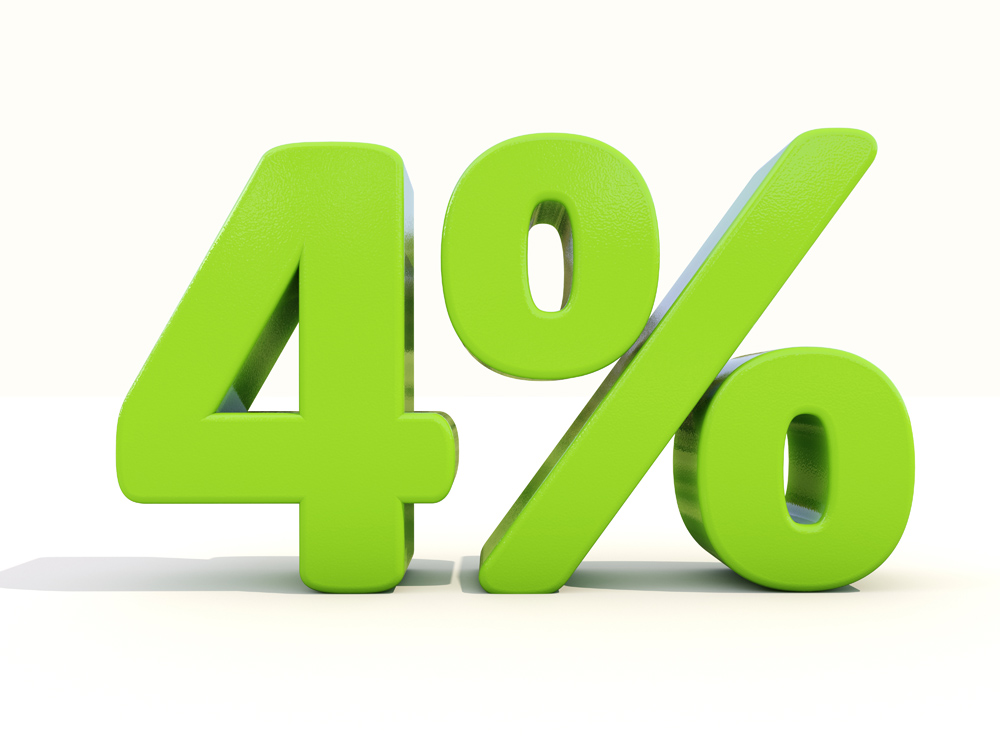
Last week, a practitioner from the Fort Mill area was advised that the county would not allow the 4% owner-occupied assessment ratio for his clients who had Hispanic names but who presented South Carolina driver’s licenses and vehicle registrations as evidence of their permanent addresses. He asked other practitioners how to appeal.

Several lawyers, mostly from the Charleston area, responded that they were well aware of this issue. Apparently, Charleston County takes a hardline approach on the issue and requires that persons who are not United States citizens be resident aliens/permanent residents to obtain the 4% ratio.

My friend and excellent Charleston real estate practitioner, Beth Settle, pointed us to this Attorney General’s opinion on the topic.

The opinion is dated June 21, 2019 and is addressed to Jerry N. Govan, Jr., a member of the South Carolina House of Representatives. Mr. Govan’s question noted that some county offices are requiring individuals to present proof of U.S. citizenship as a requisite of receiving the special ratio and asked whether South Carolina law, specifically §12-37-10 et seq., requires proof of citizenship. The legislator then asked whether counties are authorized to use investigative methods to determine citizenship.

The opinion agreed with the questioner that South Carolina law provides no “bright line” rule to determine whether a non-citizen is or is not a domiciliary for the purposes of the special ratio and pointed to court decisions from multiple jurisdictions with varying results on this issue. Some courts have held that illegal aliens cannot form the requisite intent to achieve domicile in the United States. Other courts have indicated the determination must be made on a case-by-case basis. Some aliens, according to an opinion from Alaska, are allowed in the country only if they do not intend to abandon their foreign residence. Those restricted aliens would jeopardize their legal presence in the United States if they seek to establish domicile here. Others are not so restricted and may be able to form the intent to remain here without jeopardizing their legal alien status.

No decisions from South Carolina appellate courts have addressed this issue, but the Administrative Law Court considered the question* and concluded that establishing domicile is ultimately a question of fact and largely one of intent. A distinction was drawn between “actual residence” and “legal residence”, and the court stated that an individual remaining in the United Stated without documentation cannot form the requisite intent to make property in South Carolina the domicile for the purposes of the discount.

The burden of proof on this issue falls on the taxpayer. The Attorney General’s opinion concluded that in order to receive the four-percent special assessment ratio, the property in question must be the legal residence of the taxpayer. The determination must be made on a case-by-case basis after investigation by the county officials and ultimately the courts. Generally speaking, the opinion continued, those aliens who are here illegally are deemed unable to establish domicile in the United States. Where the alien is in the United States as a result of DACA, that person cannot qualify. And a tourist without a permanent visa cannot be a permanent resident.

*Richland County Assessor v. Herrera, 2018 WL 5114185 (18-ALJ-17-0006-cc)(October 9, 2018).