
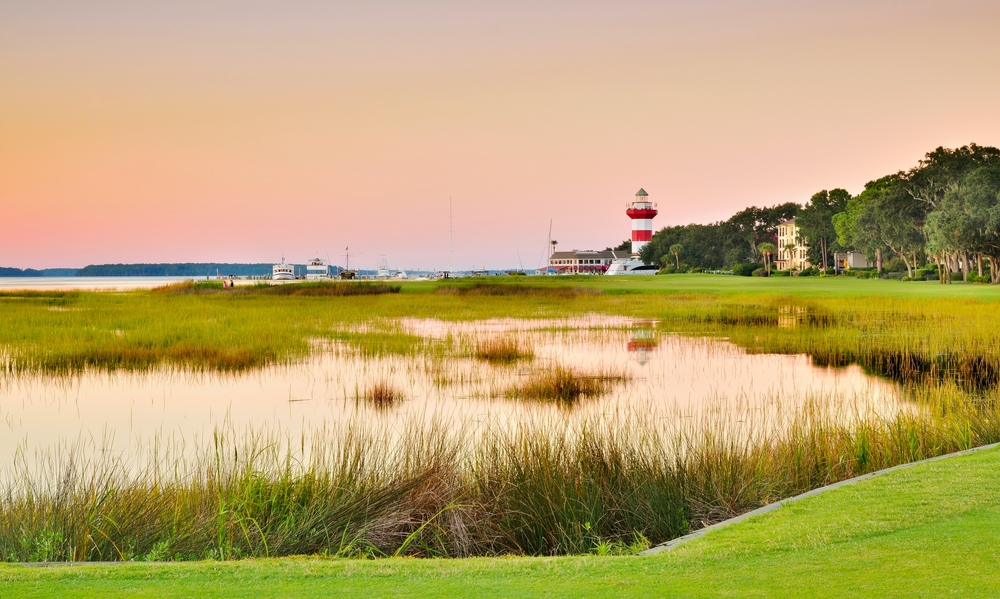
Now that Rory McElroy’s repeat victory at the Masters is in the books[1], the golfing world will turn its attention to scenic Hilton Head Island. It is there that the Harbour Town Golf Links at Sea Pines Resort will host the 58th edition of the RBC Heritage golf tournament later this week. For a long time, the Heritage was the only permanent PGA event in South Carolina[2] and quite a few South Carolina residents and golf fanatics from across the world make the trek down to Sea Pines to take in the action each year.
That makes today’s blog a particularly appropriate time to discuss the ongoing legal battle over public funding for the dredging of the waterways around Sea Pines Resort, which made news again this month. If you have ever worked or vacationed around Hilton Head Island, you are probably aware that boating culture is a significant part of overall appeal of the Island and it also figures nicely into the presentation of the televised golf tournament.
The controversy is somewhat simple. The physics of the waterways around the Harbour Town Yacht Basin and nearby Braddock Cove Creek are such that periodic dredging of the waters is necessary to allow navigation of the waters in all tides.
For a time, the cost of the dredging was born by the South Island Dredging Association (SIDA), a coalition of various Sea Pines owners’ associations, private slip owners, and marinas located in or near the local waterways. However, recent rounds of dredgings have become controversial both for the impact on the surrounding Calibogue Sound and the Town of Hilton Head’s decision in the last few rounds to start allocating public funds towards the project.
In 2022, resident Ryan McAvoy filed suit seeking to enjoin the Town from contributing $600,000 in public funds towards the next round of dredging. McAvoy claims that the Town’s allocation of the funds to the project violated the South Carolina Constitution because it allocated public funds primarily for the benefit of private gated communities, private owners of homes and boating slips, and private marinas from which the public is barred.
While there is no doubt that that the waterways in question are contiguous to the private communities contained within Sea Pines and contain private marinas that are restricted from public use, the Town of Hilton Head argues the waterways in question are navigable waters of the United States that are themselves open to the public and that the Town and its residents benefit from the use of the improved waterways and from the resulting tourism generated from the boating community being able to use the waters to access public areas.
In 2024, a Circuit Court judge granted the Town’s motion to dismiss McAvoy’s lawsuit on the ground that the waters to be dredged are public waterways. However, the breaking news from last week is that the Court of Appeals reversed the decision and ordered a new trial finding that the Circuit Court had mistakenly focused its decision on whether the waterways were public vs private. Instead, the trial court should have determined whether there is a public benefit to the Town’s action. The Court of Appeals found sufficient evidence in the record supporting McAvoy’s argument that the dredging primarily accrued to the benefit of private interests for the matter to continue towards a full trial.
This recent case is just the latest example of the controversy that can come from using public funds in support of what some in the community may see as providing limited or tangential benefit to the public at large. The balance between determining private vs public benefit can often be tricky to quantify. Similar arguments (and lawsuits) have erupted in the past over the public benefit of beach renourishment, government funding of infrastructure for private businesses, and is not so far removed from past controversies concerning government use of the power of eminent domain to further private redevelopment. Whenever the public perceives that the beneficiary of government action is a private entity or a group of private parties, you can bet that there will be drama and oftentimes litigation.
While we will have to wait and see the ultimate outcome for the boaters of Hilton Head, real estate professionals and developers alike must consider the possible implications of public opposition whenever it brings in the government for assistance in these kinds of projects.
[1] My children’s rooting interests died with Scottie Scheffler’s parade of “near miss” pars that fell just a swing stroke short. It has been an up and down month of sports fandom for our household.
[2] My colleague David Hicks reminds me that the third annual Myrtle Beach Classic will tee off in May.