Happy New Year!

Standard

Let’s make 2023 a great year!

2022 has been a difficult year for lots of dirt lawyers and their staff members. Everyone has been way too busy! 2023 promises to be a little slower. I remember my first slow-down in private practice many years ago. I was panicking a little, and my senior partner advised me to take a breath, clean up my desk and old files, and by the time I was through, the economy would have improved. He was right! And I have given that same advice to many people, including my now adult children, many times through the years.

Abraham Lincoln said, “Most folks are as happy as they make up their minds to be.”  My guess is that he used the qualifier “most” because he recognized that outside forces might lead to unhappiness for some people, but I couldn’t agree more with our 16th president that happiness is usually a matter of choice.

Here in the Bible belt of the South, some may believe that faith leads to happiness, but experience suggests that people of faith don’t always choose happiness. Experience also suggests that affluence does not create happiness. In fact, it seems that the opposite may be true in many instances.

I write this blog* for South Carolina real estate lawyers and their staff members, and my goal is to keep us all up to date on real estate issues that may affect our practices.

Early in my career, I decided to focus on real estate law because I chose happiness. I found real estate law to be a happier choice than litigation, especially the domestic litigation I tried for about five minutes. If the economy is good, then everyone should be satisfied at the end of the closing process. The seller should walk away with funds. The buyer should have a new piece of real estate to inhabit, rent or develop. The lender should have a nice income stream. And the players in the marketplace should be paid fairly for their services in connection with the closing.

Those of us who weathered the recent real estate peak are well aware that practicing real estate law does not lead to similar happiness when things are moving too quickly and fraud is so prevalent that it is hard to catch our collective breath. Kudos to all who have survived this challenging season.

Another realization I made early in my career is that to make money, lawyers must work very hard, often at a speed and pressure that do not benefit their health and happiness. And if lawyers have to work under those circumstances, then their staff members do as well.

So how do we choose happiness in a pressure-filled real estate practice that is dependent on the economy?

I offer Jon Gordon’s “20 Tips for a Positive New Year” as a suggestion. Jon Gordon is a motivational business speaker I enjoy following. Many of his tips for a positive 2023 focus on choosing to be happy. (But I particularly like his tip #8, “Get More Sleep”) You can download this excellent advice in poster format to keep at your desk or post in your workroom.

I am going to try to follow Abraham Lincoln’s and Jon Gordon’s advice in 2023. And I invite you to join me!

* Thanks to the readers of this blog! I began writing weekly very late in 2014. Readership has increased from just under 2,000 in 2014 to just over 40,000 in 2022. I’d like to take the opportunity of a new year to thank Martha McConnell and Jennifer Rubin, excellent lawyers, who help me with ideas, redirect my thinking, keep me out of trouble and proofread my work. And I’d like to thank Cris Hudson, IT guru extraordinaire, who handles technical issues. It is a team effort, and I am blessed with a great team!

What should you do when faced with a letter from the ODC?

Standard

This disciplinary opinion clearly sets out what not to do!

I’ve blogged before about Mike Goodwin, the “Bow Tie Comedian” based here in Columbia, who entertained us during lunch at Chicago Title’s seminar several years ago. I highly recommend Mike if you need a comedian suitable for a family audience. A joke that bubbled up through his very funny presentation was a line his mother used to keep him on the straight and narrow during his childhood, “what you NOT gonna do is…..” 

For example, she would say, what you NOT gonna do is to stand there and hold that refrigerator door open while you try to decide what you want to eat. During one lull in the laughter, Mike said to us, “what you NOT gonna do is sit there and not laugh at my jokes.” (So we laughed.)

Mike’s tag line came to mind when I read a recent disciplinary case* involving a real estate lawyer. This lawyer did exactly what he should not have done when the ODC contacted him.

This lawyer had been previously disciplined for financial misconduct in 2011. In that case**, he was given a public reprimand. He did not learn from his mistake.

In 2016, a client gave the check in the amount of $8,969. Just prior to the deposit of this client’s check, the balance in the lawyer’s trust account was $0.15. The lawyer negotiated nine checks to himself totaling $365. Then he issued a check to the client’s seller in the amount of $8,969. This check was returned as unpaid for insufficient funds, and the bank notified the ODC. The client also filed a complaint with the ODC.

Later, he misappropriated trust funds by writing checks to himself in amounts totaling just over $8,000.

What did the lawyer do in response to the ODC? Nothing!

  • He failed to respond to notices of investigation, despite being served with reminder letters.
  • He failed to respond to the court-appointed receiver after he was placed on interim suspension.
  • He failed to cooperate with the receiver and failed to produce client files and trust account files after being ordered to do so.
  • He failed to file an answer to formal charges.
  • (The Court didn’t say this, but his worst mistake may have been failing to hire a lawyer experienced in disciplinary matters.)
  • He failed to appear at his hearing.
  • He failed to file a brief taking exception to the report issued subsequent to the hearing, thus accepting the findings of fact, conclusions of law, and recommendations.

The Court, siting the central purpose of the disciplinary process is to protect the public from unscrupulous and indifferent lawyers, disbarred the lawyer. Learn well from this lawyer’s lack of action!

*In the Matter of Griffin, South Carolina Supreme Court Opinion 28124 (December 14, 2022).

**In the Matter of Griffin, 393 S.C. 142, 711 S.E.2d 890 (2011).

Fifth Circuit addresses short-term rental challenge

Standard

This blog has previously discussed challenges by various cities, including cities in South Carolina, to short-term rentals in residential areas.

Vrbo and Airbnb are two go-to websites to find interesting short-term rentals in vacation locations. Sometimes a cabin or house seems much more appropriate and fun than a hotel room for a family get-away. Having a kitchen and room for dining is often a plus.

Arguments against such rentals often focus on noise and parking problems in otherwise quiet residential subdivisions.

Rules vary greatly in the cabins and houses we’ve rented, but a common theme seems to be that parties are not allowed. I’ve also seen limits on the number of cars that can be accommodated and, of course, the number of people permitted. Pets may or may not be allowed.

The Fifth Circuit Court of Appeals recently addressed such a challenge in Hignell-Stark v. City of New Orleans, 46 F. 4th 317 (August 22, 2022). Thanks to Professor Dale Whitman of the University of Missouri at Kansas City Law School via the Dirt Listserv for information on this case.

An ordinance in the City of New Orleans required an owner to be a resident of the city to obtain a license to become a landlord allowing short-term rentals. When the plaintiffs challenged this ordinance using a “takings” theory, the Fifth Circuit held that theory to be inapplicable because permission to make short-term rentals of a residential unit is not a property interest. It is instead, according to the Court, a privilege.

The plaintiffs also argued that the ordinance was an undue burden on interstate commerce, and the Court agreed, stating that an ordinance that discriminates against interstate commerce is per se invalid unless there are no available alternative methods for enforcing the city’s legitimate policy goals. The ordinance in question was a blanket prohibition against out-of-state property owners’ participation in the short-term rental market. The Court pointed out that the ordinance doesn’t just make it more difficult for non-residents to compete in the market for short-term rentals in residential neighborhoods; it forbids them from participating altogether.

The Court pointed to alternative methods for achieving the city’s legitimate goals of preventing nuisances, promoting affordable housing, and protecting neighborhoods’ residential character. More aggressive enforcement of nuisance laws, increased penalties for nuisance violations, increased taxes on short-term rentals, requiring an operator remain on the property during night hours, and capping the number of short-term rentals licenses in particular zoning district might be alternatives.

The ordinance was held unconstitutional and void because the city’s objectives could be addressed in other ways that did not burden interstate commerce.

What do you think? Would you be comfortable with short-term rentals in your neighborhood?

All the Rules of Professional Conduct are not intuitive

Standard

…but this one is: be honest!

Some of the rules we learned in our professional responsibility classes in law school were problematic because they didn’t seem intuitive. I found the advertising rules to be particularly prickly. The rules surrounding financial recordkeeping require extreme attention to detail in accounting, and we went to law school because we aren’t strong in math, right? Even the rules surrounding competency require careful study for each practice area.

But Rule 407’s requirement of honesty is identical to the directive our parents imposed and, for that reason, absolutely intuitive. As lawyers, we must be honest in our professional relationships.

One lawyer learned this lesson the hard way according to a November 23 attorney disciplinary opinion from the South Carolina Supreme Court. *

This lawyer worked as a law clerk for a firm after graduation and became an associate attorney when he was admitted to practice in November 2017. He was paid on an hourly basis. The firm used computer software to track working hours in real time, and throughout 2018, the lawyer used software to clock in and out during times when he was not in the office or otherwise working to inflate his hours and increase his pay.

Fortunately, the lawyer did not bill clients directly, so no client overpaid because of his misconduct. At tax time, though, the lawyer’s supervising attorney discovered the discrepancy and confronted the associate. The total overpayment was just short of $18,000. After confronting the lawyer, the firm allowed the associate to self-report. His report included a signed restitution agreement in which he agreed to repay the law firm in full. 

The lawyer also filed an affidavit in mitigation, in which he expressed remorse and explained that his preoccupation with financial security arose from his disadvantaged upbringing. He said he was desperate to prove his personal worthiness and to achieve financial security. Those goals eclipsed his better judgment. He also stated he has worked with counselors to understand why he committed this misconduct.

He entered into an agreement for a six-month suspension, which the Court accepted. He was also required to complete the Legal Ethics and Practice Program Ethics School and to pay the costs incurred by the ODC in investigating and prosecuting the matter.

Stay honest out there, lawyers, and take the time to mentor young lawyers with regard to their ethical responsibilities.

*In the Matter of Jacob, South Carolina Supreme Court Opinion No. 28122 (November 23, 2022).

A Blog for Thanksgiving Week

Standard

The top ten things this dirt lawyer is thankful for professionally…

As a happy United Methodist (by virtue of my marriage 42 years ago to a P.K.* who refused to be baptized again at a Baptist church) I believe an attitude of thankfulness makes life better.

So, from a real estate standpoint, here are the top ten things for which I’ll give thanks this Thursday:

  1. We live and work in a state where closing real estate transactions is the practice of law and where, by hard work and vigilance, we are in a position to protect the interests of our clients.
  2. We help our consumer clients achieve one of their biggest dreams, home ownership.
  3. We help our commercial clients purchase, lease, finance and refinance properties. These activities allow our clients to make money and allow our communities to thrive.
  4. We don’t ignore title problems. We find them, discuss them, cure them, obtain insurance over them, and, hopefully, make them better for the property owner and lender, and for the next lawyer.
  5. If things go well, everyone involved in the closing is “happy”.
  6. We generally, as a community of real estate lawyers, seek to get along with each other. (Don’t make me point out exceptions to this rule!) Older lawyers mentor younger lawyers. Lawyers ask each other for guidance and, generally, that guidance is given with a smile. We train lawyers and paralegals, we serve on committees, we speak at seminars, write papers and books, participate in the Bar’s and the law schools’ mentorship programs and handle pro bono matters. As lawyers, we try to be good citizens.
  7. Those of us who weathered the financial downturn that began in 2007 encourage those of us who have not that there is life on the other side. If we suffer from another downturn in 2023, we will get through it.
  8. Technology has made our lives easier in the last few years, and improvements in technology will continue to make our lives easier. (I know that technology has also led to a great deal of fraud that we must fight every day, but I’m being positive here! Work with me!)
  9. I am thankful for the team of dedicated professionals who worked with me before I retired and who continue to take the best care possible of title insurance agents (dirt lawyers and their staff members.)
  10. I am thankful for the network of attorney agents who ably handle real estate matters throughout the Palmetto State.

I know. I know. Many of you are shaking your heads and pointing out that I no longer work “in the trenches” and don’t see the problems that plague real estate lawyers in the form of the constantly changing environment, changing technologies, difficulties in hiring and retaining staff members, increased competition and encroachment into “our” part of the closing by third parties.  I do see those difficulties, I am sympathetic, and that team of professionals I used to work with are constantly seeking improvements.

But, for Thanksgiving week, let’s pause for just a moment to be thankful!

*I’m guessing most South Carolinians know what a P.K. is, but, just in case you don’t, it’s an acronym for Preacher’s Kid, which I am told means the worst kid in church. My husband tells two stories to demonstrate:  (1) His father once spoke to him from the pulpit and threatened to have him sit with him during the sermon if he didn’t behave; and (2) There are unconfirmed rumors that my husband’s initials have been carved in various church pews across South Carolina.

Renaissance Tower condo owners file federal lawsuit

Standard
Renaissance Tower (left), Myrtle Beach, SC

This blog previously discussed the evacuation of Renaissance Tower condominium project in Myrtle Beach on October 7 because the building was deemed unsafe. The concern was reported to be the structural foundation of the 22-story building which is located just north of Ocean Lakes Campground.

The Sun News reported on October 14 that Horry County Code Enforcement posted a sign outside the resort that the building is unsafe, and occupancy has been prohibited. The paper also reported that residents received an evacuation letter from the management company stating that the steel frame within the foundation is in substantially worse condition than previously believed. The damage was apparently discovered during a repair project that had just begun.

A proposed federal class action lawsuit has now been filed by condo owners alleging the board of directors of the homeowners’ association and the management company of the project knew for years about steadily worsening damage to structural steel components supporting the building but failed to further inspect and repair the damage. These failures allowed the damage to worsen, according to the 34-page complaint.

The complaint further alleges that the building management company had known since 2016 that the foundation of the building was corroding. In 2016, an engineer was hired to perform an inspection and reported that the foundation was in “bad shape” and needed to be repaired or replaced. The complaint alleges that no repairs were made in response to this report.

After the collapse of the Champlain Towers South building in Surfside, Florida in June of 2021, according to the complaint, the HOA board asked the engineer to return and present repair options. The engineer determined that the conditions had worsened. On October 7 of this year, contractors determined that the steel was so corroded that the building was not structurally sound. Thus, the evacuation was ordered.

The complaint alleges that despite being left homeless, stuck paying for temporary housing, or deprived of income from a tenant, Renaissance owners now face more than $2 million assessment for repairs to the building’s structural steel as well as an unknown additional assessment for temporary shoring to make the building safe.

Like the Surfside, Florida building that collapsed, the Renaissance tower is an ocean-front project that is structurally supported by steel and concrete. The building remains unoccupied. The complaint alleges that some owners are homeless, and others are living in tents. Sales of units have also been stalled.

I would not be surprised to see additional inspections and lawsuits involving ocean-front projects.

Columbia house purportedly sold as an NFT

Standard
149 Cottage Lake Way – one of the first NFT-based residential home sales for the US

When bizarre topics are discussed in my family, we often employ the famous quote by actor Chris Tucker from the funny movie Rush Hour: “Do you understand the words that are coming out of my mouth?” I’m not sure I understand the words I am typing here, so we’ll add links below for you to read for yourself.

A company called Roofstock onChain claims to have sold a house located in Columbia, South Carolina using NFT technology. The address of the house is revealed: 149 Cottage Lake Way, and it’s located in my zip code. If you Google that address, you’ll see lots of pictures of the house and articles about this transaction.

I had to start with the basics to attempt to get a handle on this topic. An NFT is a non-fungible token, a digital asset that can come in the form of art, music, in-game items, videos, and other assets. They are bought and sold online using cryptocurrency. The NFT allows the buyer to own the original item. NFTs have been described as physical collector’s items, only digital. Instead of receiving an actual painting, the buyer gets a digital file that represents exclusive ownership.

To trade in NFTs, the buyer must first have a digital wallet that allows storage of cryptocurrency and NFTs. The wallet must be funded with cryptocurrency. After that step, there are apparently several NFT marketplaces to explore.

So how did this house purchase take place? An LLC was created for the ownership of the three-bedroom recently renovated home. (And here are the words that I don’t understand.) Several of the articles say something along the lines of: The house was sold on the Roofstock onChain NFT marketplace by transferring the home identity to an Ethereum address owned by the buyer.

Dirt lawyers, I ask you, do you see any problems with this transaction? Did anyone search the title? Was there a physical inspection of the home? Was there a survey? Were the taxes prorated?  Did a South Carolina licensed attorney close the transaction?  I have more questions, but I bet you can come up with a list of your own.

I’ll continue to read about this topic and attempt to keep readers informed. In the meantime, here are some links for your education:

The future is now? Columbia becomes blockchain testing ground with house bought as an NFT

Blockchain Makes Deeper Inroads Into Real Estate As Roofstock Announces Its First NFT Home Sale

Are NFTs the future of home ownership?

How NFTs Could Change Real Estate

Blockchain Facts: What it is, how it works, and how it can be used

Roofstock onChain https://onchain.roofstock.com/

Welcome to Ethereum https://ethereum.org/en/

Congressional method for funding CFPB held unconstitutional

Standard

A three-judge panel of the United States Fifth Circuit Court of Appeals ruled on October 19 that the Consumer Financial Protection Bureau’s funding structure is unconstitutional. *

Rather than receiving its funding through periodic Congressional appropriations, the CFPB is funded directly from the Federal Reserve, which is funded through bank assessments. This funding method was intended to remove some congressional influence on the bureau.

Most federal agencies receive annual appropriations from Congress that are determined each year through legislative negotiations. Many agencies have separate funding sources like fees and assessments collected from the entities they regulate. The arrangement, like CFPB’s, which provides for a continuous funding source, is common among financial regulatory agencies like the Federal Reserve, the FDIC, the Federal Housing Finance Agency, the National Credit Union Administration, and the Office of the Comptroller of the Currency.

Many commentators have suggested that this opinion will not stand because nothing in the Constitution prevents Congress from funding agencies in a variety of ways. The case is expected to be appealed to the full Fifth Circuit and after that to the Supreme Court. But while this holding stands, it renders all CFPB actions from its inception vulnerable to challenge.

*Community Financial Services Association of America, Ltd. v. CFPB

Housing Authority must exercise discretion in eviction

Standard

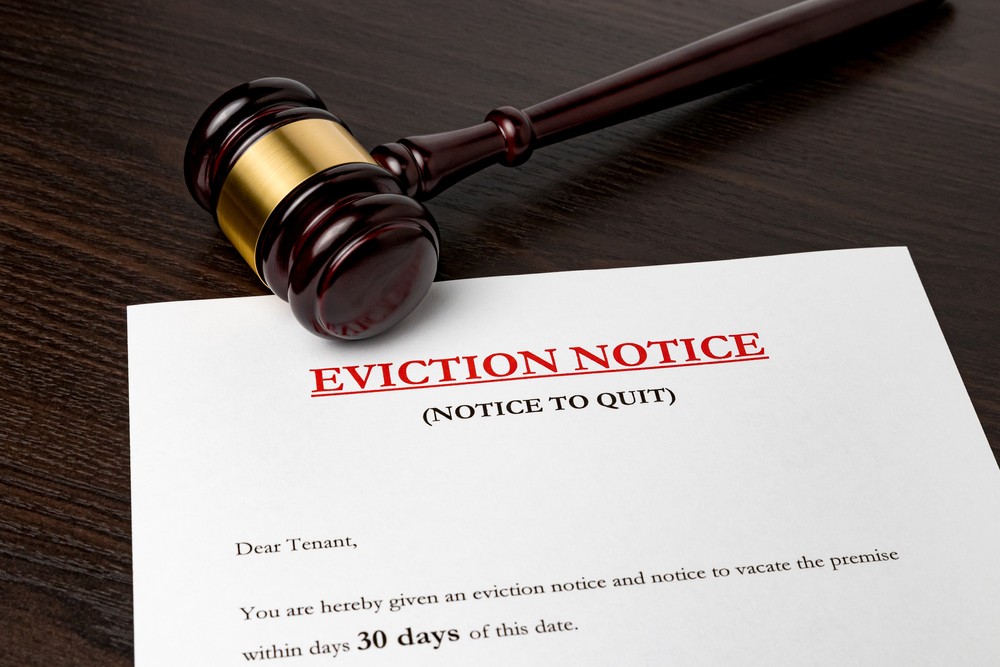
Real estate cases can be sad, and this is one of those. City of Charleston Housing Authority v. Brown* Involved the eviction of a mother from a public housing apartment because her son committed a crime.

The facts, according to the Court, are not in dispute. Katrina Brown renewed her lease with CHA in 2015. Brown’s minor son and daughter were listed as residents and members of her household. Early in 2016, Brown’s son, who was 17 at the time, was arrested a mile away from his home carrying a gun. Two weeks later, CHA sent an official 30-day notice of eviction to Brown. The notice informed Brown that her eviction was based on the lease’s prohibition against violent criminal behavior.

At the magistrate’s hearing, a Charleston detective testified that Brown’s son confessed to an attempted armed robbery that occurred two days before his arrest and approximately one mile from the housing complex. Brown testified that her son was being held in jail, and if he was able to make bond, he would live with his grandmother.

The magistrate found that evictions based on criminal activity provisions of housing lease agreements must be determined on a case-by-case basis and denied the application for eviction based on the testimony as well as factors from federal law.  On appeal, the circuit court remanded the case for factual findings and analysis regarding whether Brown’s eviction was warranted under 42 U.S.C. §1437(1)(6), the federal statute governing public housing leases, which is colloquially known as the “One-Strike Rule.”

The “One-Strike Rule” requires federally-funded public housing authorities and private landlords renting their properties to tenants receiving federal housing assistance to include a provision in all leases stating that drug-related criminal activity, as well as criminal activity that threatens other tenants or nearby residents, are grounds for eviction, regardless of the tenant’s personal knowledge of the criminal activity. The strict-liability, no-fault rule was premised on the idea that public housing tenants are entitled to homes that are “decent, safe, and free from illegal drugs.

In May of 2017, the magistrate issued an order evicting Brown, finding her son’s actions created good cause for eviction. At an appeal hearing before the circuit court, Brown argued that non-drug related criminal activity can only be grounds for eviction if the activity constitutes a present threat to the residents of the public housing facility and occurred in the immediate vicinity of the facility. She also argued that CHA was required to demonstrate that they used discretion in evaluating the circumstances and alternatives to eviction of an innocent tenant before evicting the entire household. She asserted that CHA made no showing that it exercised discretion.

The circuit court affirmed Brown’s eviction. The Court of Appeals found that Brown’s son’s actions created good cause for the eviction. The Court cited a 2007 Massachusetts case that set out the policy reason for the “One-Strike Rule”: Tenants of public housing developments represent some of the most needy and vulnerable segments of our population, including low-income families, children, the elderly, and the handicapped. It should not be their fate, to the extent manifestly possible, to live in fear of their neighbors.

The Court further held that the threat need not be “ongoing” to justify eviction. Then the Court turned to an interesting aspect of federal law, holding the “One-Strike Rule” does not automatically require eviction. Rather, the housing authority must demonstrate that it exercises discretion in the decision to evict. The record must reflect that the housing authority knew it could refrain from invoking the “One-Strike Rule” under the circumstances.

The case was remanded to the magistrate for a hearing to determine whether CHA exercised discretion in deciding to pursue the eviction of Brown’s entire household for the criminal actions of her son.

I’m sure you understand what I mean about this case being sad. It is sad for the mother to be evicted for the actions of her son, and it is sad for the other residents of the facility to be subjected to such criminal activity. This is a difficult situation, and I’m encouraged to know that discretion must be exercised.

*South Carolina Court of Appeals Opinion No. 5941 (August 24, 2022)

Myrtle Beach article points to current fraud cases

Standard

The Myrtle Beach Sun News published an article on September 5 entitled, “They were conned out of their dream beach home, lawsuit says. These are common SC scams.”  You can read the article here.

Those of us who have worked in the real estate industry for years have heard of (or been bitten by) various iterations of real estate fraud schemes. These schemes change routinely as the fraudsters become more sophisticated. Thankfully, we are becoming more informed and therefore more sophisticated ourselves. But this article is an excellent reminder.

The article recounts the tale of a North Carolina couple, Jeremy and Candice Pedley, who spent years saving before finally acting on their dream of owning a family vacation home in North Myrtle Beach. The Pedleys entered into a contract last November to purchase a condo in in a gated community for $380,000. Unfortunately, a third party hacked into the real estate agent’s emails, impersonated their closing attorney, and convinced he Pedleys so wire their funds to a bank account in Rock Hill.

The hacking effort requested the exact number the Pedleys were expecting to wire, $86,183.81. This fact convinced the Pedleys that the fraudulent instructions were legitimate. According to the article, they have been able to recover about $36,000 of the lost funds. They were unable to complete the purchase of their dream condominium.

Columbia attorney Dave Maxfield is representing the Pedleys in a lawsuit attempting to recover their funds. According to the article, Maxfield told the Sun News that banks should do a better job stopping fraudulent accounts from being used, and real estate agents and attorneys need to warn clients about the pitfalls of wiring funds.

The article then details a few other common scams outlined by The S.C. Department of Consumer Affairs.

One such scheme creates fake rental listings promising low rent, immediate availability, and great amenities. The goal is to trick renters into transferring funds before they are tipped off that the listings don’t exist.

Another scheme notifies consumers that they have won the lottery, requesting, of course, some sort of fee or tax to receive the alleged winnings. Pressure is applied to “act now”.

Finally, the article discussed fake debt collectors. Fraudsters impersonate government authorities and attempt to convince consumers to pay off debt. These schemes typically request the target to pay a fraction of the amount they owe in return for full debt forgiveness. Threats of arrest are often used to apply pressure.

Please keep yourself and your staff members educated about all the current schemes. Your title insurance company should be a great source of current information. And please give your staff members permission to slow down and use the time they need to think through the facts of your transactions. I believe time is the key. The very smart individuals you employ, if properly armed with the necessary information and education, should be able to thwart most of these schemes, if they are given sufficient time to analyze the communications that hit their inboxes daily.