According to news reports, the town of Surfside Beach may be one of the latest victims of a business email compromise-type fraud attack. Unfortunately, early reports suggest that the town may have lost over half a million dollars to scammers. South Carolina’s State Law Enforcement Division is actively investigating this incident, so the information we have is limited and unproven, but if true this amount would represent a loss of funds equal to approximately 2.6% of the town’s 2025-2026 budget.
Wildcat Construction was engaged by the town to do some work on its public utilities, and one of its bills, in the amount of $545,598.30, was due for payment. On March 13, 2026, the town indicates it initiated an ACH payment to what they thought was an account belonging to Wildcat, but Wildcat says that it has no such account and that it had requested payment by check. The town released a public statement in which it acknowledged it had “identified a potential cybersecurity incident involving its email environment,” and reported the incident to law enforcement. Details about what exactly may have happened internally at the town level are pretty scant. While SLED is investigating, Wildcat maintains that it has not received the funds, and that it is still entitled to be paid. It is easy to imagine how a scammer might have sent a “spoofed” email to a Town employee, pretending to be an accounts receivable clerk for Wildcat, with a fake set of payment instructions for the Wildcat invoice. The same type of “spoof” attack happens all too often in real estate deals where the closing attorney is gathering invoices and payment instructions. If the Town employee failed to properly verify those payment instructions, then just like the danger of wire fraud in a real estate transaction, the funds could have been sent to a fraudster instead of the correct party.
Data published by the FBI’s Internet Crime Complaint Center, which tracks and reports cyber-crime involving US interests, indicates that both the number of cyber-crimes against, and the amount of property lost by, Americans continues to skyrocket. The IC3 reports that in 2025, it received a total 1,008,597 of cyber-crime complaints for all types of cyber-crime, and it tracked over $20.8 Billion in total losses related to cyber-crimes. The clear indication here is that cyber-criminals are increasing their attacks on our businesses, and are succeeding in stealing more of our money.
This incident is yet another example highlighting the importance of verifying payment instructions with a known, trusted contact. That includes not only the routing/account numbers, but also the form of payment. In this example, Wildcat says it told Surfside they wanted a check, but the payment was made via ACH to an account that Wildcat says it did not provide to the Town.
While the “worst case scenario” impact on Surfside Beach, even if these funds are permanently lost, looks like it would be below 3% of the town’s overall annual budget, the risk to South Carolina lawyers of wire fraud and business email compromise is potentially much more dire. For a small or solo real estate-focused law firm whose annual fee revenues might be closer to the $1,000,000.00-mark, loss of funds for a mortgage payoff could be much higher as a percentage of the firm’s budget. If we assume that a typical mortgage payoff for a SC home might be around $250,000.00, then it’s easy to see how that amount, when targeted by fraudsters, could be a devastating loss for a small firm. And, while this particular example was not a real estate law firm, it demonstrates that the fraudsters are out there actively targeting anyone they think they can, and that no one is immune to their attacks.
There is yet another hot button zoning conflict in the Palmetto state that has attracted much public attention in Fort Mill, SC. It has spawned several lawsuits, an Attorney General inquiry, and legislators filing bills up at the State House that certainly would have major impact on S.C. dirt lawyers if they were to pass.
The controversy centers around Silfab Solar’s ongoing construction of a solar panel manufacturing factory near Fort Mill, SC. The company is renovating a warehouse in an existing industrial park there that is jointly operated by York and Chester counties. The industrial park is located near several residential developments, but most notable in recent press coverage is the elementary school located on the adjacent parcel to the proposed Silfab site.
In 2022, in connection with recruitment by the S.C. Department of Commerce, Silfab requested zoning verification from York County that its proposed operation would be in compliance with local zoning ordinances. The York County zoning staff ultimately determined that the manufacture of solar panels fit within the permitted use of “computer and electronic productions manufacturing” which was permitted in the “Light Industrial” zoning classification assigned to the industrial park. Notably, there was no appeal of the zoning verification.
With the zoning verification in hand, Silfab decided to move forward with the project and entered into a fee in lieu of tax (FILOT) Agreement with York County. The County passed an ordinance approving the FILOT agreement in September 2023, in effect ratifying the proposed project at its proposed location. Silfab thereafter obtained building and environmental permits and started construction at the site
But at some point in the process, the public became aware of the project and that hazardous gases and chemicals would be used as part of the manufacturing process of the panels. As concerns grew, a neighboring landowner filed a request for a zoning interpretation inquiring whether solar panel manufacturing was actually a permissible use under the zoning ordinance. In 2024, the York County Board of Zoning Appeals (BZA) found that solar panel manufacture is not permitted within the Light Industrial zoning classification, which effectively overruled the prior determination of the zoning staff.
Silfab appealed the BZA ruling but construction has continued under the existing zoning verification and permits. In response to growing public outcry, York County issued statements that its interpretation of state law and its ordinance is that BZA zoning interpretations only apply prospectively and that the County does not have authority to revoke previously given permits or to issue a stop work order.
But the controversy really expanded into an issue of statewide concern in March when Silfab reported two separate chemical leaks within a three day period. While the leaks were contained and were reportedly of no danger to the outside community, DHEC ordered Silfab to pause its use of previously permitted chemicals pending a review. Silfab has since entered into an agreement with DHEC not to bring any more dangerous chemicals into its site or proceed with manufacturing until the investigation is completed.
The leaks also drew the attention of Attorney General Alan Wilson who issued inquiries to York County concerning the propriety of the zoning approval and to Silfab concerning the cause and extend of the leaks. The gubernatorial candidate appears to be closely monitoring the situation as events unfold.
The South Carolina General Assembly is also involved in the debate. Local legislators have introduced proposed bills in the House and Senate that would amend the Code to give Counties the power to revoke permits and stop work on projects when the project is found to be in violation of zoning ordinances.
While these bills are unlikely to pass before the end of the current session, there have been a number of other bills advanced in the State House in recent years that have sought to give local authorities the ability to have something of a “do-over” concerning prior approvals of development. Often these bills have been provoked by growing public outrage over major projects that were passed by local authorities without much initial fanfare.
While the Court’s pending review of the BZA appeal may result in restoring the original zoning interpretation and making much of the present controversy moot, there is always the chance of additional appeals. Further, with the national debate over data centers expanding into South Carolina in recent months the salience of the Silfab controversy may impact future debates concerning whether government entities should be able to change their mind about prior zoning decisions even after property owner’s have formed plans and made investments relying upon them.
What South Carolina Real Estate Attorneys Need to Know
As of February 23, 2026, the 2026 ALTA/NSPS Minimum Standard Detail Requirements for Land Title Surveys officially replaced the 2021 standards. These updates may appear technical at first glance, but for South Carolina real estate attorneys—particularly those handling commercial transactions, development work, and lender representation—the changes carry meaningful legal and practical consequences.
The 2026 Standards reflect evolving technology, shifting risk allocation, and mounting expectations from title insurers and lenders. Attorneys who understand these changes will be better positioned to manage risk, avoid closing delays, and advise clients with confidence.
In South Carolina, ALTA/NSPS Land Title Surveys are a cornerstone of development due diligence, commercial financing and title insurance underwriting. While surveyors perform the fieldwork, attorneys are often the gatekeepers—reviewing surveys for compliance, identifying red flags, and reconciling survey matters with title commitments.
Any change to the ALTA Standards therefore ripples directly into:
Title objection and resolution strategies
Closing timelines
Survey exceptions and endorsements
Risk allocation among buyers, lenders, and insurers
The 2026 Standards were jointly adopted by ALTA and the National Society of Professional Surveyors (NSPS) in October 2025 after several years of committee work, with the stated goal of improving clarity, consistency, and adaptability.
A Clear Effective Date—with Transitional Traps
The effective date for the new standards is February 23, 2026. Any ALTA/NSPS Land Title Survey contracted for on or after that date must comply with the 2026 Standards unless the parties agree otherwise in writing. Surveys contracted before the effective date may still be governed by the 2021 Standards, even if completed later—but only if that is clearly addressed in the engagement agreement.
For attorneys, this means:
Engagement letters and contracts should specify which ALTA standard applies
“Survey updates” or revised plats may trigger new standard requirements
Ambiguity can expose clients—and counsel—to disputes with lenders or insurers
Technology Is Now Explicitly Embraced
One of the most forward‑looking changes is the shift from requiring information obtained strictly “on the ground” to allowing “practices generally recognized as acceptable” in both fieldwork and mapping. This expressly accommodates modern tools such as drones, LiDAR (Light Detection and Ranging), and other remote‑sensing technologies, without tying the standards to any specific method.
For attorneys, this reinforces the need to:
Review surveys for completeness, not methodology
Understand that aerial or remote data may now support certain depictions
Counsel clients that innovation alone is not grounds for objection
Expanded Documentation of Possession and Occupation
Perhaps the most practically significant change is the requirement that evidence of possession or occupation be noted along the entire perimeter of the property, regardless of proximity to boundary lines. This exceeds prior standards, which often focused only on near‑boundary features.
This change:
Increases the likelihood that surveys will reveal fence lines, uses, or improvements suggesting potential boundary or prescriptive issues
Elevates the importance of attorney review and follow‑up
May increase survey‑related title objections and negotiation
Parol Statements Must Be Noted
Closely tied to evidence of possession and occupation, under the 2026 Standards, surveyors must note any verbal (“parol”) statements made by landowners or occupants relating to title or boundary issues.
For attorneys, this is a double‑edged sword:
It may surface issues earlier in the transaction
It also introduces non‑record information that may complicate underwriting, disclosures, and risk tolerance
These notations do not constitute legal opinions, but they should never be ignored during diligence.
Title Evidence and Research Responsibilities Are Clarified
The 2026 Standards expand guidance on how surveyors source title evidence when a current title commitment is unavailable, and they more clearly acknowledge shared responsibility between surveyors and title professionals for obtaining certain documents.
South Carolina attorneys should:
Provide current title commitments early whenever possible
Coordinate closely with surveyors on complex tracts or non‑fee interests
Table A Gets a Notable Update
The optional Table A items remain a critical tool for tailoring survey scope. In 2026:
Item 15 was clarified to allow certain depictions via aerial or satellite imagery if agreed to in writing
A new Item 20 requires a summary table of conditions and potential encroachments on the face of the survey—intended as a factual summary, not a legal conclusion
The former “catch‑all” or blank item has been renumbered as Item 21
Attorneys should carefully align Table A selections with lender and client expectations.
Practice Takeaways for South Carolina Real Estate Attorneys
The 2026 Standards raise the bar—not by radical change, but by greater disclosure and clearer expectations. Attorneys should update internal checklists, educate clients, and adjust survey review practices accordingly.
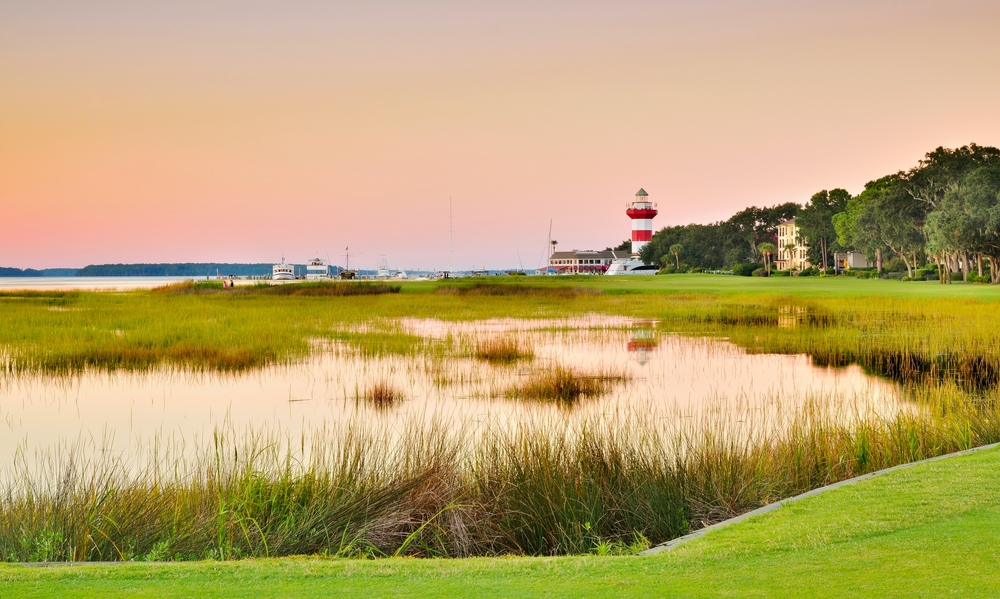
Now that Rory McElroy’s repeat victory at the Masters is in the books[1], the golfing world will turn its attention to scenic Hilton Head Island. It is there that the Harbour Town Golf Links at Sea Pines Resort will host the 58th edition of the RBC Heritage golf tournament later this week. For a long time, the Heritage was the only permanent PGA event in South Carolina[2] and quite a few South Carolina residents and golf fanatics from across the world make the trek down to Sea Pines to take in the action each year.
That makes today’s blog a particularly appropriate time to discuss the ongoing legal battle over public funding for the dredging of the waterways around Sea Pines Resort, which made news again this month. If you have ever worked or vacationed around Hilton Head Island, you are probably aware that boating culture is a significant part of overall appeal of the Island and it also figures nicely into the presentation of the televised golf tournament.
The controversy is somewhat simple. The physics of the waterways around the Harbour Town Yacht Basin and nearby Braddock Cove Creek are such that periodic dredging of the waters is necessary to allow navigation of the waters in all tides.
For a time, the cost of the dredging was born by the South Island Dredging Association (SIDA), a coalition of various Sea Pines owners’ associations, private slip owners, and marinas located in or near the local waterways. However, recent rounds of dredgings have become controversial both for the impact on the surrounding Calibogue Sound and the Town of Hilton Head’s decision in the last few rounds to start allocating public funds towards the project.
In 2022, resident Ryan McAvoy filed suit seeking to enjoin the Town from contributing $600,000 in public funds towards the next round of dredging. McAvoy claims that the Town’s allocation of the funds to the project violated the South Carolina Constitution because it allocated public funds primarily for the benefit of private gated communities, private owners of homes and boating slips, and private marinas from which the public is barred.
While there is no doubt that that the waterways in question are contiguous to the private communities contained within Sea Pines and contain private marinas that are restricted from public use, the Town of Hilton Head argues the waterways in question are navigable waters of the United States that are themselves open to the public and that the Town and its residents benefit from the use of the improved waterways and from the resulting tourism generated from the boating community being able to use the waters to access public areas.
In 2024, a Circuit Court judge granted the Town’s motion to dismiss McAvoy’s lawsuit on the ground that the waters to be dredged are public waterways. However, the breaking news from last week is that the Court of Appeals reversed the decision and ordered a new trial finding that the Circuit Court had mistakenly focused its decision on whether the waterways were public vs private. Instead, the trial court should have determined whether there is a public benefit to the Town’s action. The Court of Appeals found sufficient evidence in the record supporting McAvoy’s argument that the dredging primarily accrued to the benefit of private interests for the matter to continue towards a full trial.
This recent case is just the latest example of the controversy that can come from using public funds in support of what some in the community may see as providing limited or tangential benefit to the public at large. The balance between determining private vs public benefit can often be tricky to quantify. Similar arguments (and lawsuits) have erupted in the past over the public benefit of beach renourishment, government funding of infrastructure for private businesses, and is not so far removed from past controversies concerning government use of the power of eminent domain to further private redevelopment. Whenever the public perceives that the beneficiary of government action is a private entity or a group of private parties, you can bet that there will be drama and oftentimes litigation.
While we will have to wait and see the ultimate outcome for the boaters of Hilton Head, real estate professionals and developers alike must consider the possible implications of public opposition whenever it brings in the government for assistance in these kinds of projects.
[1] My children’s rooting interests died with Scottie Scheffler’s parade of “near miss” pars that fell just a swing stroke short. It has been an up and down month of sports fandom for our household.
[2] My colleague David Hicks reminds me that the third annual Myrtle Beach Classic will tee off in May.
We all know that South Carolina has some of the most beautiful natural scenery in the nation. As the weather gradually improves, and with Spring Break underway for many and the summer rental season right around the corner, tourists begin flocking to our beautiful beaches.
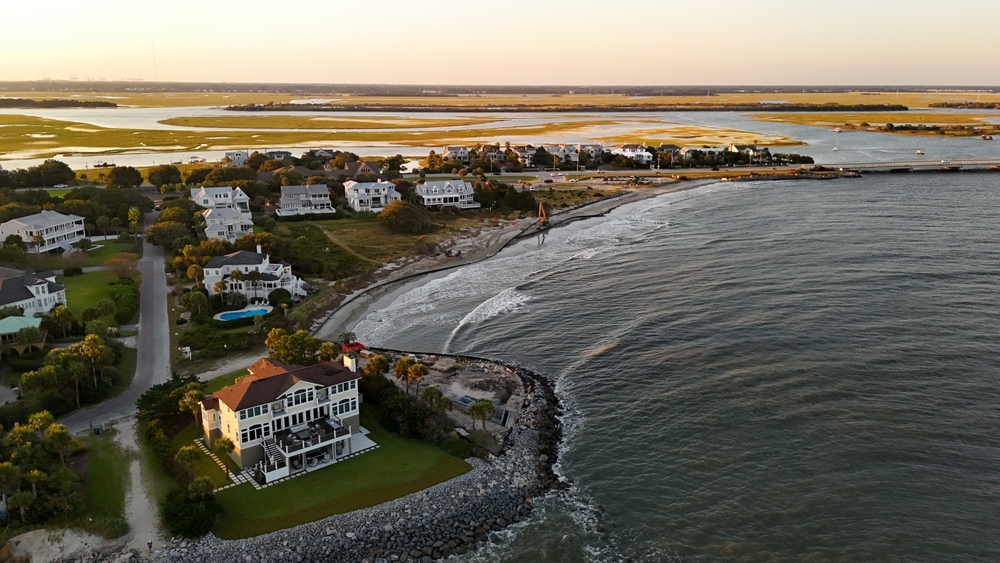
In February 2026, a legal dispute[1] on Sullivan’s Island quietly reshaped the conversation around property rights, zoning enforcement, and the future of residential ownership models in South Carolina’s coastal communities. At the center of the case was 2 SC Lighthouse, LLC, a property owner, and Pacaso, Inc., a company that facilitates fractional homeownership. On the other side stood the Town of Sullivan’s Island, determined to enforce its long‑standing restrictions on short‑term rentals. While the case involved a single property, its implications reach far beyond one address.
Sullivan’s Island has long maintained strict zoning rules designed to preserve its residential character. Among those rules are limits on short‑term vacation rentals, which town officials argue can disrupt neighborhoods and strain local infrastructure. As new real estate models have emerged, the town has taken a close look at how these arrangements fit within existing ordinances.
That scrutiny intensified when a home owned by 2 SC Lighthouse, LLC was used in partnership with Pacaso. Pacaso’s model allows multiple buyers to purchase fractional ownership interests (in this instance, one‑eighth shares) in a single property. Each owner receives scheduled access throughout the year, and Pacaso manages maintenance and logistics. However, unlike a true rental property, occupants do not pay nightly or weekly fees to stay in the home; they are staying in a property they legally own.
Town officials concluded that the arrangement functioned like a vacation rental in practice, even if it was structured differently on paper. The Town’s Zoning Administrator issued a violation, asserting that the property was being used as a prohibited short‑term rental under Sullivan’s Island zoning laws. That decision was upheld by the Town’s Board of Zoning Appeals (BZA).
2 SC Lighthouse and Pacaso appealed to the Charleston County Circuit Court. The court sided with the Town, effectively agreeing that the zoning authorities’ interpretation of the ordinance should stand.
The property owner and Pacaso appealed, arguing that a fractional ownership is not a rental, and that the Town was stretching the definition of “short‑term rental” beyond what its ordinance actually said.
On February 18, 2026, the South Carolina Court of Appeals reversed the circuit court’s decision, siding with 2 SC Lighthouse and Pacaso. The ruling turned on the critical distinction between ownership and renting. The court emphasized that the individuals staying in the home were owners, not tenants. Without a rental transaction (no landlord‑tenant relationship and no payment for temporary lodging), the court found that the town’s definition of a short‑term rental did not apply.
In making its ruling, the court clarified that interpreting a zoning ordinance is a question of law rather than a factual determination entitled to broad deference. While zoning boards are given leeway in applying ordinances, they cannot rewrite or expand those ordinances. If a municipality wants to regulate fractional ownership, it must do so explicitly.
Although the ruling is an unpublished opinion and is not binding precedent, its practical impact is significant. For Sullivan’s Island, the decision places limits on enforcement under current zoning language. The town may still regulate short‑term rentals aggressively, but it cannot treat fractional ownership arrangements as rentals unless its ordinances are amended to say so.
For other South Carolina coastal communities, the case serves as a warning and a roadmap. Many towns face similar tensions between preserving neighborhood character and responding to evolving real estate practices. The decision signals that courts will closely scrutinize attempts to regulate new ownership models using old definitions.
For property owners, the ruling reinforces a core principle of land‑use law: property rights cannot be curtailed by implication. Restrictions must be clearly stated, not inferred based on policy concerns alone.
The decision does not end the debate over fractional ownership on Sullivan’s Island or elsewhere. Municipalities may respond by revising zoning ordinances to directly address co‑ownership models. Developers and property owners, meanwhile, will likely continue testing the boundaries of traditional zoning frameworks.
This case highlights the broader reality that zoning laws written decades ago are being asked to govern a rapidly changing housing market. As ownership models evolve, so too must the rules that regulate them—through legislation, not interpretation.
For now, 2 SC Lighthouse, LLC’s victory stands as a reminder that in land‑use law, words matter, and towns must play by the rules they have written.
[1]Pacaso, Inc. & 2 SC Lighthouse, LLC v. Town of Sullivan’s Island, South Carolina, Appellate Case No. 2024‑000134, 2026‑UP‑078 (S.C. Ct. App. Feb. 18, 2026) (unpublished).
Another long‑running legal battle in South Carolina – this time over the future of Captain Sam’s Spit – may finally be drawing to a close. Developer Kiawah Partners, the Town of Kiawah Island, and several other interested parties entered into a $37 million settlement at the beginning of March that would transfer the entirety of the 170 acres of pristine coastline to the State of South Carolina and other local entities subject to a permanent conservation easement.
This blog has covered the unfolding controversy involving the Spit several times in the past. The Spit, which lay seaward of the DHEC critical line when originally conveyed in the 1980s, became the subject of numerous lawsuits after an adjustment of the critical line in the 1990s made the property developable. Following that adjustment, Kiawah Partners and the Town of Kiawah entered into a Development Agreement under which the developer planned to build more than 50 homes on certain highland areas of the Spit, while conveying and committing the remaining portions to be preserved in their natural state. However, in a series of lawsuits, appellate courts ultimately denied all the various applications to construct erosion‑control devices deemed necessary to support the proposed development plan.
Kiawah Partners has since pursued a pending lawsuit seeking compensation for what it views as a regulatory taking of its property rights, while the Town and local conservation groups have filed a separate action seeking to enforce the Development Agreement’s provisions concerning the preservation of the remainder of the land. The current settlement resolves both lawsuits.
Under the terms of the settlement, the State of South Carolina and the other participating groups agree to purchase the developer’s entire interest in the Spit for $37 million. The Spit would then be jointly managed by the State and local entities. Beachwalker Park, a popular destination for local beachgoers, is to be transferred to the Town of Kiawah Island and will remain open to the public under the management of Charleston County.
The settlement is contingent upon the General Assembly approving the State’s $32 million contribution, which may occur before the end of the current legislative session. If lawmakers do not balk, Captain Sam’s Spit will be permanently conserved for the enjoyment of the public—and for the 18 endangered species that call the area home.
Across rural South Carolina, data center proposals are generating increasing controversy as residents challenge whether counties are complying with zoning statutes, comprehensive plans, and public‑notice requirements.
In Colleton County, Council amended its zoning ordinance to add data centers as a permitted use and to create a special exception within residential districts – changes that paved the way for a proposed $6 billion facility near the environmentally protected ACE Basin. In January, neighboring landowners, represented by the Southern Environmental Law Center, filed suit alleging that the county enacted these amendments without adequate notice or transparency, that the changes conflict with the county’s comprehensive plan, and that allowing an industrial special exception within a rural district is inconsistent with existing zoning classifications.
Similar disputes continue to surface statewide. In Marion County, Council recently approved a $2.4 billion data center project and a fee‑in‑lieu‑of‑tax agreement. The project appeared on the agenda only under the code name “Project Liberty” and was covered by a nondisclosure agreement, leaving the public without meaningful information until the final reading. Aiken and Berkeley Counties have faced comparable challenges.
Opponents of data centers emphasize their extraordinary electrical demand, which has already strained power grids across the country. Some estimates now place data‑center consumption at roughly seven percent of U.S. electricity use, with projections continuing to rise. In the Colleton debate, residents expressed concern that utilities lack sufficient capacity to serve the proposed facility and that ratepayers – particularly Santee Cooper customers – may ultimately bear the cost of necessary upgrades.
Water usage presents a parallel problem. Data centers generate substantial heat and rely heavily on water‑based cooling. The volume required can impose real stress on local water systems, particularly in rural areas. While newer closed‑loop cooling technologies reduce consumption, they require additional energy and higher capital investment.
Other community impacts have also drawn scrutiny. Backup diesel generators – which data centers depend on for uninterrupted service – emit gases and particulates that may pose health risks. Residents in rural counties also cite noise, light pollution, and the visual intrusion of large industrial campuses as threats to the historic and environmental character of their communities.
Yet despite these concerns, the economic incentives remain significant. Proponents of the Marion County project note that the facility could generate nearly $28 million annually for a county operating on a $25 million budget. Construction phases typically span several years, providing a substantial economic boost. And although data centers require relatively few employees once operational, they nevertheless contribute positively to local employment and tax revenue. Moreover, the facilities are essential to the growth of artificial intelligence and advanced computing – technologies many policymakers liken to a modern “space race.”
The General Assembly has taken notice. Several bills addressing data‑center siting, utility impacts, and environmental standards have been introduced this session. Developments in the Colleton County litigation, along with potential legislative action, will likely shape future permitting and zoning practices statewide.
For South Carolina lawyers, these projects are becoming increasingly complicated to navigate to completion. Title insurers are increasingly view data centers as high‑risk properties due to their scale, public visibility, and susceptibility to challenge. Attorneys may be asked to perform extended title examinations, provide more detailed zoning analyses, and secure specialized endorsements requiring careful underwriting. As counties pursue these high‑value developments and as communities continue to push back, lawyers will as always be on the front lines.
Imagine that you have a real estate investor client who purchased a big house in a gated community at a foreclosure sale. The client then took out a mortgage on the house, paid to make significant repairs and renovations, and ultimately signed a contract to sell it on to a third party. Then, all of a sudden, the Federal government sends your client a cease and desist order, a subpoena, and eventually fines him $4,677,552.00 for violating OFAC (Office of Foreign Asset Control, an agency of U.S. Treasury) sanctions against a family member of a Russian oligarch. Does that sound fun to anybody? Unfortunately, that is more or less what happened to one real estate investor in Atlanta who unknowingly bought a house which was, in fact, owned by a person who was on the OFAC sanctions list.
This particular person whose name appeared on OFAC’s sanctions list is now known as Karina Rotenberg. She is a family member of a Russian oligarch who was identified for US financial sanctions after Russia invaded Ukraine. For a time in the early 2000’s, she lived and worked and owned homes in Atlanta. At the time, her name was Karina Fox. Guess which last name her Atlanta home is owned under? That’s right – it’s Fox.
Well, it just so happened that, after it added her to the sanctions list, OFAC figured out that Ms. Fox/Rotenberg owned property in Atlanta. This means that her property could not be sold, mortgaged, or otherwise transferred, since doing so would be a violation of the sanctions. OFAC sent a notice to the Fulton County Clerk of Court specifically mentioning the property’s address, and listing several names by which Ms. Fox/Rotenberg was known (including both “Fox” and “Rotenberg”), and asked the Clerk to file the notice in the county records to let the public know that the OFAC sanctions existed. And the Clerk of Court did file that notice. Unfortunately, for reasons which are not clear, the Clerk appears to have only indexed the notice under the name Rotenberg. So, a title searcher who did not know that Karina Fox and Karina Rotenberg are the same person would not necessarily know that this home was owned by a person on the OFAC sanctions list.
Now, here comes our local real estate investor, by all accounts an entrepreneurial fellow who had immigrated from India and worked to further his education and succeed in this county. He operated his real estate deals through an LLC: King Holdings LLC. Most of his past deals had been smaller single-family homes that he had bought in distress, improved, and flipped for a profit. This home would be bigger than most of his past projects. But it was being sold at foreclosure and seemed like a bargain. King Holdings buys the home at foreclosure sale in January 2023.
Around April of 2023, OFAC learns about the foreclosure, and tracks our investor down. He says that an OFAC investigator called him on his cell phone and told him that he should not be doing anything with the home, due to the sanctions. In our investor’s version of the story, the caller seemed sketchy, and he says he wondered at the time if it was a scammer trying to scare him into giving up some personal information.
Our investor goes ahead and mortgages the property to have funds to begin renovations. The law firm which closed the mortgage says it searched title to the home and did not find the OFAC notice (which, again was indexed in a different name, Rotenberg).
By December, 2023 our investor has learned that this home has significantly more repair/maintenance problems than he’d bargained for. He is beginning to think it was not such a great deal. He signs a contract with a third party to sell the home. After initially listing the property for $2.5M, he finally signs a contract to sell it for $1.4M.
In February 2024, OFAC issues a cease-and-desist order and administrative subpoena to our investor, restating the sanctions and requiring that he immediately stop doing anything with the home. The subpoena also demands information on all dealings involving the property since January 2023. It seems that our investor certified the accuracy of a response that disclosed the renovation work but did not say anything about the property’s listing and pending sale.
In March 2024, our investor closed the $1.4 million sale of the property to the third party buyer.
OFAC took the position that pretty much everything our investor did violated OFAC’s regulations/sanctions. (I also get the sense that they were pretty mad about him not disclosing the sale, and then going ahead with the sale to the third party, after OFAC had issued their cease-and-desist order.) So, as punishment, OFAC imposed the $4,677,552.00 fine on him personally.
It is really disappointing that the Clerk of Court did not index the OFAC notice under all the names that OFAC had listed. Another possible way this could have been avoided is if our investor had checked the OFAC sanctions list before proceeding. This is a great tool that all our CTIC agents should be using too – it could even help you save a client from ending up like our Atlanta investor!
Have you ever been asked to provide a title opinion in connection with a real estate transaction? What does that mean? To me, it means that the client asks you to give your legal opinion as to the legal and factual validity of title ownership for a particular piece of land, and to note any matters of record that impact the title. That raises the question: Do you want to be personally responsible for that opinion? More importantly, do you want to be personally responsible to the client or a third party if that opinion is incorrect?
What if the records are incomplete or inaccurate? Will you search title yourself or are you going to rely on a title abstractor? Will the abstractor have sufficient E&O coverage to protect you if they make a mistake? Are you comfortable taking the risk that the abstractor did not miss anything in title? Lastly, why would you want to bear that risk when there is a national industry offering title insurance to protect parties from the same types of title risks that would be covered by a title opinion?
I think buyers and lenders look at these opinions as a guaranty that the opinion is correct. As a lawyer, you would never guarantee the outcome of litigation or settlement negotiations because there are too many factors that are outside of your control. In a perfect world, real estate or public records would contain no errors and no mis-indexing and there would be no forgery, fraud or people attempting to take advantage of the system. But we, our systems and our abstractors are not infallible. However, when lenders and buyers close a real estate transaction, they want certainty.
In recent years there has been a push, especially with refinances and home equity mortgages, for lenders to accept an attorney opinion letter (commonly referred to as an “AOL”) in lieu of a title insurance policy. At first, this may seem like an additional stream of revenue for your office, but you must weigh the benefits against the potential harm.
A legal opinion is an analysis by an attorney subject to a promise of care, not an insurance contract. If the legal opinion is wrong, the remedy is a claim of legal malpractice or negligence on the part of the attorney.
In comparison, a title insurance policy is a contract of indemnity in which the title insurance company has certain obligations to its insureds pursuant to the terms of the policy. Coverage depends upon satisfaction of the commitment requirements and is subject to the specific exceptions as well as the conditions and exclusions of the policy jacket.
While the perception may be that AOLs are faster and less expensive and appropriate where risk is considered low (refinances and HELOCs), The American Land Title Association (ALTA) and other industry leaders caution that an AOL does not provide the same level of protection as title insurance products.
For attorneys, loss resulting from an inaccurate AOL could negatively impact a practice’s bottom line. An attorney making a payout under an E&O policy may soon have an increased deductible or lose the policy altogether. A firm may see its reputation suffer in the community to a greater degree from a personal allegation of malpractice than from a claim against a title policy.
There are companies that offer a variety of services which include AOL programs. One such provider is Voxtur Analytics Corp. Earlier this year Voxtur (and its 20+ affiliated entities) filed bankruptcy in Canada and has petitioned the U.S. Bankruptcy Court for the District of Delaware to be recognized and restructured under a Chapter 15 petition. According to online information, Voxtur has been suffering large losses for the last several years: $54.3 million in 2023, $73.6 million in 2024. Reportedly, as of March 2025, its liabilities exceeded its assets by $33.2 million.
Many lenders have relied on Voxtur’s AOL program and others like it in lieu of title insurance. The bankruptcy should cause these lenders and their servicers to question not only the reliability of such programs but also the longevity of the remedies available under such a program. As a result of the bankruptcy, parties that utilized Voxtur’s services must be questioning whether Voxtur will be able to satisfy any claims related to its AOL program. Voxtur should be a reminder to the industry that vendor insolvency is a real risk in the AOL model of risk allocation.
So back to my original question: are AOLs worth the risk? Is it worth the risk to an attorney’s personal, professional liability or reputation to provide an opinion of title for a fee that may not match the potential risk? Is it worth the risk to fast-track a transaction or cut costs when the result may be to weaken the lending industry’s access to reliable protections in the event of title claims, especially for those matters which may be covered under certain title policies of insurance but would not be covered under an AOL?
…Just a little food for thought as we digest all those holiday feasts. Cheers!
Commercial real estate lawyers know that disputes over parking lot use are common. The long-running legal battle between the owners of Gulfstream Café and Marlin Quay Marina, recently addressed by the Supreme Court, nearly escalated into a literal parking lot showdown given its contentious history.
To catch readers up to speed: In 1982, Georgetown County approved the Marlin Quay Planned Development, which contained two distinct businesses: the Gulfstream Café and its 17 parking spots; and the Marlin Quay Marina, which consisted of 60 boat slips, a marina store, a restaurant, and 62 parking spaces.
The businesses operated in seeming harmony for many years. In 1986, the Marina owner even granted Gulfstream a right of ingress/egress over and the non-exclusive use of Marina’s parking lot and parking spaces, which seemed very neighborly indeed. This easement implied in part: “[i]t is anticipated by the parties that while they will each have joint and non-exclusive use of the area covered by this easement that the Grantor will primarily utilize the premises during the daytime and [Gulfstream] will primarily use these premises in the evening.”
Things went downhill in 2016 when the Marina was sold to a new owner with a different vision for its property. The new owner wished to demolish the existing buildings at the Marina and build a new restaurant and store in its place. Making matters worse for Gulfstream, the new owner also intended on operating the new restaurant in the evenings, created direct competition for customers and for parking spaces at night.
The County Council approved Marina’s request to modify the Planned Development according to this initial set of plans over the objection of Gulfstream. However, the Marina withdrew its petition after it became known that the Marina’s architect, a Georgetown County Council member, failed to recuse himself from the deliberations and vote[1].
After the County approved the re-submitted plans, Gulfstream filed suit against the Marina alleging that the proposed expansion of the restaurant violated the terms of its existing easement. After a full trial, the Circuit Court ruled that the Marina must revise its plan so that it did not exceed the footprint of the existing building with respect to the parking lot if it chose to move forward.
The Marina revised its plans to comply with the Court’s order. It chose to build a bigger vertical space with a larger outside seating area waterside. Gulfstream again objected and maintained that the increased square footage would make the difficult parking situation worse. The County eventually approved the revised plans over Gulfstream’s objection finding that the new construction would be in better condition, bring the Marina into compliance with current building codes, and be a net benefit to tourism and the community over the existing structure.
Not backing down, Gulfstream then filed suit against the County alleging that it had violated its own parking requirements under the zoning ordinance by approving the new plans. Gulfstream asserted that the County’s approval violated its right to substantive and procedural due process and amounted to a taking of its rights under the easement, all of which substantially diminished the value of its property.
The case ultimately reached the South Carolina Supreme Court, which found in favor of the County. The Court agreed that Gulfstream’s easement created a property right, but found that Gulfstream did not have an exclusive right to the use of the Marina’s parking spaces in the evening. Further, Gulfstream had exactly as many parking spaces available to its customers after the approval of the new plans as it did before. The Court was unconvinced by Gulfstream’s arguments that the approval of the additional square footage of seating had overburdened its easement rights and determined that the County had not deprived Gulfstream of any property interest.
The Court found that the General Assembly had given Counties the option to approve “planned developments” so that they could be flexible in adopting innovative planning solutions for benefit of their local communities.[2] The County complied with all hearing requirements for approving the amendment to the planned development and Gulfstream had a full opportunity to present its opposition to the plan. Therefore, the County had not violated any substantive or procedural due process right.
The Court also ruled against Gulfstream on its claim that the County had engaged in a “taking”. The County had not engaged in a “per se” taking because Gulfstream had not been deprived of all economically or productive use of its easement. Gulfstream still retained the same non-exclusive right it had always enjoyed concerning the parking spaces in the Court’s view.
Further, the County had not engaged in a regulatory taking under the Penn Central test.[3] The County approved the plans in its estimate of the best interest of the community. The County had not appropriated the parking to its own use. County approval of the plans did not prevent Gulfstream from continuing to do business as before. The Court further rejected Gulfstream’s offered expert testimony that valued the property based on the assumption that Gulfstream did not have any use of the easement parking[4]. Finally, the Court reasoned that because Gulfstream did not have an exclusive right in the use of the parking spaces that the County’s ruling could not have upset any investment backed expectation in the use of the parking spots at night.
Finally, the Court majority declined to hold that the councilman’s participation in the initial approval of the plans invalidated the subsequent approvals that took place after he recused himself. The majority found the subsequent approvals of the completely revised project by the Council, acting this time with the councilman’s recusal, were sufficient to overcome any impropriety in the first vote.
The two dissenting Justices, though concurring in ultimate result, were much more skeptical of the councilman’s conduct and made it plain that the Justices believed County made unique concessions in its review of the Marina project.[5] The Court questioned whether the Council had properly re-examined the basis for approving the concessions after the recusal.
In any event, the legal duel between the restaurants seems to be over for now. The next time you are in Garden City, you may just want to take a fact-finding mission to sample the cuisine. Just be sure to arrive early as you know that the parking may be an issue.
[1] The Court’s opinion tells us that Gulfstream separately filed an ethics complaint that resulted in an official sanction and fine being levied against the council member.
[3]Penn Central Transport Corp. v City of New York, 438 U.S. 104 (1974). Some attorneys may vaguely recall from the boring semester of Constitutional Law that under the Penn Central test, a court, in considering whether a state action amounts to a regulatory taking, must consider 1) the character of the state’s action; 2) the economic impact of the regulation on the claimant; and 3) the extent the regulation interferes with an investment backed expectation. Partial credit to you though if the name seemed familiar!
[4] The entire Court seemed to find the expert’s testimony as lacking in credibility. The Court characterizes his testimony as indicating that the new Marina restaurant had rendered the Gulfstream property as almost entirely without value. The expert seems to have bitten off more than he could chew there.
[5] The dissent seemed especially concerned that the councilman had asked for $72,000 from the Marina as additional compensation for his role in shepherding the matter through County Council.