This blog previously discussed the evacuation of Renaissance Tower condominium project in Myrtle Beach on October 7 because the building was deemed unsafe. The concern was reported to be the structural foundation of the 22-story building which is located just north of Ocean Lakes Campground.
The Sun News reported on October 14 that Horry County Code Enforcement posted a sign outside the resort that the building is unsafe, and occupancy has been prohibited. The paper also reported that residents received an evacuation letter from the management company stating that the steel frame within the foundation is in substantially worse condition than previously believed. The damage was apparently discovered during a repair project that had just begun.
A proposed federal class action lawsuit has now been filed by condo owners alleging the board of directors of the homeowners’ association and the management company of the project knew for years about steadily worsening damage to structural steel components supporting the building but failed to further inspect and repair the damage. These failures allowed the damage to worsen, according to the 34-page complaint.
The complaint further alleges that the building management company had known since 2016 that the foundation of the building was corroding. In 2016, an engineer was hired to perform an inspection and reported that the foundation was in “bad shape” and needed to be repaired or replaced. The complaint alleges that no repairs were made in response to this report.
After the collapse of the Champlain Towers South building in Surfside, Florida in June of 2021, according to the complaint, the HOA board asked the engineer to return and present repair options. The engineer determined that the conditions had worsened. On October 7 of this year, contractors determined that the steel was so corroded that the building was not structurally sound. Thus, the evacuation was ordered.
The complaint alleges that despite being left homeless, stuck paying for temporary housing, or deprived of income from a tenant, Renaissance owners now face more than $2 million assessment for repairs to the building’s structural steel as well as an unknown additional assessment for temporary shoring to make the building safe.
Like the Surfside, Florida building that collapsed, the Renaissance tower is an ocean-front project that is structurally supported by steel and concrete. The building remains unoccupied. The complaint alleges that some owners are homeless, and others are living in tents. Sales of units have also been stalled.
I would not be surprised to see additional inspections and lawsuits involving ocean-front projects.
149 Cottage Lake Way – one of the first NFT-based residential home sales for the US
When bizarre topics are discussed in my family, we often employ the famous quote by actor Chris Tucker from the funny movie Rush Hour: “Do you understand the words that are coming out of my mouth?” I’m not sure I understand the words I am typing here, so we’ll add links below for you to read for yourself.
A company called Roofstock onChain claims to have sold a house located in Columbia, South Carolina using NFT technology. The address of the house is revealed: 149 Cottage Lake Way, and it’s located in my zip code. If you Google that address, you’ll see lots of pictures of the house and articles about this transaction.
I had to start with the basics to attempt to get a handle on this topic. An NFT is a non-fungible token, a digital asset that can come in the form of art, music, in-game items, videos, and other assets. They are bought and sold online using cryptocurrency. The NFT allows the buyer to own the original item. NFTs have been described as physical collector’s items, only digital. Instead of receiving an actual painting, the buyer gets a digital file that represents exclusive ownership.
To trade in NFTs, the buyer must first have a digital wallet that allows storage of cryptocurrency and NFTs. The wallet must be funded with cryptocurrency. After that step, there are apparently several NFT marketplaces to explore.
So how did this house purchase take place? An LLC was created for the ownership of the three-bedroom recently renovated home. (And here are the words that I don’t understand.) Several of the articles say something along the lines of: The house was sold on the Roofstock onChain NFT marketplace by transferring the home identity to an Ethereum address owned by the buyer.
Dirt lawyers, I ask you, do you see any problems with this transaction? Did anyone search the title? Was there a physical inspection of the home? Was there a survey? Were the taxes prorated? Did a South Carolina licensed attorney close the transaction? I have more questions, but I bet you can come up with a list of your own.
I’ll continue to read about this topic and attempt to keep readers informed. In the meantime, here are some links for your education:
A three-judge panel of the United States Fifth Circuit Court of Appeals ruled on October 19 that the Consumer Financial Protection Bureau’s funding structure is unconstitutional. *
Rather than receiving its funding through periodic Congressional appropriations, the CFPB is funded directly from the Federal Reserve, which is funded through bank assessments. This funding method was intended to remove some congressional influence on the bureau.
Most federal agencies receive annual appropriations from Congress that are determined each year through legislative negotiations. Many agencies have separate funding sources like fees and assessments collected from the entities they regulate. The arrangement, like CFPB’s, which provides for a continuous funding source, is common among financial regulatory agencies like the Federal Reserve, the FDIC, the Federal Housing Finance Agency, the National Credit Union Administration, and the Office of the Comptroller of the Currency.
Many commentators have suggested that this opinion will not stand because nothing in the Constitution prevents Congress from funding agencies in a variety of ways. The case is expected to be appealed to the full Fifth Circuit and after that to the Supreme Court. But while this holding stands, it renders all CFPB actions from its inception vulnerable to challenge.
*Community Financial Services Association of America, Ltd. v. CFPB
Several news sources have reported that Renaissance Tower condominium project in Myrtle Beach was evacuated on October 7 because the building was deemed unsafe. The concern is apparently the structural foundation of the 22-story building which is located just north of Ocean Lakes Campground.
The Sun News reported on October 14 that Horry County Code Enforcement posted a sign outside the resort that the building is unsafe, and occupancy has been prohibited. The paper also reported that residents received an evacuation letter from the management company stating that the steel frame within the foundation is in substantially worse condition than previously believed. The damage was apparently discovered during a repair project that had just begun.
I have recommended previously that all South Carolina dirt lawyers subscribe to the DIRT listserv run by Professor Dale Whitman of the University of Missouri at Kansas City Law School. Two updates from that service in June relate to problem high-rise projects.
First, a 50-unit condominium building in Waukesha, Wisconsin, Horizon West, has been ordered to be demolished by the Waukesha City Council. Professor Whitman reports that the building’s steel structure has been compromised by water infiltration, much like the collapsed Surfside project near Miami, and is considered a risk for collapsing.
The residents don’t have the funds to pay for the demolition, and the insurance company is taking the position that the building should be repaired, not demolished. The cost of the demolition has skyrocketed because of the presence of asbestos.
The units were valued at $90,000 to $140,000 according to Zillow, prior to the discovery of the defects. During the current high-priced housing market, it is not likely that the property owners will be able to replace their housing even if they receive their full replacement costs from insurance. It is a very sad situation, but, of course, not as sad as an actual collapse resulting in the loss of lives.
Second, Florida’s legislature has passed a law that requires regular building inspections and requires homeowners’ associations to maintain reserves. The act was unanimously passed by both houses, and Governor DeSantis signed the bill into law on May 26th.
Under the new law, inspections are required when a condominium building reaches 30 years of age and every ten years thereafter. For buildings within three miles of the coast, the first inspection is required at 25 years of age.
In addition, mandatory structural integrity reserve studies are required every ten years under the new law, and reserves are required to be maintained based on the studies. The power of the HOA to waive reserves was removed, effective December 31, 2024.
This legislation is encouraging and should be considered in South Carolina, particularly because of the existence of our numerous high-rise coastal condominium projects. The Renaissance project is an example.
The only downside I see about such legislation is that it will make condominium living more expensive and may price some retirees and lower-income individuals out of the market entirely. But, logically, the cost of maintenance should be factored into every residential property purchase. The ability of an owners’ association to waive reserves and thereby kick the maintenance can down the road is a dangerous proposition.
If I told you how many articles I’ve written about fraud and scams, you’d think I’m much older than I am, so we won’t go there. But I am old enough to be retired. My husband and I both worked for large corporations who kept us current on scams of all kinds. In retirement, we must read numerous sources to make sure we keep ourselves safe online and otherwise.
The Washington Post, one of my favorite newspapers, published an article on September 6 entitled “Yes, it’s a scam; Simple tips to help you spot online fraud.” You can read it here.
The first tip makes so much sense: “Have “the talk” with family members.” This is so important! Tell your aging parents, your teenagers who spend a considerable portion of their lives online, and everyone in between the tricks you learn from your practice and your title insurance company about safety online. As painful as it may be to assist your elderly family members with their computer issues, keeping them safe from scams will save you from having to unwind the problems. Tell your family members to come to you to “gut-check”, as the article advises, suspicious messages and phone calls.
The second tip involves social media. The article advises that privacy settings can make it significantly harder for cybercriminals to successfully target you and your family members. Read the article for the details.
The third tip is my mantra: stay current! Using current events for unjust enrichment is a prime strategy of scammers. The article reports that within 24 hours of President Biden’s announcement of the student loan forgiveness program, The Federal Trade Commission released a warning about student loan scams. Updates for all of us are available at Fraud.org, a project of the National Consumers League. Make one of your employees responsible for reviewing and reporting on the great information from that site. And make sure your family members know about it.
I love this one: “Assume that people or companies aren’t who they say they are.” As lawyers, we’re naturally and by education skeptical. Make sure those around you approach the internet and telephone as skeptically as you do.
This one is great: “Verify everything using a different channel.” Title insurance companies have been telling their agents for years (decades!) to verify wiring instructions by making a telephone call using a known and trusted telephone number. This advice can be used in other areas of online life. Use official customer service numbers and websites. Call your bank! Call or text a friend who asks for money via social media. The article advises the use of AARP’s free telephone service to ask about possible scams: 877-908-3360.
The article advises all of us to memorize the signs that something is a scam:
You didn’t initiate the conversation.
You won something.
You are panicked: scammers want to create a sense of urgency.
It involves fast payment methods: peer to peer payment apps, for example.
There are payment complications. For example, the scammer will offer to pay over an app like Zelle, say there’s a problem, then ask for your email address so they can send a fake email to get your information.
They want information.
Something doesn’t feel right.
Stay current, keep your office current, and keep your family members current!
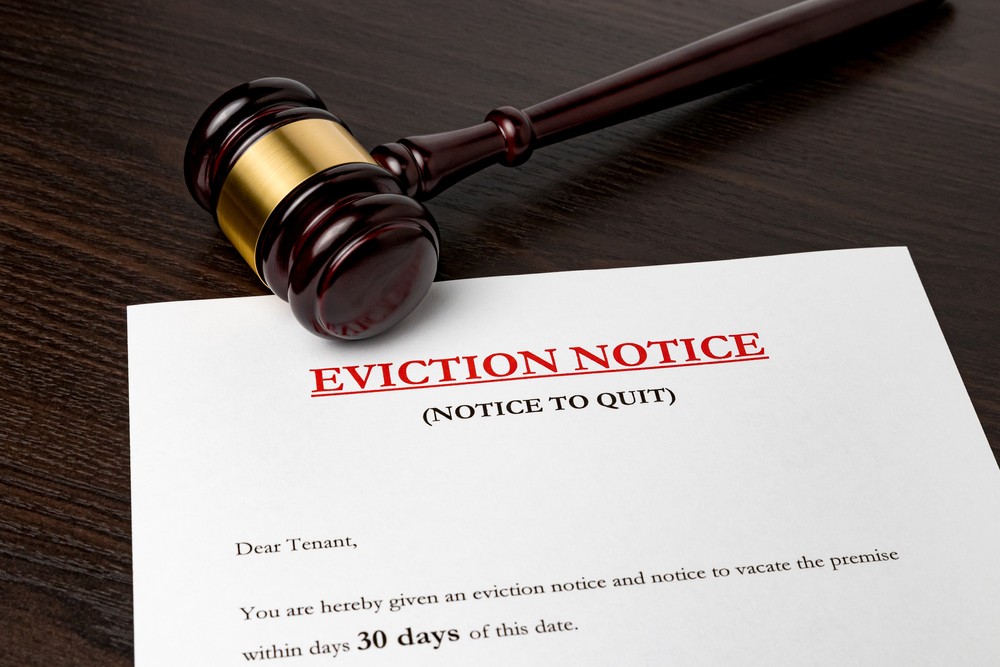
Real estate cases can be sad, and this is one of those. City of Charleston Housing Authority v. Brown* Involved the eviction of a mother from a public housing apartment because her son committed a crime.
The facts, according to the Court, are not in dispute. Katrina Brown renewed her lease with CHA in 2015. Brown’s minor son and daughter were listed as residents and members of her household. Early in 2016, Brown’s son, who was 17 at the time, was arrested a mile away from his home carrying a gun. Two weeks later, CHA sent an official 30-day notice of eviction to Brown. The notice informed Brown that her eviction was based on the lease’s prohibition against violent criminal behavior.
At the magistrate’s hearing, a Charleston detective testified that Brown’s son confessed to an attempted armed robbery that occurred two days before his arrest and approximately one mile from the housing complex. Brown testified that her son was being held in jail, and if he was able to make bond, he would live with his grandmother.
The magistrate found that evictions based on criminal activity provisions of housing lease agreements must be determined on a case-by-case basis and denied the application for eviction based on the testimony as well as factors from federal law. On appeal, the circuit court remanded the case for factual findings and analysis regarding whether Brown’s eviction was warranted under 42 U.S.C. §1437(1)(6), the federal statute governing public housing leases, which is colloquially known as the “One-Strike Rule.”
The “One-Strike Rule” requires federally-funded public housing authorities and private landlords renting their properties to tenants receiving federal housing assistance to include a provision in all leases stating that drug-related criminal activity, as well as criminal activity that threatens other tenants or nearby residents, are grounds for eviction, regardless of the tenant’s personal knowledge of the criminal activity. The strict-liability, no-fault rule was premised on the idea that public housing tenants are entitled to homes that are “decent, safe, and free from illegal drugs.
In May of 2017, the magistrate issued an order evicting Brown, finding her son’s actions created good cause for eviction. At an appeal hearing before the circuit court, Brown argued that non-drug related criminal activity can only be grounds for eviction if the activity constitutes a present threat to the residents of the public housing facility and occurred in the immediate vicinity of the facility. She also argued that CHA was required to demonstrate that they used discretion in evaluating the circumstances and alternatives to eviction of an innocent tenant before evicting the entire household. She asserted that CHA made no showing that it exercised discretion.
The circuit court affirmed Brown’s eviction. The Court of Appeals found that Brown’s son’s actions created good cause for the eviction. The Court cited a 2007 Massachusetts case that set out the policy reason for the “One-Strike Rule”: Tenants of public housing developments represent some of the most needy and vulnerable segments of our population, including low-income families, children, the elderly, and the handicapped. It should not be their fate, to the extent manifestly possible, to live in fear of their neighbors.
The Court further held that the threat need not be “ongoing” to justify eviction. Then the Court turned to an interesting aspect of federal law, holding the “One-Strike Rule” does not automatically require eviction. Rather, the housing authority must demonstrate that it exercises discretion in the decision to evict. The record must reflect that the housing authority knew it could refrain from invoking the “One-Strike Rule” under the circumstances.
The case was remanded to the magistrate for a hearing to determine whether CHA exercised discretion in deciding to pursue the eviction of Brown’s entire household for the criminal actions of her son.
I’m sure you understand what I mean about this case being sad. It is sad for the mother to be evicted for the actions of her son, and it is sad for the other residents of the facility to be subjected to such criminal activity. This is a difficult situation, and I’m encouraged to know that discretion must be exercised.
SC Supreme Court invalidates builder arbitration clause …and refuses to enforce the severability provision
It’s rare that we read the Advance Sheets and pause to say “wow”, but this is one of those cases! Damico v. Lennar Carolinas, LLC* is a construction defect suit brought by a number of homeowners against their homebuilder and general contractor, Lennar Carolinas, LLC. The case involves new homes in The Abbey, a subdivision in the Spring Grove Plantation neighborhood located in Berkeley County, consisting of 69 single-family homes constructed between 2010 and 2015. The suit alleged, among other things, negligence, breach of contract, and breach of various warranties.
Lennar moved to compel arbitration. The Circuit Court denied the motion to compel, finding the contracts were grossly one-sided and unconscionable and thus the arbitration provisions were unenforceable. The Court of Appeals reversed, citing a United States Supreme Court case** that forbids consideration of unconscionable terms outside of an arbitration (the Prima Paint doctrine).
The South Carolina Supreme Court agreed with the Court of Appeals that the Circuit Court violated the Prima Paint doctrine but agreed with the homeowners that the arbitration provisions, standing alone, contain a number of oppressive and one-sided terms, thereby rendering the provisions unconscionable and unenforceable. The Court further declined to sever the unconscionable terms from the remainder of the arbitration provisions.
The Court denied severability for two reasons. First, enforcing the severability provision would have required the Court to blue-pencil the agreement regarding a material term of the contract, a result strongly disfavored in contract disputes. Second, as a matter of policy, The Court found severing terms from an unconscionable contract of adhesion discourages fair, arms-length transactions.
The Court said that if it honored the severability clause in such contracts, it would encourage sophisticated parties to intentionally insert unconscionable terms—that often go unchallenged—throughout their contracts, believing the courts would step in and rescue them from their gross overreach. This is not to say, according to the Court, that severability clauses in general should not be honored, because the courts are constrained to enforce a contract in accordance with the parties’ intent.
Rather, the Court said it merely recognized that where a contract would remain one-sided and be fragmented after severance, the better policy is to decline the invitation for judicial severance.
I read this case to be a clear message to lawyers that it doesn’t pay to be too clever in drafting contracts.
The Court defined unconscionability to mean the absence of meaningful choice on the part of one party because of one-sided contract provisions, together with terms that are so oppressive that no reasonable person would make them and no fair and honest person would accept them. The touchstone of the analysis begins with the presence of absence of meaningful choice coupled with unreasonably oppressive terms.
What was so horrible about the contract in question?
One provision gave Lennar the sole discretion to include or exclude its contractors, subcontractors and suppliers, as well as any warranty company and insurer as parties in the arbitration. The Court said that it is a fundamental principle of law that the plaintiff is the master of the complaint and the sole decider of whom to sue for the injuries. Giving Lennar the “sole election” to include or exclude parties strips the homeowners of that right, according to the Court. Taken to its logical conclusion, this provision could require homeowners to litigate with some defendants and arbitrate with others.
Another provision said the homeowners “expressly negotiated and bargained for the waiver of the implied warranty of habitability (for) valuable consideration…in the amount of $0.”
Similarly, the contract specifically stated that the “(l)oss of the use of all or a portion of your Home” is not covered by its warranty to new homebuyers.
Another provision stated, “(T)his Agreement shall be construed as if both parties jointly prepared it”, a blatant falsehood, according to the Court, “and no presumption against one party or the other shall govern the interpretation or construction of any of the provisions of this Agreement.”
The Court found that these and other terms of the contracts to be absurd, factually incorrect, and grossly oppressive.
The Court pointed to the fact that Lennar is significantly more sophisticated than the consumer homeowners, creating a disparity in the parties’ bargaining power and that South Carolina has a deeply-rooted and long-standing policy of protecting new home buyers.
The Court said, “It is clear that Lennar furnished a grossly one-sided contract and arbitration provision, hoping a court would rescue the one-sided contract through a severability clause. We refuse to reward such misconduct, particularly in a home construction setting.”
WOW!
Lawyers who represent consumers should wave this case in the face of parties who claim contracts can never be negotiated. Every contract can be negotiated, and this case is clear evidence that this fact is true in South Carolina. Consumer lawyers, this is your case!
Devine St. and Crowson Rd., Columbia, SC during the “1000-year flood” of 2015
If you have clients who are complaining about the rising cost of flood insurance, there may be a good reason for those complaints. This issue came to my attention through The DIRT listserv which I have recommended to South Carolina dirt lawyers several times. If you haven’t already, subscribe to this listserv for interesting discussions of current real estate topics.
In 2021, FEMA announced that the National Flood Insurance Program (NFIP) was shifting to a risk-based premium system. The new system is called Risk Rating 2.0, and it attempts to base premiums on the actual characteristics of individual properties rather than simply referring to “flood maps”. I’d like to refer everyone to this article from ClimateWire dated August 27, 2022.
According to the article, FEMA’s shift was intended to encourage more homeowners to buy flood insurance by showing more precisely the risk that each property faces of being flooded. The shift has apparently caused the opposite result. Many homeowners have dropped FEMA flood insurance based on increasing premiums. It should be noted that many premiums were also reduced.
Closing attorneys understand all too well that properties in high-risk flood zones require flood insurance if the property owners obtain federally backed mortgages. The individuals who are dropping the coverage are not those who have such mortgages. Many of the individuals opting out of flood insurance because of increased costs are low-income individuals in coastal areas.
The article states that the number of NFIP policies dropped from 4.96 million in September of 2021 to 4.54 million in June of 2022. The declining numbers cause concerns that owners whose homes are flooded will not be able to rebuild or recover financially, and that low-income households will suffer the most.
FEMA told the reporter that many factors could influence the drop in policy holders, including the economic impact of the pandemic, inflation, the housing market, and the affordability of purchasing flood insurance from the private market. It is not clear how many people who dropped NFIP policies have bought flood insurance through private insurers. In other words, FEMA does not consider that its change in premium calculations is the sole cause of the problem.
We need to pay attention to this issue as Congress wrestles with possible solutions. It is certainly dangerous to have flood insurance priced in a way that fails to protect low-income homeowners who live in the most precarious areas geographically.
The Myrtle Beach Sun News published an article on September 5 entitled, “They were conned out of their dream beach home, lawsuit says. These are common SC scams.” You can read the article here.
Those of us who have worked in the real estate industry for years have heard of (or been bitten by) various iterations of real estate fraud schemes. These schemes change routinely as the fraudsters become more sophisticated. Thankfully, we are becoming more informed and therefore more sophisticated ourselves. But this article is an excellent reminder.
The article recounts the tale of a North Carolina couple, Jeremy and Candice Pedley, who spent years saving before finally acting on their dream of owning a family vacation home in North Myrtle Beach. The Pedleys entered into a contract last November to purchase a condo in in a gated community for $380,000. Unfortunately, a third party hacked into the real estate agent’s emails, impersonated their closing attorney, and convinced he Pedleys so wire their funds to a bank account in Rock Hill.
The hacking effort requested the exact number the Pedleys were expecting to wire, $86,183.81. This fact convinced the Pedleys that the fraudulent instructions were legitimate. According to the article, they have been able to recover about $36,000 of the lost funds. They were unable to complete the purchase of their dream condominium.
Columbia attorney Dave Maxfield is representing the Pedleys in a lawsuit attempting to recover their funds. According to the article, Maxfield told the Sun News that banks should do a better job stopping fraudulent accounts from being used, and real estate agents and attorneys need to warn clients about the pitfalls of wiring funds.
The article then details a few other common scams outlined by The S.C. Department of Consumer Affairs.
One such scheme creates fake rental listings promising low rent, immediate availability, and great amenities. The goal is to trick renters into transferring funds before they are tipped off that the listings don’t exist.
Another scheme notifies consumers that they have won the lottery, requesting, of course, some sort of fee or tax to receive the alleged winnings. Pressure is applied to “act now”.
Finally, the article discussed fake debt collectors. Fraudsters impersonate government authorities and attempt to convince consumers to pay off debt. These schemes typically request the target to pay a fraction of the amount they owe in return for full debt forgiveness. Threats of arrest are often used to apply pressure.
Please keep yourself and your staff members educated about all the current schemes. Your title insurance company should be a great source of current information. And please give your staff members permission to slow down and use the time they need to think through the facts of your transactions. I believe time is the key. The very smart individuals you employ, if properly armed with the necessary information and education, should be able to thwart most of these schemes, if they are given sufficient time to analyze the communications that hit their inboxes daily.
Fourth Circuit unpublished opinion weighs in on SC tax sale issue
South Carolina appellate courts will overturn tax sales on the flimsiest of technicalities. In a recent unpublished opinion of the Fourth Circuit Court of Appeals, a tax sale was not overturned, but the result was almost the same for the tax sale purchaser who failed to search the title.
Remember that an unpublished opinion has no precedential value, but this case is particularly interesting to South Carolina dirt lawyers who understand the necessity of searching titles. Thanks to my friend and real estate litigator extraordinaire Jim Koutrakos who sent this case to me.
Guardian Tax SC, LLC v. Day* involved a Charleston County tax sale. Ralph and Virginia Day bought property in Charleston in 1991. In 2006, the Days mortgaged the property to Bank of New York Mellon. Between 2005 and 2007, the Days failed to pay their federal income taxes, and beginning in 2010, they failed to pay -county taxes.
In 2016, the Day’s title was subject to three interests: (1) the county tax lien; (2) the mortgage; and (3) the federal tax lien. By operation of law (S.C. Code §12-49-10), the county tax lien took priority. The mortgage had a higher priority than the federal tax lien because it was recorded first. Charleston County sold the property to Guardian through a tax sale that year.
The County did not notify the bank or the United States of the tax sale, but it did publish notice in a local newspaper. Guardian’s purchase of the property satisfied the County lien and generated approximately $1.6 million in excess proceeds. The Days owed approximately $3.5 million to the bank and their federal tax liabilities totaled approximately $2.9 million.
After the tax sale, the County searched the title and notified the Days and the bank of their one-year statutory redemption period. The County did not notify the United States nor inform Guardian of the notices it sent to the Days and the bank. Neither the Days nor the bank redeemed the property. At some point after the expiration of the period of redemption, Guardian searched the title and discovered for the first time the interests of the bank and the United States. Guardian filed a quiet title action which was removed to federal court by the United States.
Guardian, the bank, and the United States filed competing motions for summary judgment. Guardian and the bank argued over the excess proceeds, and Guardian argued that the federal tax lien was extinguished by the tax sale or, alternatively, the United States should be awarded a 120 day right of redemption.
The district court agreed with the bank that it was entitled to the proceeds and agreed with the United States that its lien was valid and that a right of redemption was not appropriate. The Court of Appeals affirmed, holding that the tax sale was nonjudicial and that the United States’ lien survived the tax sale because it did not receive the required notice. Further, because of the lack of notice, the redemption period never began to run.
Both courts rejected Guardian’s argument that the federal lien should be extinguished because of South Carolina equitable principles because federal law governs the enforcement of federal tax liens. The Court of Appeals quoted the District Court’s jab that there is “nothing inequitable about the outcome” because Guardian could have avoided the result by engaging in due diligence prior to the tax sale by searching the title, a “minimal burden.”
*United States District Court of Appeals for the Fourth Circuit Unpublished Opinion No. 21-1411 (August 23, 2022)





 Let's Talk Dirt