Charleston ROD litigation reaches temporary resolution

Standard

This blog has previously discussed (here and here) the excellent lawsuit brought by The Finkel Law Firm against the Charleston County Register of Deeds seeking a writ of mandamus requiring the ROD (1) to immediately file all documents delivered to the ROD within one month of delivery; (2) to mark the documents as having been recorded on the date of delivery; and (3) to record all future documents in the order of the time delivery regardless of whether they were delivered in person or by the U.S. mail or parcel post.

The Court appointed Howard Yates, one of the most experienced real estate lawyers of the Charleston Bar, as Court Monitor. Mr. Yates issued a report dated January 31, 2022, the parties signed a Consent Order on February 10, and the Court issued a separate Order, also dated February 10. Please read all three documents here.

Mr. Yates has made numerous recommendations involving, among other matters, increasing office hours, increasing work hours for staff, and hiring employees from other ROD offices to reduce the backlog by working weekends.

The Court will maintain jurisdiction and will require frequent reports on progress. We can all applaud the efforts of The Finkel Law Firm and Howard Yates in bringing this matter to satisfactory conclusion, at least temporarily.

Advice for purchaser clients: obtain a survey!

Standard

Advice for lawyers: paper your file when clients refuse!

On this cold, wet Monday morning, I was wondering what I could write to help my real estate lawyer friends through a February week in South Carolina. Then I remembered this news article from the U.S. Sun an excellent dirt lawyer friend from the coast sent to me. His quote was: “I wish I could get all buyers to read it when they turn down a survey.” Perhaps you can use this article to convince a client or two.

Any of us who are old enough to have practiced in the 1990s will remember a time when lenders and title insurance companies required current surveys for every closing. A current survey is a great tool for a real estate lawyer to review along with the title work. Comparing the boundary lines with the title work and checking for easements, encroachments and such horrible mishaps as sewer lines running under improvements gave the lawyer and client a great deal of comfort.

Our backdoor neighbors were once Steve and Wendy Spitz. Many real estate lawyers in South Carolina attribute our knowledge and enthusiasm for the practice to Steve’s property classes in law school. We both built in a new subdivision, and a corner of the Spitz home, as revealed by a survey, sat squarely on a City of Columbia water easement. That builder’s mistake was corrected prior to closing by negotiating with the City to move the easement. Thankfully, the water line itself was not a problem.

To hold down closing costs, at some point in the 1990s lenders began to eliminate the requirement for a survey in most residential closings if the lender could obtain title insurance survey coverage. One of the title insurance companies agreed to provide survey coverage to lenders without a new survey. There were some requirements back then, like having a survey of record showing the improvements or having an affidavit from the owner that nothing had changed since the prior survey.

Then, for competitive reasons, all the title insurance companies caved. Current surveys were no longer required. Over the years, the requirements were even softened.

My thought was that the title companies had unceremoniously hung the lawyers out to dry. Previously, the closing attorney simply told the client that a survey was required to close. With the change, the closing attorney had to convince the client of the need for a survey despite the added cost. I believe one of the biggest traps for the unwary closing attorney is failing to advise purchaser clients to obtain surveys and failing to paper files when surveys are rejected.

And don’t even mention the surveyors! They were collectively and understandably furious that they had lost a large portion of their business. I remember being the sacrificial lamb who was sent to speak to a statewide group of surveyors on behalf of the title insurance industry. It wasn’t pretty.

Here’s another story from my neighborhood. A kindly preacher friend bought a house several doors down from us. The free-standing garage had been added prior to my friend’s purchase and well after the original construction. My friend did not obtain a current survey. When he sold the house, a new survey revealed that the garage violated the side setback line by more than ten feet, and the purchaser refused to close. Keep in mind that contracts typically require sellers to give marketable title. A setback violation of this magnitude may be insured over by a title insurance company, but the title may not be marketable. This purchaser was within his rights to reject this title.

By that time, the developer, a Greenville based insurance company, had sold all the lots, and took the position that it could no longer waive violations of the restrictions even though the restrictions clearly allowed for developer waivers. The solution was that my friend went door to door to obtain the signatures of the required majority of the owners. Thankfully, my friend was a very nice guy, and the neighbors were willing to accommodate his request by signing the waiver.

Today, title insurance policies have evolved to the point that survey coverage is often given to owners without current surveys. But the example above demonstrates that title insurance coverage may not cure the underlying problem. Title insurance can never create marketable title. And title insurance claims may take time and cause aggravation that clients will not appreciate.

So let your clients read the linked article and advise them to obtain surveys. And, if they refuse, obtain  informed consent confirmed in writing for your file!

Here’s a great idea!

Standard

The official who records our deeds should not be selected via popularity contest!

I’m all about the democratic process. But when it comes to the Register of Deeds, I believe that person should be appointed locally based on a very specific skill set. Popularity and politics should have nothing to do with choosing the appropriate person to handle the very meticulous administrative process that deals with recording public documents.

Apparently, the Executive Committee of the Charleston County Bar Association wants to take action to make sure the ROD for Charleston County is qualified. Take a look at this letter that body wrote to County Council on January 19.

If you follow this blog, you know that the Finkel Firm has brought suit against the Charleston County ROD asking for a writ of mandamus based on the horrific lag involved with recording documents in that county. This letter provides additional evidence that something is terribly wrong in the Charleston County ROD office, and action needs to be taken sooner rather than later.

As this letter points out, South Carolina is a race notice state. If our deeds, mortgages and other documents are not recorded in a timely manner and in the proper order, then the proper priorities among parties is thrown to the wind. The rights of parties relating to real property are based on when the documents establishing those rights are properly recorded.

The letter lists eighteen counties where the RODs are currently appointed. The letter also states that no constitutional provision or statutory edict requires an election in this case.

What do you think? Should the Register of Deeds be appointed by County Council?

Court of Appeals answers novel JTROS question

Standard

In the first Advance Sheet of 2022, our Court of Appeals answered a novel question concerning the severance of a joint tenancy with right of survivorship. The case* involved the estate of a father who owned property in Garden City with his son, one of his five children. Father and son had purchased the property together, each owning a fifty percent interest.  

The facts are simple. The property owners entered into a contract to sell the property in November of 2013, prior to the father’s death on December 20, 2013. The transaction closed on December 27, just seven days after the father’s death. The son, who was also the personal representative, treated the sale as if he was the sole owner and claimed the proceeds of the sale individually. His siblings argued that the contract severed the joint tenancy, entitling the estate to half of the proceeds.

The Probate Court and Circuit Court agreed with the siblings, relying on South Carolina Federal Savings Bank v. San-A-Bel Corporation**, which held that a purchaser under a contract has an equitable lien on the property. The Probate Court reasoned that the sales contract entered into prior to the Decedent’s death encumbered the property, entitling the purchaser possession of the property upon payment of the purchase price and entitling the estate to one-half of the proceeds. The Circuit Court found that the Probate Court had correctly interpreted the law.

Dirt lawyers understand the San-A-Bel case sets up a trap for the unwary lawyer who fails to deal with the equitable lien that case established, but we have never understood that case to affect JTROS severance. The Court of Appeals agrees with us. Since neither San-A-Bel nor the JTROS statutes address the question at hand, the Court decided to look at rulings from other states to address the novel issue of whether a contract of sale severs a joint tenancy.

The Court cited cases from the states of Washington and Florida (citations omitted) and decided to follow the Florida court which held that severance does not automatically occur upon the execution of a contract executed by all joint tenants unless there is an indication in the contract or from the circumstances that the parties intended to sever and terminate the joint tenancy.

The Court found that the contract at issue was silent on the severance issue and no extraneous circumstances indicated severance was intended by the parties, so the joint tenancy was not severed by the contract, and the son was entitled to the sales proceeds.  

Dirt lawyers tend to hold our collective breath when our Courts address a novel real estate issue. But I believe that, this time, we can agree that they got it right. Let me know if you disagree with me!

*In the Matter of the Estate of Moore, South Carolina Court of Appeals Opinion 5887, January 5, 2022.

**307 S.C. 76, 413 S.E.2d 852 (Ct. App. 1992).

Happy New Year!

Standard

Watch out for those recurring dreams…

And don’t forget the mortgage subordinations!

As the last blog of the year, I thought I’d tell you the story of one of my recurring dreams, or more accurately, one of my recurring nightmares, for your entertainment.

Do you have recurring dreams? I grew up in Georgetown where everyone makes routine pilgrimages to Charleston for shopping, dining, and medical appointments. My first recurring nightmare as a child involved the fright of crossing that rickety, two-lane bridge between Mt. Pleasant and Charleston. Thank goodness that monstrosity was replaced by the beautiful suspension bridge we cross today!

Later came the dreams involving college at Carolina. I dreamed I couldn’t get into the mailbox in my dorm. I have no idea why I had that dream because nothing very important was ever there. I dreamed my meal card wouldn’t work but that was also a useless dream because missing those dorm meals would have been no great loss.

Then came law school. In those dreams, it was always time for the exam for a class I had forgotten I signed up for. A more accurate dream would have involved a class I knew I signed up for but failed to attend class because I didn’t understand a word the professor said (think international law). Thank goodness my boyfriend had a great “skinny” on that topic and I somehow made it through that class. And I later married that boy.

But my most vivid recurring dreams involve my professional life, and the stories are always based in fact. I’ll tell you the factual, not the fantasy version of this dream. And I’ll avoid the names for attorney-client and other confidentiality reasons. This is the biggest professional mistake I made or, more accurately, the biggest professional mistake I made that I know about. As dirt lawyers, we plant time bombs every day, right?

I represented real estate developers. They developed malls, shopping centers, residential subdivisions, residential condominiums, outlots for McDonalds and other fast-food restaurants and other properties. The story involves a very large tract that was developed into an upscale residential subdivision, a Walmart, a movie theater, a church, and a shopping center.

The development was complicated. It involved environmental issues that could have derailed the entire project. Multiple individuals formed various entities for buying, holding and selling the real estate. The underlying property was purchased from the Federal government, which created its own set of complications. The acquisition, for example, involved a bid process that was foreign to me at the time.

It all finally fell into place, and the residences and businesses are still in place in 2021.

The problem that I thought might derail my career came to light when one of the individual developers declared bankruptcy. When that happened, every legal step I had taken for that person in the prior three years was scrutinized. The main lawyer scrutinizing my work, along with a team of associates, was a law school classmate, and, thankfully, a very kind and smart lawyer. But I spent lots of time worrying that I had missed something important.

I can remember the phone call from my friend all these years later down to the clothes I was wearing and the coffee cup in my hand.

The commercial properties required easements because of the private roads the properties shared. They also had easements for maintenance, pedestrian access, shared utilities, etc. Here’s the pitfall. When properties with these legal connections are owned and mortgaged separately, the lenders almost always must subordinate their mortgages to the easements to ensure the easements remain in place in the event of foreclosure, or in this case, bankruptcy.

I knew that!

I routinely obtained mortgage subordinations at every step of the development, except for one commercial tract. To this day, I have no idea how I missed one set of subordinations. And I think I lost several years off my life between the phone call from my kind classmate until I was able to obtain the subordinations very much after the fact. I was very lucky because the lender I had to approach (hat in hand) was a local lender. I even knew the person I had to persuade to cure my problem. And the good Lord must have smiled on me that day because it all worked out. I kept my license and my clients.

So, as I wish you a very happy, healthy, and prosperous 2022, I remind you to avoid the mistake I made. Always obtain the necessary mortgage subordinations!

Finkel Firm seeks affidavits in support of its lawsuit against Charleston ROD

Standard

This blog has previously informed South Carolina real estate practitioners about the Petition for Writ of Mandamus filed by the Finkel Law Firm against the Charleston County Register of Deeds because of the significant backlog in recording.

Attached here is a copy of the memorandum from the firm requesting affidavits from law firms, title abstractors, realtors, title companies and agencies, and other organizations associated with the real estate industry setting forth how they have impacted with these delays.

Please read this memorandum and help this law firm if you, your office, and your clients have been impacted.

Borrower sues mortgage lender for violation of attorney preference statute

Standard

Court of Appeals holds lender’s foreclosure action is not a compulsory counterclaim

South Carolina’s Court of Appeals ruled on a noteworthy foreclosure case* in August.

The facts are interesting. In 1998, the borrowers signed a fixed-rate note in the amount of $60,400 at a 9.99% interest rate secured by a mortgage on property in Gaston. The note contained a balloon provision requiring payment in full on July 1, 2013.

On June 27, 2013, days before the note matured, the borrowers brought an action against the lender alleging a violation of South Carolina Code §37-10-102, the Attorney Preference Statute. The complaint alleged that no attorney supervised the closing, that the loan was unconscionable, and that the borrowers were entitled to damages, attorney’s fees and penalties as provided in the Consumer Protection Code. In addition, the complaint asserted a claim under the Unfair Trade Practices Act. All the allegations were premised on the same alleged violation of the Attorney Preference Statute.

The borrowers immediately defaulted on the note, and the lender filed an answer asserting no counterclaims. At trial, the jury found for the lender. About a year later, the borrowers sent a letter by certified mail to the lender requesting that it satisfy the mortgage. The letter included a $40 check to pay the recording fee for the mortgage satisfaction. The lender refused to satisfy the mortgage and returned the check.

The lender brought the present action for foreclosure in October of 2016. The borrowers asserted defenses of res judicata, laches, unclean hands, waiver, and setoff, but admitted no payments had been made on the loan after July 1, 2013. The borrowers then sought a declaratory judgment that the lender held no mortgage on the property, or, alternatively, that the mortgage was unenforceable. They alleged that the lender was liable for failing to satisfy the mortgage and for noncompliance with the Attorney Preference Statute. The lender denied the allegations and argued that the claims under the Attorney Preference Statute were time-barred.

Both parties sought partial summary judgments before the master-in-equity. The master granter the borrower’s motion and denied the lender’s motion. He ruled that the mortgage was satisfied and instructed the lender to file a satisfaction.

On appeal, the lender argued the master erred by finding its foreclosure action was a compulsory counterclaim in the 2013 action. The Court of Appeals agreed, holding that the two claims arose out of separate transactions. The Attorney Preference claim arose from the closing, while the foreclosure arose from the borrower’s default, according to the Court. The Court reversed the master’s award of partial summary judgment to the borrower and remanded the case for further proceedings. Because of its decision on this issue, the Court determined that it did not need to address the remaining issues.

*Deutsche Bank National Trust Company v. Estate of Houck, South Carolina Court of Appeals Opinion 5844, August 11, 2021.

Thoughts of a traveling dirt lawyer in the days of COVID

Standard

I am a planner. In November of 2019 I told my boss I planned to retire in February of 2021, giving us plenty of time to name and train my replacement. Thank goodness, Jennifer Rubin stepped up to learn more than I ever knew about my job. My husband, Frank, had already retired, and we had plans to travel.

But none of us planned for COVID!

Jennifer, the rest of our office and I all worked from home beginning March of 2020. We did manage to put everything in place for my retirement, and Jennifer has taken over like a champ…seamlessly.

After two COVID vaccines, Frank and I decided to put our toes timidly into the travel waters. Six adults flew with masks to Denver and toured Colorado for ten days. We drove over 1,700 miles and saw six National Parks, the Air Force Academy, and many other beautiful sites. (We crossed over to Utah on a whim to visit beautiful Arches National Park.)

 Except for the challenges of breathing at heights up to 14,000 feet above sea level, Colorado is a delightful state! Having grown up in Georgetown, South Carolina, and Panama City, Florida, my lungs are accustomed to breathing at sea level. And compared to Columbia, the temperatures in September were wonderfully cool!

A dirt lawyer can’t travel without having lots of real estate thoughts and raising lots of real estate questions.

Here are just a few from Colorado:  How was all that land accumulated for those National Parks? Were condemnations required? Who was displaced? What kinds of contracts are in place for care and maintenance of the parks?  How does the Federal Government share and manage the Academy’s real estate with the City of Colorado Springs and the State of Colorado? Is the Academy’s real estate treated like the real estate of our Fort Jackson? (I once handled the legal work for the creation of a subdivision from surplus Fort Jackson land, so I learned a good bit about the technicalities.) Where do those people who live in the middle of nowhere buy groceries and deliver babies?  How is that mountainous property surveyed?

I can do the research, but maybe some lawyers who are much smarter than I am will point me in a direction.

Of the six vaccinated, mask wearing adults, three came home and tested positive for COVID! Thankfully, the cases were minor, and everyone is fine by now.

After booster shots, Frank and I decided to travel again. This time, we struck out on our own and drove about 1,400 miles from Columbia to Asheville, Nashville, Memphis, Selma and back to Columbia. What a great trip!

We spent one night at an upscale, relatively new hotel in Asheville, and I was struck with how cramped it seemed, surrounded by busy Asheville streets. I, of course, thought about the developer’s thought process in accumulating the real estate and placing the hotel in that location.

Don’t judge, but it was Halloween week, so we took the “Spooky Asheville Walking Tour”. We didn’t see any ghosts, but I was struck with the stories of covering up cemeteries to create streets. I’m not sure I bought that story from a real estate standpoint. I’ve been involved in many claims involving missed cemeteries!

In fact, I couldn’t decide whether the tour guide was completely making up the stories or whether some of them were based in historical fact. Apparently, a lieutenant of Al Capone was pushed out of Asheville’s Flat Iron Building, and a United Methodist Church is haunted by a nun who predicts futures. I may need to check some of this out. Call me skeptical.

At Graceland, we saw Elvis’ Trust Deed with the notation, “A Title Policy is a Vital Policy.” I couldn’t agree more, and I’m attaching a picture for your enjoyment.

At the Peabody Hotel in Memphis, we watched the ducks leave their fountain in the hotel lobby to return to their “penthouse apartment” for the evening. We watched this show twice and dubbed it the best show in town. (The “rubber ducky” drinks I was imbibing may have added to the attraction.)

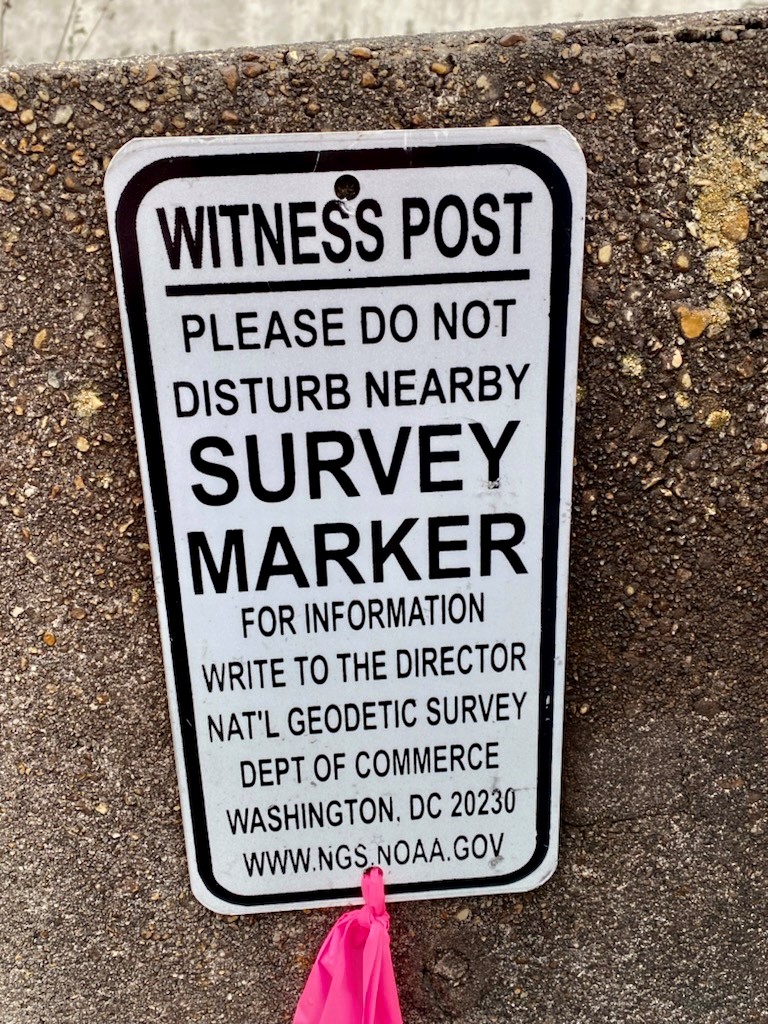
At the historic Edmund Pettus Bridge in Selma, we saw a “Witness Post” advising that we shouldn’t remove a survey market. What dirt lawyer could resist taking a picture of that? It is also attached for your enjoyment.

Thanks for indulging my real estate meandering thoughts and questions. Our next trip will be with children and grandchildren to Disney World for Thanksgiving week. Be prepared!

Is it time to end single-family zoning?

Standard

Although politics are important to me, I see absolutely zero benefit in discussing politics on social media or in this blog. For that reason, I raise this topic with some apprehension and definitely without taking a political position. I raise it for educational purposes only.

I invite you to put this term in your favorite search engine: “terminating single-family zoning”. You will find articles that range in tone and opinion from, “The conservative case for ending single-family zoning” to “Dems are set to abolish the suburbs”. The arguments are all over the place! 

My purpose in raising this topic is simply to ensure South Carolina real estate practitioners have it on their respective radars. Like most extreme changes, this one is likely to be very slow to make it to The Palmetto State, but it’s important for us to be prepared to address if and when it arrives at our borders.  

One interesting perspective comes from Journal of the American Planning Association (Volume 86, 2020 – Issue 1) which argues that the privilege of single-family homes “exacerbates inequality and undermines efficiency” by making it harder for people to access high-opportunity places and contributing to shortages of housing in expensive regions. In many cities, the paper argues, single-family zoning prevents housing development where development would be most beneficial and instead pushes expansion into denser, lower income neighborhoods, onto polluted commercial corridors, and into the undeveloped land outside city boundaries. The authors have no illusion that making this change will be simple or that every city can handle the controversy the same way.

Arguments against eliminating single-family zoning include the idea that most Americans prefer detached single-family houses, that it creates more aesthetically pleasing neighborhoods, that it protects against excessive density, and that eliminating it will be impossible. Many arguments are made against constructing a housing tower next to existing detached homes. But counter arguments are made that removing single-family zoning might reduce rather than increase the prevalence of high-rise development because tall buildings are a response to scarcity of development-friendly parcels.

The conservate argument against single-family zoning is apparently that there is no greater distortion of the free market than local zoning codes, and that there are few bureaucracies doing more harm to property rights and freedom than local zoning officers.

See what I mean when I said the arguments are all over the place?

That being said, jurisdictions in California, Washington State, Oregon, Massachusetts, Minnesota, and Maryland are apparently considering loosening zoning restrictions. In one of his first actions after surviving an election seeking to oust him from office, California Governor Gavin Newsom essentially abolished single-family zoning throughout California and signaled his approval of legislation seeking to increase California’s housing production.

I doubt we will deal with this issue any time soon, but proactively becoming familiar with the arguments on all sides will only improve our ability to discuss the issues when the time comes.

Secret Service Thwarts $21 million scam

Standard

The United States Secret Service announced in a press release dated September 1 that on August 23, it was successful in thwarting a real estate related business email compromise (BEC) scheme that sought to defraud a purchaser of more than $21 million.

The scheme attempted to divert closing funds to a fraudulent bank account. After quick action by the Secret Service and its private sector partners, the funds were returned to the victim.

Please refer to this Underwriting Memorandum issued by Chicago Title’s South Carolina State Office on September 20 warning that fraudulent wiring instruction schemes are on the rise.

These schemes typically employ altered or fictitious payoff statements. The fraudster often impersonates a mortgage broker, lender, borrower, or an agent of the borrower to request a copy of the payoff statement. Alternatively, the fraudster may intercept the payoff statement by a hacking or phishing ploy.

Armed with the payoff statement, the fraudster will create and transmit a bogus “updated” payoff statement with wiring instructions intending to divert the funds to the fraudster. The statement may also alter contact information so that telephone calls to verify payoff information will be answered by the fraudsters.

Chicago Title’s memorandum advises closing attorneys to take the following proactive measures to minimize the risk that payoff funds will be diverted:

  • Obtain payoff statements early so they can be properly reviewed and verified.
  • Verify banking information and payoff amounts directly with the payee using known, trusted numbers rather than information from the payoff statement.
  • Refer to prior payoff statements from the same payee to confirm the banking information matches.
  • Maintain repetitive wire information within systems or databases to use for future wires. Lock this information to restrict alterations.
  • If it is impossible to make a verbal confirmation by a known trusted telephone number, consider sending overnighting a check.

Be careful out there, closing attorneys!