Dave Whitener’s “Palmetto Logs”

Standard

SC palmetto state

Two weeks ago, this blog paid tribute to the late, great Dave Whitener, a giant among real estate legal professionals in South Carolina. As suggested in that blog about Dave’s “Top Ten You Betters”, I also wanted to share with you Dave’s “Palmetto Logs”.

Several years before his death, Dave was asked to address the American Bar Association. The issue was whether a successful defense might be mounted if a federal agency attacked the rights now existing in South Carolina for lawyers, and only lawyers, to close real estate transactions. In that talk, Dave cited ten areas of defense that he called the Palmetto Logs. For non-South Carolinians, the palmetto log has traditionally been a symbol of protection for South Carolinians in time of war. South Carolina is nicknamed “The Palmetto State”.

Here are Dave’s suggested protections against an attack from outside our state for closings performed by licensed South Carolina attorneys:

Caselaw

  1. State v. Buyers Service, 292 S.C. 426, 357 S.E.2d 15 (1987). In this case, the South Carolina Supreme Court defined the practice of law in a residential real estate closing to include: certification of the title; preparation of the deed and loan closing documents, closing the transaction and overseeing recording.
  2. Doe v. Condon, 351 S.C. 158, 568 S.E.2d 356 (2002). In this case, the South Carolina Supreme Court reiterated and confirmed that the four protected areas set out in Buyer’s Service would also apply to residential refinances.
  3. Doe v. McMaster, 355 S.C. 306, 585 S.E.2d 773 (2003). In 2003, the South Carolina Supreme Court again reiterated its holding in Buyer’s Service.

Statutes and South Carolina Constitution

  1. C. Code §40-5-310 makes it a felony for an individual to participate in the unauthorized practice of law.
  2. C. Code §40-5-320 makes it a misdemeanor for a corporation or other entity to participate in the unauthorized practice of law.
  3. C. Code §37-10-102 gives a borrower the absolute right to choose the closing attorney in a residential loan closing. The statute provides for a $7,500 penalty if the disclosure is not given.
  4. South Carolina’s Constitution gives the S.C. Supreme Court the exclusive right to define the practice of law within South Carolina

Practical Considerations

  1. The low cost attributable to attorneys’ fees for residential closings in South Carolina. Dave believed the low cost would present a major difficulty if a federal agency argues that South Carolina’s practice is anti-competitive or increased prices.
  2. Major job losses would possibly result from the outsourcing of jobs to closing centers outside of South Carolina
  3. Major risks would be raised in turning over the duties now performed by experienced lawyers to unregulated and inexperienced lay persons.

I’m not sure whether Dave would say differently if he were here to analyze this topic for us today. I fear that the retirement of Chief Justice Jean Toal may have resulted in the loss of the South Carolina lawyer’s strongest advocate in the South Carolina Supreme Court. So far, the Palmetto Logs are holding strong, but some more recent cases from our Supreme Court give me some concern on this topic.

In any event, I am continually thankful for Dave Whitener and his influence, mentorship and friendship to South Carolina dirt lawyers!

Commercial lawyers: you’re not immune from fraud!

Standard

This high-dollar scam was reported to our company

hacker mask

Our company publishes an excellent newsletter entitled “Fraud Insights”. The Editor, Lisa Tyler, National Escrow Administrator, deals mostly with residential transactions. It’s unusual for her to report on a scam involving a commercial transaction, but the edition that hit my in-box today outlines the story of a chilling scam involving a commercial transaction in New York. Fortunately, the scammers were not successful despite their best efforts.

Here are the facts. On April 10, 2019, an attorney at a large, prestigious New York City law firm sent a settlement services office in Lake Success, New York, a payoff letter for a private mortgage. The payoff letter said $1.7 million should be wired to a bank account in New Jersey.

The afternoon before the closing, the settlement office received an email purportedly from the payoff attorney’s office with revised payoff instructions for a bank in the Netherlands.

The closing was postponed for reasons not involving the loan payoff. When the closing was rescheduled, the settlement office emailed the lawyer and his assistant inquiring about the change in the wiring instructions. The responding email confirmed that the change was legitimate.

Reviewing the emails carefully, the closer noticed the domain name for the lawyer’s office contained an extra “s” beginning with emails dated April 16. The attorney’s email signature was also partially cutoff beginning April 16.

Two hours before the closing, the attorney’s assistant purportedly sent the closer an email asking if the wire had been sent. The closer did not want to alarm her that her email had been compromised, so he responded that the closing was happening shortly, and he would be in touch. The closer then searched the law firm by Internet and called the main telephone number, asking for the assistant directly. She answered the phone and said the original payoff letter was the only payoff letter, and she had not sent the recent email. She was, of course, alarmed.

She said her attorney was in court and she would relay the distressing information to him immediately. She was asked to refrain from using email for that notification because the emails were clearly being watched. Regardless, she emailed the attorney. At that point, the scammers were tipped off that their scheme had been uncovered.

While the legal assistant and the closer were discussing the situation by phone, the closer received another email purportedly from the assistant demanding that he call the lender to confirm the payoff information. Immediately following that exchange, a man called the closer office to confirm the altered wiring instructions.

At this point, everyone involved with the closing knew for sure that they were dealing with attempted fraud. The closing took place, but the payoff was accomplished via bank check.

The closer said his office tries to remain on the cutting edge of technology and industry news. His sharp eye in pinpointing the email discrepancies kept the closing from being another cybercrime news story. Commercial lawyers may feel somewhat insulated from the rampant cyber fraud that plagues residential practices, but this cautionary tale is an example of penetration into a sophisticated law firm. Be careful out there!

Paying tribute to a giant of the SC Real Estate Bar

Standard

Dave Whitener was a friend and mentor to us all

Have you ever tried to organize your old forms, seminar materials and documents only to start waxing nostalgic and ultimately getting absolutely nothing accomplished? That happened to me today.

I am sorely behind schedule writing an update to the Handbook for South Carolina Dirt Lawyers. I’m sure my name is “Mud” with Terry Burnett and Alicia Hutto, my good friends at the South Carolina Bar who are not very patiently waiting for results. I had a plan to get the update done in 2017 and again in 2018, but that never happened. I’ve been so busy with new initiatives at work that I didn’t even attempt to develop a plan to write an update in 2019. Now, I’m shooting for the date of my death or retirement, whichever comes earlier. Wish me luck!

Hugh Dave WhitenerBut today, I began to organize ancient materials in an attempt to breathe new life into this aged project. And I kept coming across the same name, my late, great friend, Dave Whitener. Why? Because Dave wrote and taught much of the subject matter I now need to address.

Dave was 70 years old when he died in 2014 after practicing commercial real estate and teaching law school in Columbia for many years. He was married to my friend, Tricia Wharton Whitener, who continues his good work today. Dave was not only an excellent practitioner and teacher, but he was also, as his obituary quips, “renowned as a raconteur whose stories made others happy”. He loved people and he loved the law. He loved talking to law students and lawyers and telling them memorable stories in an effort to keep them out of trouble.

Since keeping my fellow South Carolina dirt lawyers out of trouble is the mission of this blog, I’m finding that many of the lessons Dave taught are appropriate on my day of waxing nostalgic.

If a law student or lawyer called Dave with a disturbing current event that the caller said “rang a bell” from one of Dave’s ethics lectures, Dave would reply, “You’re hearing the dinner bell at the federal prison.” That would get the caller’s attention!  I thought of that quote when I came across a lecture from Dave entitled “Top Ten ‘You Betters’”.  I thought I’d share that list with this audience today because this particular top ten list will never go out of style for real estate practitioners.

Dave Whitener’s Top Ten “You Betters”

    1. You better not facilitate the unauthorized practice of law.
    2. You better do what you should be doing.
    3. You better know what you should be doing.
    4. You better be on time.
    5. Everything better be shown on the closing statement.
    6. Everything on the closing statement better be correct.
    7. You better communicate with your clients.
    8. You better understand the rules on conflicts of interest.
    9. You better remember that your trust account is sacred.
    10. You better train your staff properly.


I could editorialize about each item on the list, but I believe the simplicity of this list speaks volumes for today’s purposes. But if I were to write a chapter on each item on the list, my handbook would be complete.

stay tuned

Thank you, Dave, for your example. My next blog may be about Dave’s ten-point plan for defending the rights of South Carolina licensed practitioners to handle real estate closings. Watch this space! 

Here’s a gift, SC dirt lawyers: Your official recording fee list!

Standard

calculator house

This blog reported on May 29 that South Carolina Governor McMaster signed House Bill 3243 into law on May 16. This legislation, called the Predictable Recording Fee Act (S.C. Code §8-21-310), will streamline document filing in ROD offices by creating predictable fees for many commonly recorded documents such as deeds and mortgages. The new law will take effect on August 1, 2019. You and your staff will no longer have to count pages for documents to be recorded!

You can read the short but effective statute here.

My friend and colleague, Jennifer Rubin, was instrumental in the creation and passage of this legislation. Jennifer drafted the legislation and spearheaded Palmetto Land Title Association’s efforts to get the bill passed. Since the legislation was enacted, Jennifer has worked with members of South Carolina Court Administration, as well as leaders in ROD offices throughout the state, to draft a uniform recording fee schedule.  Attached is the newly created official recording fee list.

This law should simplify and streamline your practice and result in significant time and money savings for you and your clients.

Flat recording legislation passes!

Standard

August 1, 2019 is the effective date for this time-saving law

businessman thought bubble scales

On May 16, 2019, Governor Henry McMaster signed House Bill 3243 into law. You can read the short but effective statute here. House Bill 3243, better known as the Predictable Recording Fee Act (S.C. Code §8-21-310), will streamline the filing of documents in the register of deeds offices across the state by creating predictable fees for many commonly recorded documents such as deeds and mortgages. The new law will take effect on August 1, 2019. You and your staff will no longer have to count pages for documents to be recorded!

My friend and colleague, Jennifer Rubin, began work on this predictable recording Bill in the fall of 2016 when she was the President of the Palmetto Land Title Association. Our Agent and friend, Cynthia Blair, who is currently the American Land Title Association President, asked for Jennifer’s help in crafting, drafting and helping to turn the idea of predictable filing fees into law. Accepting that challenge and with the help and support of Chicago Title and PLTA, Jennifer began work on the Bill and began coordinating with the various stakeholders who were: The American Land Title Association, The South Carolina Association of Clerks of Court and Register of Deeds, The Association of Counties, The South Carolina Association of Realtors, The South Carolina Bankers Association, The Mortgage Bankers of the Carolinas, The South Carolina Bar Association, and the American Resort Developers Association on various versions of the Bill.

Jennifer said she was particularly thankful for the efforts of PLTA’s Legislative Committee led by attorney John Langford and the major contributions of her friend Julie Stutts, the deputy RMC for Aiken County.  She also appreciated the advocacy, guidance and support of lobbyists James Knox, Sharon Wilkerson, Neil Rashley, and Kali Turner and their respective groups.  Without everyone pushing this bill forward along and along, the creation of this law would not have been possible.

This new law will finally allow South Carolina real estate attorneys to fully comply with TRID regulations, provide clients and other parties with accurate final closing costs, and keep our bank accounts orderly. Please note that while the new law does not go into effect until August 1st, there is no grace period. So if you have closings on or near the first of August, please be sure to review the new statute to ensure that you’ve collected the correct amount for recording fees.

Let’s collectively start a trend in South Carolina: Shifting home closings away from the end of the month

Standard

I’m going on the record with a strong second to my friend, Gary Pickren’s blog!

end of month calenda NOPE.

Gary Pickren, an excellent residential real estate attorney with an outstanding law firm, Blair|Cato|Pickren|Casterline, here in Columbia posted a blog on May 12 entitled “Save Yourself a Huge Headache!!!!” You can read Gary’s blog in its entirety here.

Gary was apparently reacting to a crazy month-end for his office in April. He reported 25 closings on Tuesday, April 30 as opposed to 3 or 4 on Wednesday, May 1. And the closings that occurred on May 1 were a result of late loan packages from lenders. He was asking his real estate agents to save themselves headaches by scheduling closings throughout the month.

Closings at the end of the month are not a new phenomenon. As far back as I can remember (and that’s a long way back), real estate agents have scheduled closings at the end of the month. Why? Because interim interest has to be paid for only one day, reducing the funds the buyer has to bring to the closing.

Does closing at the end of the month save the buyer money? No! Interest will be paid from the date of the closing regardless. The only difference is the amount of the interim interest, the funds brought to the closing table. If interest is not brought to the closing, it is paid with the first payment.

I sent Gary’s blog around to my office members and got some unexpected strong reactions!

TAnderson

Troyce Anderson, who was formerly a closing paralegal in Greenville, said scheduling closings throughout the month would probably reduce claims because law firms would be able to close with less stress and avoid common mistakes.


MTucker

Melissa Christensen, who was formerly a closing paralegal in the Myrtle Beach area, said her daughter, Savannah, was born on May 30, and the family always has to schedule birthday parties in early June.


SSigwart 2018

Speaking of birth issues, Sara Sigwart, who was formerly a closing paralegal in Hilton Head and Charleston, said that one of her fellow closing paralegals successfully searched for a doctor who would schedule a delivery of her child on the 20th of the month so she could celebrate birthdays with her child on the actual birth date.  Sara’s other reply to Gary’s blog was “PREACH!”


DSeay


Denise Seay, who was formerly a real estate paralegal in Hilton Head said, “Oh good grief-we used to say Realtors only knew one day in the month!”


If our office staff reacted this strongly, imagine how strongly your paralegals, who are currently in the closing trenches, would react. Think about how much easier it would be to manage your office and everyone’s schedules! Your holidays and vacations would even be more manageable.

Gary’s blog calls the end of the month in a residential closing office “organized chaos”.  It might also be termed a huge “traffic jam” for lenders, real estate agents, closing attorneys, paralegals, abstractors, and even buyers and sellers. Let’s follow Gary’s advice and spread closings throughout the month!

You don’t have to be the “bad guy” by using your own words to pass this thought on to real estate agents. Send them this blog!

Court of Appeals affirms Circuit Court in “nefarious conduct” Awendaw annexation case

Standard

awendaw

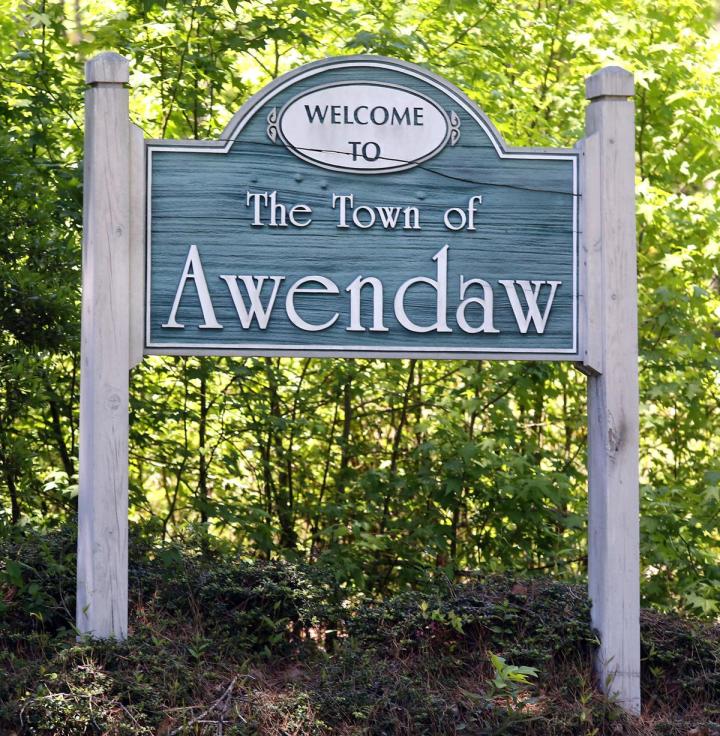
In December of last year, this blog discussed a South Carolina Supreme Court case in which the Court called the Town of Awendaw’s annexation attempt “nefarious conduct”.* The case was remanded to the Court of Appeals, which affirmed the Circuit Court’s decision that the annexation attempt was void ab initio.**

The Town of Awendaw’s annexation of a ten-foot wide, 1.25 mile-long parcel of land within beautiful Francis Marion National Forest was challenged by two individuals and the South Carolina Coastal Conservation League.

The sole question before the Supreme Court last year was whether the challengers had standing to contest the annexation in a case where the “100 percent method” of annexation is used, meaning all property owners petition the municipality to have their property annexed.

The case involved three parcels of land serving as links in a chain necessary to satisfy the contiguity requirement of annexation. The first link is the ten-foot strip managed by the United States Forest Service. The second link is owned by the Mt. Nebo AME Church, and the third link is approximately 360 acres of unimproved real estate surrounded by the National Forest on three sides and owned by Defendant EBC, LLC.

In the fall of 2003, the Town sought to annex the ten-foot strip which required a petition signed by the Forest Service. Town representatives sent the Forest Service four letters seeking approval. Through verbal discussions, the Town learned the Forest Service was opposed to annexations because of their impact on the Service’s ability to conduct controlled fire burns. Additionally, the Forest Service indicated any petition would have to come from Washington, D.C., officials, a process that might take several years.

The Town annexed the property anyway in 2004, relying on a 1994 letter from a Forest Service representative, stating it had “no objection” to annexing several strips of property in the same vicinity. However, the Town had previously stated that it realized this letter was unclear.

In 2009, EBC, LLC requested that Awendaw annex its property, and the Town passed an ordinance annexing that property and simultaneously rezoning it as a “planned development” to permit residential and commercial development. In annexing the EBC property, the Town relied on the ten-foot National Forest strip as well as the church property. Without either component, there would be no contiguity and annexation would be impossible.

In November of 2009, the petitioners filed a complaint against the Town and EBC alleging, among other things, that the Town lacked authority to annex the ten-foot strip of National Forest property because the Forest Service never submitted an annexation petition. The Town and EBC moved for partial summary judgment contending the petitioners lacked standing and that the statute of limitations had run.

At trial, a surveyor testified that the 1994 Forest Service letter referred to a different strip of land. The Town’s administrator responded that the Town had used the 1994 letter at least seven times, and that he believed the letter incorporated the property in question. The petitioners testified they were concerned about potential harm caused by developing the property, including damage to unique species of animals. They testified that they were also concerned that the proposed development would threaten the Forest Service’s ability to conduct the controlled burns necessary to maintain the health of the forest.

The trial court found that the petitioners had standing and concluded that the annexations were void because the Town never received the required petition from the Forest Service. The Court of Appeals concluded that the petitioners lacked standing.

In analyzing the standing issue, the South Carolina Supreme Court discussed its prior cases that held “non-statutory parties” (meaning, non-property owners of the annexed properties) lacked standing to challenge a purportedly unauthorized annexation. Those cases, however, were premised on good faith attempts by annexing bodies, according to the Court.

The Supreme Court did not believe the General Assembly intended in establishing the statutory framework for annexation to preclude standing where there is a credible allegation that the annexing body engaged in “deceitful conduct”. The Court held that a party that can demonstrate the annexing body engaged in “nefarious conduct” has standing to challenge the annexation.

The Court also discussed the public importance exception to the standing rule. This exception states that standing may be found when an issue is of such public importance as to require its resolution for future guidance. The Court stated that the petitioners had satisfied the “future guidance” prong of the public importance exception because the Town had used the 1994 letter numerous times and fully intended to use it again.

The case was remanded to the Court of Appeals to address the Towns’ remaining arguments. The Court of Appeals, apparently noting the Supreme Court’s strong language and robust opinions, reversed course and affirmed the lower court’s ruling that the annexation was void.


*Vicary v. Town of Awendaw, South Carolina Supreme Court Opinion No. 27855 (December 19, 2018).

**South Carolina Court of Appeals Opinion No. 5645 (May 1, 2019).

Dirt Lawyers: beware of these assessor antics

Standard

and be aware of a tool for fighting back!

tiny detectives

The South Carolina Bar maintains a great listserv for members of the Real Estate Practices Section through which lawyers can ask questions and share information via email. I recommend that South Carolina real estate practitioners join the section and the list. Both provide opportunities for staying in touch with fellow practitioners and keeping up with news and trends.

Recently, the list contained this entry from a wonderful practitioner in Myrtle Beach whose name I’m withholding from this blog:

“Good morning Listmates,

Is every County going through the same audit of principal residence discounts for their taxpayers? Or is it just in Horry County? I have run into multiple back-charged properties and even ran into one where it was back-charged between when we did the title search and when we recorded the Deed. (And, yes, the Assessor refused to abate the new bills for the new owner.)

So what we have now is that on any given day the assessor can back charge multiple years’ worth of taxes (and you know how big the discount is, so these bills aren’t tiny!) regardless of whether or not we have searched the title, whether the property is in foreclosure, or even whether or not the property owner is dead. (Yes – my situation involved a deceased person in foreclosure – who do I go after for that tax bill payment??)

Add to this that our title abstractors who update the title work prior to recording are looking for judgments, liens, Deeds, Mortgages….but they are not looking for new tax bills, because tax bills come out in the Fall, right? Not anymore.

I imagine the buyers who get stuck with these bills could make a title insurance claim, but ultimately that will come back to the attorney because we “missed it” and then the E&O premiums go up and the client is lost to us because we look incompetent.

I guess the moral of this story is to instruct your abstractors to check for taxes before recording any Deeds. If you have a seller on the hook at least you can get the taxes paid at the closing. (Or if you have a deceased foreclosed party, at least you’ll know before the next tax year…)”

Horry County is, of course, a vacation haven. Many, many homeowners use Horry County properties as second homes and investment properties. Primary resident discounts amount to the difference in a 6% and a 4% mileage rate, so, as the astute lawyer suggested in her e-mail to fellow real estate practitioners, the differences are “not tiny”. Thus, all the coastal counties are vigilant about policing the discounts for primary residents.

(I know a guy who lives in an interior county in North Carolina and owns a second home in the Outer Banks. He votes where his beach house is located and has his mail delivered there, resulting in multiple trips to retrieve the mail. I don’t know exactly how the North Carolina statute on the primary residence discount reads, but I don’t recommend this tactic without the advice of a tax expert.)

Luckily for us in South Carolina, the Palmetto Land Title Association worked on this problem several years ago. Teri Callen of our office was Legislative Chair of PLTA at a time when the Association lobbied to “fix” the situation outlined above.

The Association, through intense lobbying efforts, was able to obtain a statutory amendment to the effect that a tax bill is final and that a “surprise” change in the 4% eligibility would only result in a personal liability so as not to affect title to the real property.

Most buyers are protected because they are bona fide purchasers for value without notice. (The lawyer’s problem, above, with the deceased property owner in foreclosure might not see the benefit of the statute.) The amendment went into effect in 2016, and counties will typically withdraw their surprise tax bills when they are provided with the statutory language.

Section 12-43-220(c)(2)(vii) of the South Carolina code now reads:

“(A) if a person signs the certification, obtains the four percent assessment ratio, and is thereafter found not eligible, or thereafter loses eligibility and fails to notify the assessor within six months, a penalty is imposed equal to one hundred percent of the tax paid, plus interest on that amount at the rate of one-half of one percent a month, but in no case less than thirty dollars nor more than the current year’s taxes. This penalty and any interest are considered ad valorem taxes due of the property for the purposes of collection and enforcement.

(B) If property had undergone an assessable transfer of interest as provided pursuant to Section 12-37-3150 and the transferee is a bona fide purchaser for value without notice, penalties assessed pursuant to subsection (vii)(A) and the additional property taxes and late payment penalties are solely the personal liability of the transferor and do not constitute a lien on and are not enforceable against the property in the hands of the transferee…”

Thanks to Teri Callen and Palmetto Land Title Association for this statutory “fix”! If you are faced with the problem outlined in the email above, provide your assessor’s office with the statute and remind them that the Code does not allow a “re-do” of tax bills that affect third party purchasers.

Also, consider joining Palmetto Land Title Association. It fights for us!

Court of Appeals decides interesting estate case

Standard

From a “dirt” point of view, it seems cases where I am able to agree with the South Carolina Court of Appeals are few and far between these days. But an estate case was handed down on April 3 that should make perfect sense to all dirt lawyers*.

last will and testament

The case involved the will of William Paradeses who lived in Richland County and died in early 2016. The will, which was executed in 2008, was discovered in the home of the deceased shortly after his death.

The will contained a strikeout of Item IV(2), which originally provided for a $50,000 bequest to Fay Greeson, the respondent in this case. Next to the deletion was a handwritten note: “Omit #2 W.D. Paradeses.”  The will also contained a handwritten addition to Item IV(1), which placed a condition on Paradeses’ bequest of his interest in the Saluda Investment Company. That notation stated: “A.D. and J.D. Paradeses will have control until it is sold and no one else.” There were no witnesses to either of these changes. A.D. and J.D. Paradeses agreed to comply with the Testator’s second notation.

Georganna Paradeses, the personal representative, filed a petition for a declaratory judgment seeking an order from the probate court declaring the rights of the parties and the effect of the notations. Faye Greeson filed an answer denying the deletion of her bequest was made by the testator and asserting the deletion failed because of improper attestation. The remaining family answered and alleged the testator made the notations with the intent to change his will.

The probate court found that the addition and deletion were consistent with a codicil and required proper execution. The probate court therefore held that the bequest of $50,000 to Faye Greeson remained valid. The remaining notation on the will was not in dispute.

The Court of Appeals relied on South Carolina Code §62-2-502, which states that a will may be freely modified or revoked by a mentally competent testator until death, and §62-2-506(a), which states that a will may be revoked by executing a subsequent will or by burning, tearing, canceling, obliterating or destroying the document with the intent to revoke it.

The appellants argued that the deletion in the will amounted to a partial revocation, which should have been allowed by §62-2-506(a) despite the absence of witnesses. They cited a 1912 South Carolina Supreme Court case** which held a strikeout in a will amounted to a revocation of the stricken provision.

The Court of Appeals, however, relied on another South Carolina Supreme Court case** that decided changes to a will with both an addition and a deletion were more akin to a codicil, which requires the normal formalities of the execution of a will. The testator’s notes in the case at hand were held by the Court of Appeals to amount to a codicil, and the bequest to Faye Greeson stood.

Dirt lawyers like certainty, and, for that reason, we like this case!


*In the Matter of Paradeses, South Carolina Court of Appeals Opinion 5635 (April 3, 2019)

**Citations omitted.

Tax lien legislation signed by Governor McMaster

Standard

Tax liens will no longer be filed locally when the system is implemented

tax-lien.jpgSouth Carolina Governor Henry McMaster signed tax lien legislation on March 28 that may change the way titles are examined.

The legislation, an amendment to South Carolina Code §12-54-122, is intended to allow the Department of Revenue (DOR) to implement a statewide system of filing and indexing tax liens centrally, that is, “accessible to the public over the internet or through other means”. Once the new system in in place, the clerks of court and registers of deeds will be relieved of their statutory obligation to maintain newly filed tax liens.

The stated effective date of the legislation is July 1, 2019, but nothing in the legislation sets a deadline for the DOR to act, and, in fact, the statute indicates the DOR “may” implement a statewide system.

The new law states that it is not to be construed as extending the effectiveness of a tax lien beyond ten years from the filing date, as set out in South Carolina Code §12-54-120.

When the new system is implemented, the law requires a notice to be posted in each county where liens are generally filed providing instructions on how to access the DOR’s tax lien database.