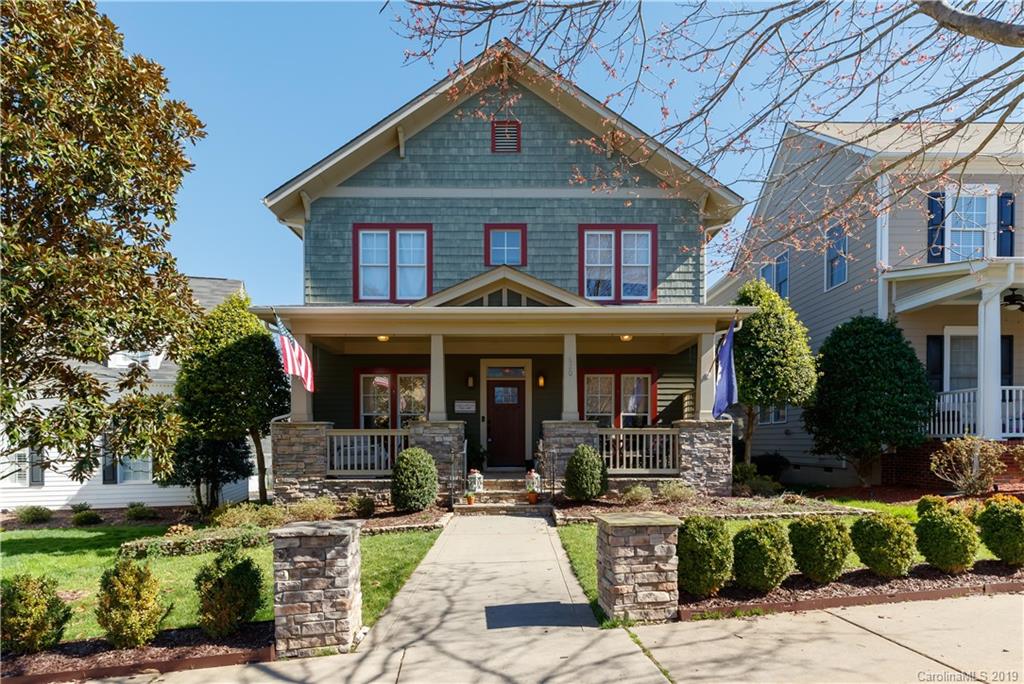
SC Supreme Court probate case is real estate adjacent

Standard

Interest in marital property vests when marital litigation is filed

Real estate lawyers, consider these fact patterns:

  • James Franklin owns 200 acres of property under contract with your developer client. Your client intends to use the property to develop a residential subdivision. Your title examination reveals Franklin’s wife recently filed a petition for divorce. Can your closing proceed without involving Franklin’s wife?
  • Let’s make the facts more difficult.  A divorce has been filed, but your title examination misses it.
  • Finally, let’s make the facts even more difficult. A divorce has been filed, your title examination misses it, and Mrs. Franklin dies before your closing.

Seels v. Smalls* answers these questions. And the involvement of Mrs. Franklin or her personal representative is required for your closing in each instance. In fact, the involvement of the family court and probate court may also be required.

In this South Carolina Supreme Court case, Olivia Seels Smalls and Joe Truman Smalls had been married for more than thirty years, living in Goose Creek, and accumulating significant assets. Mrs. Smalls filed marital litigation on July 2, 2014 and died unexpectantly on December 17, 2015. Mrs. Smalls’ brother, Randall Seels, was appointed personal representative. He moved to be substituted as plaintiff in the family court case. Mr. Smalls sought dismissal of the action, arguing the entire matter had abated upon the wife’s death.

It took our Supreme Court thirteen pages to ruminate over what I thought was settled law in South Carolina. The personal representative was entitled to the wife’s interest in the marital property. One paragraph from page 46 summarizes the holding:

“In summary, section 63-3-530, governing the family court’s subject matter jurisdiction, provides in subsection (A)(2) that the family court has ‘exclusive jurisdiction’ to settle all legal and equitable rights regarding marital property, importantly in section 20-3-610, the General Assemble has confirmed that each spouse has a ‘vested special equity and ownership right in the marital property’ that is subject to apportionment by the family court at the time marital litigation is filed. Further, the definition of ‘marital property’ in subsection 20-3-630(A) provides ‘marital property’ is all property acquired or owned by the parties as of the date marital litigation is filed, regardless of how it is titled, so marital property essentially springs into existence as a legally defined concept at that moment in time.”

The bottom line, dirt lawyers, is that marital litigation involving your seller should stop you in your tracks. Don’t close until you carefully examine the family court implications. And, if your client’s spouse has died, you will also need to deal with probate court implications. If you have concerns, call your friendly title insurance company underwriter for assistance.

This blog often ends with these words, and today is no exception. Be careful out there!

*South Carolina Supreme Court Opinion 28103 (August 3, 2022).

Check out this interesting “heirs property” article with a SC slant

Standard

I was not familiar with “The Daily Yonder” until a Google search for real estate news revealed an interesting article about heirs’ property. The tag line for The Daily Yonder is “Keep it Rural”.  The articled, with a South Carolina connection, can be read in its entirety here

Entitled “Land rich, cash poor—How black Americans lost some of the most desirable land in the U.S.”, the article was written by Sarah Melotte and was dated July 11. It caught my attention because it quoted a South Carolinian, Ercelle Chillis, who said her family’s seven-acre tract off Folly Road in Charleston means so much because it was purchased in 1926 by her father, who saved “pennies and nickels and dimes” to buy it. Chillis’ father died without a will, and his children did not probate his estate. Family members now own the land as heirs’ property.

The article focuses on the precarious nature of owning real estate as heirs’ property. The numbers of owners multiply as the years pass, making it more and more difficult to obtain clear title. Developers may target heirs, purchasing fractional interests to ultimately force a sale by all owners. These sales are often at below-market prices. In the case of natural disasters, relief from FEMA and other entities may be unavailable for properties with title issues.

Historically, many of these properties were in swampy and mosquito infested areas with low property values. The “Gullah Geechee Corridor”, a strip of land once predominantly inhabited by enslaved people, runs along the coasts of North Carolina, South Carolina, Georgia, and northern Florida. We all know that the values of coastal properties have sky-rocketed in recent years.

The article points to several reasons black Americans have lost properties: violence, discrimination, intimidation, and immigration to the North. But legal scholars also blame vulnerable forms of land ownership, such as heirs’ property.

The author points to organizations such as The Sustainable Forestry and African American Land Retention Network, that are attempting to fix this problem. Legal reforms are also being implemented. Notably, in 2016, South Carolina state senator and Emanuel AME shooting victim Clementa Pinckney helped pass The Uniform Partition of Heirs Property Act which allows an heir to purchase other heirs’ interest to avoid forced sales to developers. Other important aspects of this legislation are the requirement of an appraisal and a directive that heirs receive a fair share of the profit.

Read this article for an interesting take on a real estate issue that many South Carolina practitioners confront on a fairly regular basis.

Does real estate “wholesaling” work in our market?

Standard

Maybe, but real estate practitioners should be careful!

A recent discussion on South Carolina Bar’s real estate section listserv surrounded whether and how to close “double closings” vs. “assignments of contracts”.  This is not a novel topic in our market. In the very hot market that preceded the crash beginning in 2007, one of the biggest traps for real estate attorneys was closing flip transactions. Title insurance lawyers fielded questions involving flips on an hourly basis!

Flips have never been illegal per se. Buying low and selling high or buying low and making substantial improvements before selling high are great ways to make substantial profits in real estate.  

Back in the day, we suggested that in situations where there were two contracts, the ultimate buyer and lender had to know the property was closing twice and the first closing had to stand on its own as to funding. In other words, the money from the second closing could not be used to fund the first closing. (Think: informed consent confirmed in writing!)

Where assignments of contracts were used, we suggested that the closing statements clearly reflect the cost and payee of the assignment.

The term real estate investors are using these days to define buying low and selling high is “wholesaling”.  A quick Google search reveals many sites defining and educating (for a price, of course) the process of wholesaling. This is a paraphrase of a telling quote I found from one site:

If you’re looking for a simple way to get started in real estate without a lot of money, real estate wholesaling could be a viable option. Real estate wholesaling involves finding discounted properties and putting the properties under contract for a third-party buyer. Before closing, the wholesaler sells their interest in the property to a real estate investor or cash buyer.

One of the smart lawyers on our listserv, Ladson H. Beach, Jr., suggested that there does not appear to be a consensus among practitioners about how to close these transactions. He suggested reviewing several ethics cases* that set out fact-specific scenarios that may result in ethical issues for closing attorneys.

In addition to the ethics issues, Mr. Beach suggested there may be a licensing issue where an assignor is not a licensed broker or agent. A newsletter from South Carolina Real Estate Commission dated May 2022 which you can read in its entirety here addresses this issue. The article, entitled “License Law Spotlight: Wholesaling and License Law” begins:

“The practice of individuals or companies entering into assignable contracts to purchase a home from an owner, then marketing the contract for the purchase of the home to the public has become a hot topic, nationwide in the real estate industry in recent years. This is usually referred to as ‘wholesaling’. The question is often, “is wholesaling legal?’ The answer depends upon the specific laws of the state in which the marketing is occurring. In South Carolina, the practice may require licensure and compliance with South Carolina’s real estate licensing law.”

The article suggests that the Real Estate Commission has interpreted that the advertising of real property belonging to another with the expectation of compensation falls under the statutory definition of “broker” in S.C. Code §40-57-30(3) and requires licensure. Further, the newsletter suggests S.C. Code §40-57-240(1) sets up an exception; licensing is not required if an unlicensed owner is selling that owner’s property. The Commission has interpreted, according to this article, that having an equitable interest is not equivalent to a legal interest for the purpose of licensing. In other words, a person having an equitable interest acquired by a contract is not the property’s owner and has no legal interest in the property for the purposes of this licensing exemption.

So real estate practitioners have several concerns about closing transactions of this type. Be very careful out there and consult your friendly title insurance underwriter and perhaps your friendly ethics lawyer if you have concerns as these situations arise in your practice.

*In re Barbare (2004), In re Fayssoux (2009), In re Brown (2004) and In re Newton (2007)

Charlotte TV station reports on Fort Mill HOA “service fee”

Standard

Charlotte television station WSOCTV (Channel 9) published a story on May 23 delving into an HOA fee from Baxter Village in Fort Mill. The story, entitled “South Carolina HOAs can charge substantial fee to leave neighborhood”, focuses on a residential seller who was shocked to find a more than $1,700 charge from her owners’ association on her closing statement.

The line item read “HOA Service Fee to Baxter”, and the fee was almost double the annual regular assessment of $950. According to the story, the covenants provide that the sale of a home will result in a fee which shall not exceed the greater of $500 or .25% of the gross sales price. The reporter interviewed a spokesman for the subdivision’s management company who said the fee has been in place since 1998. The sales price for the home highlighted in the story was $685,000.

The reporter interviewed a lawyer familiar with homeowners’ association issues in North Carolina as well as South Carolina. He said that North Carolina’s legislature had passed a Planned Community Act in 2010 that banned exit fees except in a few specific cases. South Carolina, of course, does not have similar legislation.

As with every residential purchase, the buyer should be advised by the attorney of the existence of covenants and should be encouraged to read them in their entirety to avoid surprises.

What do you think, dirt lawyers? Should we pass similar legislation in South Carolina?

South Carolina Supreme Court issues final decision on Episcopal church real estate

Standard

“This case is over” according to the court

Church schisms are tough in many ways, and the real estate issues are no exception. This week, the South Carolina Supreme Court filed an opinion* that it says finally resolves the real estate issues. In other words, the Court has decided who owns the real estate of the churches in dispute.

The dispute began in 2010 when the Lower Diocese of South Carolina, after doctrinal disputes, dissociated from the National Episcopal Church. The parties have been involved in extensive litigation in state and federal courts for the twelve years that have followed the dissociation. I am glad that I don’t have to figure out the doctrinal issues. The real estate issues are thorny enough.

My best advice to practicing real estate lawyers: when you are asked to close any transaction involving Episcopal church property, call your intelligent and friendly title insurance underwriter. In fact, call your underwriter when you deal with any church real estate transaction. They will stay current on the real estate issues involving churches.

The Court based its decision on which of the parishes adopted the national church’s “Dennis Cannon”. This church law provides that all real and personal property owned by a parish is held in trust for the national church.  The actions taken by each church with regard to the Dennis Cannon were examined.

Without belaboring the analysis, the following parishes will maintain their properties:

  • Trinity Episcopal Church, Pinopolis
  • The Protestant Episcopal Church of the Parish of Saint Philip, Charleston
  • The Protestant Episcopal Church of the Parish of Saint Michael, Charleston
  • Church of the Cross, Inc., Bluffton
  • The Church of the Epiphany, Eutawville
  • The Vestry and Church Warden of the Episcopal Church of the Parish of St. Helena, Beaufort
  • Christ St. Paul’s Episcopal Church, Conway
  • The Church of the Resurrection, Surfside
  • The Church of St. Luke and St. Paul, Radcliffeboro
  • The Vestry and Church Wardens of St. Paul’s Church, Summerville
  • Trinity Episcopal Church, Edisto Island
  • St. Paul’s Episcopal Church of Bennettsville, Inc.
  • All Saints Protestant Episcopal Church, Inc., Florence
  • The Church of Our Savior of the Diocese of South Carolina, John’s Island
  • The Church of the Redeemer, Orangeburg

The properties of the following parishes are held in trust for the National Church:

  • The Church of the Good Shepherd, Charleston
  • The Church of the Holy Comforter, Sumter
  • St. Bartholomew’s Episcopal Church, Hartsville
  • The Vestry and Church Wardens of the Episcopal Church of the Parish of St John’s, John’s Island
  • The Vestry and Church Wardens of St. Jude’s Church of Walterboro
  • Saint Luke’s Church, Hilton Head
  • St. David’s Church, Cheraw
  • The Vestry and Church Wardens of the Parish of St. Matthew (St. Matthews, Fort Motte)
  • The Vestries and Church Wardens of the Parish of St. Andrew (Old St. Andrew’s, Charleston)
  • The Church of the Holy Cross, Stateburg
  • Trinity Church of Myrtle Beach
  • Holy Trinity Episcopal Church, Charleston
  • Vestry and Church Wardens of the Episcopal Church of the Parish of Christ Church, Mount Pleasant
  • St. James’ Church, James Island

I feel for all the parties involved. I am a United Methodist, and our international church authorities have been examining similar issues in recent years. We may see more church schism opinions in South Carolina and elsewhere. Stay in touch with your friendly title insurance company underwriter!

*The Protestant Episcopal Church in the Diocese of South Carolina v. The Episcopal Church, South Carolina Supreme Court Opinion 28095 (April 20, 2022).

Check out “Arrived Homes” real estate investment platform

Standard

Real estate has always been a significant investment option but shelling out the required funds may be cost prohibitive for all but the most affluent among us. Jeff Bezos and his partners may have solved this problem.

Check out the real estate investment platform Arrived Homes. Go to the site and listen to the quick explanation entitled “What is Arrive in 1 min”.  Very simply, an investor can buy “shares” of rental properties and collect the rental income attributable to those shares. If the economy holds out and real estate continues to appreciate, the properties (and the shares) will increase in value over time. The company intends to hold the properties for five to seven years before selling them and distributing the equity to the investors.

The business finds, buys and manages residential rental properties and offers shares of the properties to investors. Potential investors can browse and choose among available properties. Management includes locating tenants, maintenance, repairs, improvements as well as handling accounting and taxes.  A quick review reflects several properties in South Carolina.

An interesting Arrived approach is to encourage the tenants of the rental properties to become investors in the properties they occupy. The idea is to encourage the tenants to treat the properties as if they own them….because they do! The longer the lease the tenant signs, the larger the equity incentive.

Rental income is paid quarterly in the form of dividends. Investors can review their returns and potential appreciation in the user dashboard.

How does the company make its money? It charges two fees, a sourcing fee and an assets under management fee. The sourcing fee is paid up front and the assets under management fee is charged at 1% per year. Both fees as listed on each property’s “page”.  Costs are deducted from the rental income.

The site launched a little over a year ago and has experienced significant growth. One report indicates properties have been purchased valued at close to $40 million already. New properties are listed every couple of weeks, and many sell out quickly.  

The intent it to make investing in real estate as easy as investing in stocks with a minimum investment of only $100. It’s an interesting concept!

New fraud warning from Chicago Title

Standard

It goes without saying that one of the most important partnerships for a real estate lawyer is a great title insurance company. I am biased, but in my opinion, there is no better title insurance company doing business in South Carolina than Chicago Title.

This week, a warning was issued from Chicago Title about a new and very specific fraud scheme that I want to share with all South Carolina practitioners.

Chicago Title received two reports last week of fraudsters apparently operating out of Houston. The fraudsters posed as owners of South Carolina properties and listed the properties for sale on Zillow. Mail away cash closings were scheduled with local real estate lawyers. In both cases, the fraudsters provided presumably fake identification and deeds to closing attorneys.

In the first case, the closing attorney very astutely foiled the scheme when he determined the signatures on the deed appeared suspicious. He contacted the New York notary who purportedly notarized the deed. She reported her seal had been stolen and used in at least one successful fraudulent scheme. The lawyer also learned from Federal Express that the deed had been sent from Houston rather than New York, where the seller was purportedly located. The transaction was stopped.

Unfortunately, the second transaction was not stopped.  This seller package also originated in Houston. The fraudster’s telephone number appears on Zillow listing for properties in multiple states. Houston law enforcement has been notified and is opening an investigation.

Any mail away closings should be particularly scrutinized. If you conduct a closing with an unfamiliar seller, you should be especially vigilant in confirming the identities of the parties. Use more than one set of eyes in your office! Anything that appears unusual should be examined carefully. Give your staff the flexibility to slow down and carefully examine each document. Tell them to bring any unusual document to you. Check behind your staff! A great real estate paralegal is invaluable, but we spent three years in law school learning to spot issues. Use those issue-spotting skills to foil these fraudsters!

Be careful and good luck out there!

Short-term rentals questioned in South Carolina cities

Standard

Vrbo and Airbnb are two go-to websites to find interesting short-term rentals in vacation locations. Sometimes a cabin or house seems much more appropriate and fun than a hotel room for a family get-away. Having a kitchen and room for dining is often a plus. And I love a hot tub with a view!

But I’ve seen a couple of news articles about South Carolina cities questioning whether these types of short-term rentals are appropriate in residential subdivisions, and I understand the concern.

WLTX posted an article on March 16 entitled, “Renters frustrated after South Carolina city pauses short-term rentals for 6 months.” The article reports that Rock Hill is halting new and renewal permits for short-term rentals for at least the next six months.

The article quotes a man who said he and his wife operate nine Airbnb locations and have been put out of business by the resolution. The article quotes the resolution: “the homes are mainly in their older neighborhoods and these transient tenants have a negative effect on the peace and perceived safety of those neighborhoods.”

An article posted on March 17 by South Carolina Public Radio entitled “Upstate cities ponder the fate of short-term rentals” discusses the Rock Hill moratorium as well as similar discussions by city officials in Spartanburg.

The city attorney in Spartanburg is quoted as saying that city’s “permissive” zoning ordinance does not address short-term rentals and that any use that is not specifically allowed is prohibited. He admitted, however, that there are “plenty” of short-term rentals—about 120 on Airbnb alone.

One councilman in Spartanburg was quoted as arguing in favor of creating rules to keep “bad actors” from causing trouble in neighborhoods.

Rules vary greatly in the cabins and houses we’ve rented, but a common theme seems to be that parties are not allowed. I’ve also seen limits on the number of cars that can be accommodated and, of course, the number of people permitted. Pets may or may not be allowed.

What do you think? Would you be comfortable with short-term rentals in your neighborhood? Could rules about groups, parties and parking make a difference?

We may see other cities in The Palmetto State considering whether to limit short-term rentals through zoning or permitting. It’s an interesting question!

SC courts will overturn tax sales on the flimsiest of technicalities

Standard

But apparently not when the claimant has no interest in the property

South Carolina courts don’t respect tax sales!

For that reason, tax sales have always been problematic for title examiners and real estate closing attorneys. Any concern about service of process or naming proper parties can result in the return the property to the owner of record. Historically, we would simply not close in the face of a tax sale in the chain of title.

In recent years, title insurance companies and real estate lawyers have attempted to take a more liberal approach. A rule of thumb might be that a tax sale that is at least ten years old where one person or entity has held title for a ten-year period since the tax sale may not result in an aborted closing. The title may not be marketable, but it may be insurable.

A recent Court of Appeals case* made me laugh. (Remember I am an easily amused title nerd.) The plaintiff, Scott, was “renting to own” the property in question under a 1998 oral agreement with her uncle, McAlister. Scott took possession of the property after making an initial down payment of $4,000 and agreeing to pay the remaining $31,000 purchase price in monthly installments of $300. That’s her story, at least. McAlister testified that Scott agreed to obtain a loan to make a second payment of $31,000.

After Scott failed to make the $31,000 payment, McAlister told Scott that her monthly payments would be considered rent only, and the parties agreed to reduce the monthly payment to $200. In 2007, McAlister began eviction proceedings, but the circuit court vacated the order of ejectment when Scott asserted that she occupied the property under a land purchase agreement. McAlister moved and changed the mailing address for tax purposes. The taxes for 2011 were never paid, and the property was sold in a tax sale in 2012.

Scott claimed she was unaware of the mailing address change, the delinquent taxes, the tax sale or the opportunity to redeem the property until the purchaser’s surveyor showed up! In 2015, Scott filed a complaint alleging that tax sale technicalities were not followed because notices were never posted on the property. The tax collector claimed her office posted the property notice on the property in August of 2012.

The circuit court granted summary judgment after it determined Scott lacked standing and that the tax authorities owed her no duties because she was not the record taxpayer, property owner or grantee. The Court of Appeals cited cases for the proposition that a tax execution is issued against the defaulting taxpayer, not against the property. The summary judgment decision was upheld on the theory that while due process is owed to a property owner, it is not owed to a person who whose only interest is based on an oral agreement.

I love it when our appeals courts answer real estate questions correctly. Overturning this tax sale would have resulted in serious consequences for title examiners and closing attorneys!

*Scott v. McAlister, South Carolina Court of Appeals Opinion 5897 (March 9, 2022)

Ethics Advisory Opinion advises lawyers: stay away from Expertise.com

Standard

Ethics Advisory Opinion 22-02 fielded two marketing questions from a lawyer concerning a website, Expertise.com. This website finds and reviews service professionals and states that it researches businesses by using customer referrals, public records, accreditations and licenses and mystery shoppers.

Some law firms are listed on the site without the knowledge of the lawyers through the site’s unilateral research and screening. The site states that it lists businesses alphabetically, but it allows law firms to submit to be reviewed and included at no cost. The site indicates this process takes approximately one year to complete.  A law firm can also purchase a “featured placement” to take advantage of being seen first on the website page and to include links to the law firm’s social media.

The lawyer’s questions were:

  1. If an attorney or law firm pays for a featured placement on Expertise.com, does that attorney violate Rule 7.4(b) by holding the law firm and its attorneys out as experts by virtue of the website’s name?

2. Does paying for a featured placement on Expertise.com violate Rule 7.2(c)?

The Ethics Advisory Committee responded definitely: “Lawyer may not participate in any way in marketing via Expertise.com.” Actively participating in an online business listing at a website whose stock language violates the advertising rules is itself a violation of the advertising rules, according to the Committee.

The Committee referred to an earlier EAO: 09-10 which opined that a lawyer who adopts, endorses, or claims an online directory listing takes responsibility under the Rules for all content of the listing and general content of the directory itself, regardless of who created the material. While the prior opinion focused on comparative language contained in client testimonials and endorsements submitted to the website, the reasoning applies to content created by the host that violates some other rule, like 7.4(b), according to the current EAO.

Regardless of the creator of the offending content and regardless of which rule it violates, the Committee’s view is that a lawyer may not adopt, endorse, claim, or contribute to any online listing that contains language or other material that would violate the Rules if created and disseminated directly by the lawyer.

Paying for a featured placement within a business directory website is not itself a violation of Rule 7.2(c) if the payment obligation or amount is not tied to the referral of business as a quid pro quo, according to the EAO. In the Committee’s view, if a featured placement is the only benefit received in exchange, the payment would be a “reasonable cost of advertisement” under the 7.2(c)(1) exception.

However, the Committee believes a lawyer may not pay Expertise.com for a featured placement because that step would be prohibited by Rule 7.4(b).

Be careful out there, lawyers!