This blog has previously discussed MV Realty PBC, LLC. South Carolina title examiners report they are discovering “Homeowner Benefit Agreements”, or “Exclusive Listing Agreements” filed in the public records as mortgages or memoranda of agreement. The duration of the agreements purports to be forty years, and a quick search revealed hundreds of these unusual documents filed in several South Carolina counties. The documents indicate that they create liens against the real estate in question.
The company behind these documents is MV Realty PBC, LLC which appears to be doing business in the Palmetto State as MV Realty of South Carolina, LLC. The company’s website indicates the company will pay a homeowner between $300 and $5,000 in connection with its Homeowner Benefit Program. In return for the payment, the homeowner agrees to use the company’s services as listing agent if the decision is made to sell the property during the term of the agreement. The agreements typically provide that the homeowner may elect to pay an early termination fee to avoid listing the property in question with MV Realty.
In response to numerous underwriting questions on the topic, Chicago Title sent an underwriting memorandum last year to its agents entitled “Exclusive Listing Agreements”. Chicago Title’s position on the topic was set out in its memorandum as follows: “Pending further guidance, Chicago Title requires that you treat recordings of this kind like any other lien or mortgage. You should obtain a release or satisfaction of the recording as part of the closing or take an exception to the recorded document in your commitments and final policies.”
Several states have sued this company or passed legislation making the contracts unenforceable. South Carolina is not one of those states. On September 6, United States Senators Casey, Brown and Wyden (Chairmen of Special Committee on Aging, Committee on Banking, Housing, and Urban Affairs and Committee on Finance, respectively) wrote a comprehensive letter setting out the legal concerns and seeking information. You can read the letter in its entirety here.
Now, MV Realty of South Carolina has filed for Chapter 11 Bankruptcy reporting assets of $1 – $10 million and debts of $1-$50 million.
Dirt lawyers, pay attention to this situation. We will certainly see updates. If you see these contracts in your chains of title in the meantime, contact your underwriting counsel for guidance.
Pending legislation in South Carolina may affect your transactions
In April, this blog discussed proposed Texas legislation that limits the purchase of real estate by some foreigners. Remember the Chinese surveillance balloon the United States shot down off the coast of the Palmetto State in February? That incident and other rising tensions between our government and China over several issues (the war in Ukraine, recognition of Taiwan, to name only two) have resulted in politicians proposing to broaden state law bans on foreign ownership of real estate.
According to a New York Times article dated February 7, entitled “How U.S-China Tensions Could Affect Who Buys the House Next Door”, legislation in Texas was proposed after a Chinese billionaire with plans to create a wind farm bought more than 130,000 acres of land near a U.S. Air Force base.
Similar legislation in Florida went into effect July 1. The Florida legislation bans nearly all purchases by Chinese nationals and China-based companies. It also bans buyers from what the legislation calls “countries of concern,” including Venezuela and Russia, from purchasing agricultural land and any real estate within 10 miles of military and critical infrastructure facilities. Those facilities include airports, seaports, electrical power plants, water treatment plants, gas plants, and certain manufacturing facilities. Many of these facilities are located near urban centers and residential communities, making it difficult those in the real estate market to understand what properties are off limits.
At least one lawsuit is on appeal in Florida on constitutionality grounds.
Proposed legislation is also pending in California and now South Carolina to restrict ownership of real estate by “hostile nations” or “foreign adversaries.” Some have suggested that such bills may run afoul of due process and equal protection issues.
Chicago Title published an Underwriting Memorandum on April 5 entitled “Foreign Ownership of Property in South Carolina” to advise agents of the pending legislation in our state.
You may recall that we have an existing statute (S.C. Code §27-13-30) prohibiting any “alien” or corporation controlled by an “alien” from owning or controlling more than 500,000 acres of land in South Carolina. Recently, the South Carolina Senate passed Senate Bill 576 that amends the existing statute by expressly prohibiting any citizen of a foreign adversary or corporation controlled by a foreign adversary from acquiring any interest in South Carolina property. The proposed legislation will now be considered by the House.
The term “foreign adversary” is defined in the bill as “any foreign government or nongovernment person determined by the United States Secretary of Commerce to have engaged in a long-term pattern or serious instances of conduct significantly adverse to the national security of the United States or the security and safety of United States citizens.”
And there are other bills pending along the same lines.
Senate Bill 392 would amend our existing statute to reduce the amount of property allowed to be owned by an “alien” to 1,000 acres. House Bill 3566 would add a statute to reduce to 1,000 acres the amount of land that can be owned or controlled by China, the Chinese Communist Party, or an entity whose principal place of business is located within China. House Bill 3118 would prohibit any company owned or controlled by China or the Chinese Communist Party or that has a principal place of business in China from owning, leasing, possessing, or exercising any control over real estate located within 50 miles of a state or federal military base for the purpose of installing or erecting any type of telecommunications or broadcasting tower.
All dirt lawyers will know immediately that all versions of the proposed legislation will create uncertainty in our market. I have only two pieces of advice at this point. First, let’s all monitor the proposed legislation. And second, let’s pay attention to guidance provided by our excellent title insurance underwriters.
Refer to the excellent article in July’s issue of SC Lawyer
I’d like to recommend that South Carolina dirt lawyers read and pay attention to an article in the July issue of the SC Lawyer. Rachel E. Carr and Danielle Bennett authored an interesting article entitled, “The Lady Bird Deed: Has the Remainderman Interest Nested or Vested?”
Cutting to the chase, your title insurance company in South Carolina will require the signatures of remaindermen if the life estate owner sells or mortgages property. But let’s look at the background this article sets out.
The Lady Bird Deed derives its name from Lady Bird Johnson, Lyndon Johnson’s first lady. Anecdotally, President Johnson went to great lengths to avoid probate by transferring his assets to his wife. South Carolina’s statutes and case law do not recognize this type of deed.
The Lady Bird Deed attempts to retain more power over the real estate in the life tenant than the typical life estate deed. This “enhancement” language is typically included:
“Grantor reserves unto himself, for and during his lifetime, exclusive possession, use, and enjoyment , right to income of the property, and Grantor further reserves the right to sell, lease, encumber by mortgage or deed of trust, pledge, lien or otherwise maintain and dispose of, in whole or in part, or grant any interest thereon, of the property by gift, sale, or otherwise without consent or joinder of the Grantee, which may terminate the interest of Grantee. Grantee shall be a remainderman in the property described herein and upon the death of Grantor, if the property described herein has not been previously disposed of prior to the death of Grantor, all right and title to the property, then remaining, shall fully vest in Grantee as fee simple subject to such liens and encumbrances which may exist at the time of Grantor’s death.”
What would you do if you saw this language in a deed for property your client intends to purchase? You would likely call your friendly title insurance company underwriter, and that person would most likely ask you to obtain the signature of the remainderman.
As the article points out, South Carolina cases have recognized a life estate coupled with a power of sale. Blackmon v. Weaver* was a 2005 Court of Appeals case involves a life estate and remainder interest established in a will. The will left property to testator’s wife, including this language:
“Second: I give, devise and bequeath all of my property whether real, personal or mixed, whatsoever and wheresoever situation, whether now owned by me or to me or hereafter acquired by me, to my wife, Lana Odom Blackmon for and during her natural life or until such time as she no longer desires the property.
Sixth: That if the desire of my wife to sell any or all of my property and assets then my wife, Mary B. Heath, J.B. Blackmon, III and Jennifer B. Weather, shall share equally in the sale of such assets.”
When a dispute arose between the wife and children, the wife attempted to sell the property. The trial court held that the wife could not sell the property because she was not the fee simple owner. But the Court of Appeals relied on the intention of the testator as expressed in the will and held that the wife had the power to sell the property.
In an earlier case** the will devised to the testator’s wife “complete perfect ownership” during her life. At her death, the property would pass to the testator’s sisters. The Court held that the widow had the power to sell the real estate because the testator’s intent was clear.
But what we don’t have in South Carolina is a case that allows life tenant to sell the property when the life estate is established in favor of the grantor in a deed. So, we do not have authority for the sale of property by the grantor of a Lady Bird Deed.
As I often suggest, please call your title insurance underwriter if you have questions about any unusual language you find in a deed.
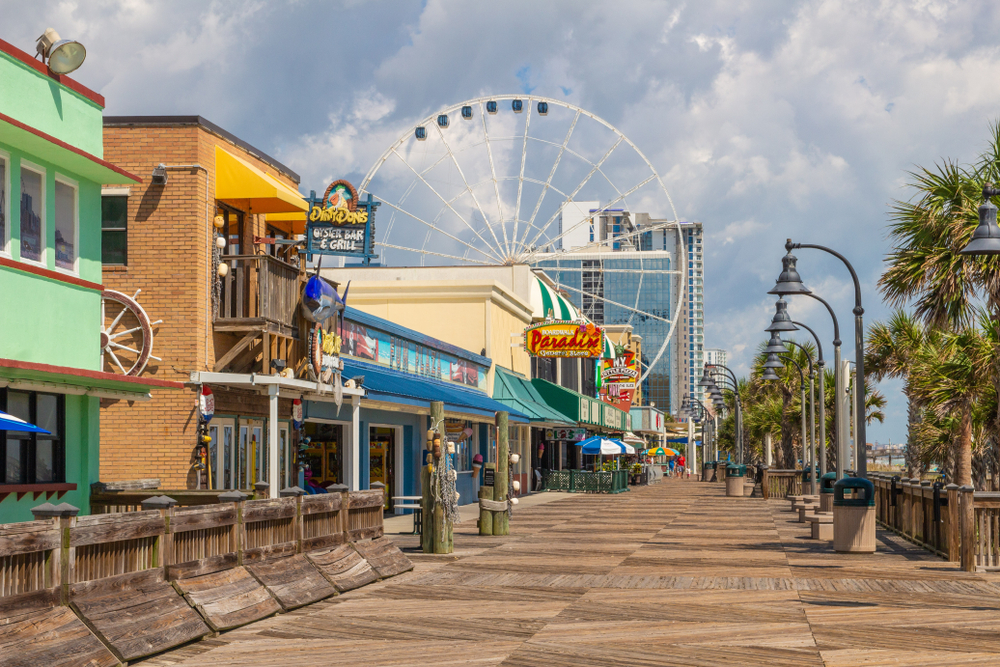
In Ani Creation, Inc. v. City of Myrtle Beach, * the South Carolina Supreme Court upheld an ordinance that imposed a zoning overlay district intended to bolster the “family friendly” nature of Myrtle Beach’s historic downtown area. The ordinance targeted smoke shops and tobacco stores and the merchandizing of tobacco paraphernalia, products containing CBD, and sexually oriented material.
The opinion begins, “The City of Myrtle Beach (the city) is a town economically driven and funded by tourism.” The facts indicate that the city received frequent criticism from tourists and residents that the proliferation of smoke shops and tobacco stores repelled families from the area. The city passed a comprehensive plan that aimed at increasing tourism and concluded that all businesses needed to encourage and support a “family beach image”. The city passed an ordinance which created a zoning overlay district known as the Ocean Boulevard Entertainment Overlay District that encompassed the historic downtown area.
The prohibited uses in the district were declared immediately nonconforming when the ordinance was passed on August 14, 2018, but an amortization period was allowed which gave affected businesses until December 31, 2019, to cease the nonconforming portions of their businesses.
The zoning administrator issued citations to the nonconforming businesses. Nine of the 25 affected stories appealed to the Board of Zoning Appeals which found (1) it did not have jurisdiction to declare the ordinance unconstitutional; (2) it could not grant a use variance because it would allow the continuation of a use not otherwise allowed in the district; and (3) the businesses were engaged in one or more of the prohibited uses. On appeal, the circuit court affirmed the Board’s opinion, finding the appellants’ 25 grounds for challenging the ordinance meritless. The businesses appealed directly to the South Carolina Supreme Court.
The appellants raised a “host” of constitutional and procedural challenges, all of which fell on deaf ears at the Supreme Court. The Court held that the ordinance was a valid exercise of the city’s police powers. According to the Court, municipal governing bodies clothed with authority to determine residential and industrial districts are better qualified by their knowledge of the situation to act upon such matters than are the courts, and they will not be interfered with in the exercise of their police power to accomplish their desired end unless there is a pain violation of the constitutional rights of the citizens.
A comment on the Dirt Listserv said, “S. Carolina is OK with cancel culture after all.” A store selling sexually oriented materials was removed from Garners Ferry Road in Columbia (about three miles from my house) using similar legal arguments. I was delighted to see that store torn down before I had to explain it to my grandchildren! But I do understand the “cancel culture” argument. What do you think?
Or do you think this JTROS decision is accurate and fair?
This Alabama case* was discussed extensively on the DIRT listserv. I’d love to know how South Carolina lawyers react to the decision.
Here’s the recital of the facts from DIRT:
“Michael Upchurch, his brother Davis Upchurch, and his nephew Jason Upchurch owned several pieces of real property as joint tenants with the right of survivorship. They signed a contract to sell the properties to third parties. However, before closing, Michael died. In this declaratory judgment action, Michael’s widow Carol Upchurch, individual and as executor of Michael’s estate, asserted, among other things, a claim to one-third of the proceeds from that sale. David and Jason filed a motion for a summary judgment, which the circuit court granted. The Alabama Supreme Court held that under the circumstances, Michael, David, and Jason’s decision to enter into a contract to sell the properties severed their joint tenancy and that, as a result Michael’s estate was entitled to one-third of the proceeds from the sale of the properties. The Supreme Court therefore reversed the trial court’s judgment and remanded the case for the entry of a judgment in favor of the estate.”
What do you think about this opinion? Would a South Carolina court come to the same result?
I don’t believe our statute answers the question. For your consideration, here are relevant portions of our statute on the subject:
§ 27-7-40. Creation of joint tenancy; filing; severance
(a)(ii) In the event of the death of a joint tenant survived by more than one joint tenant in the real estate, the entire interest of the deceased joint tenant vests equally in the surviving joint tenants who continues to own the entire interest owned by them as joint tenants with right of survivorship.
(iv) If all the joint tenants who own real estate held in joint tenancy join in an encumbrance, the interest in the real estate is effectively encumbered to a third party or parties.
(vi) If real estate is owned by more than two joint tenants, a conveyance by one joint tenant to all the other joint tenants therein conveys his interest therein equally to the other joint tenants who continue to own the real estate as joint tenants with right of survivorship.
(ix) If real estate is owned by two or more joint tenants, a conveyance by all the joint tenants to themselves as tenants in common severs the joint tenancy and conveys the fee in the real estate to these individuals as tenants in common.
(c) Except as expressly provided herein, any joint tenancy severed pursuant to the terms of this section is and becomes a tenancy in common without rights of survivorship.
The answer would seem clearer to me if only one joint tenant had entered into a contract. Severance of the joint tenancy would appear to be the correct answer. But under the facts recited here, I have my doubts.
The intention of the parties is always relevant. We don’t have any clear statement to that effect here. If all three had survived the sale, each joint tenant would have been entitled to his portion of the proceeds. But no document among the owners addressed a death prior to the sale. Originally setting up their interests as JTROS suggests their intent that a death of one would result in ownership by the other two. Did signing the contract evidence their intent to no longer own the properties as joint tenants?
One comment from DIRT suggested the court might have decided that the contract rights of the deceased owner survived his death and passed to his estate. But that’s not what the court held. It held that the JTROS was severed by the contract.
Dirt lawyers, what do you think?
*Upchurch v. Upchurch, Supreme Court of Alabama Case SC-2022-0478 (April 7, 2023)
2023’s first real estate case is both humorous and sexy!
If real estate lawyers weren’t easily amused, our profession might live up to the common misconception that it’s boring. But the first South Carolina real estate case of 2023 is both funny and sexy. I’ll explain the funny part shortly. Sadly, the only thing sexy about this case* is that the property is occupied by two strip clubs. But let’s agree to be entertained where we can.
This is a specific performance case involving property in Charleston County. Clarke owned a strip club located at 2015 Pittsburgh Avenue in Charleston. The defendant’s predecessor in title owned a strip club across the street at 2028 Pittsburgh Avenue. The Supreme Court called the property at 2028 Pittsburgh Avenue the subject property, so we will, too. The subject property includes buildings and a parking lot.
In 1999, Clarke entered into a lease which permitted him to share the parking spaces on the subject property with the property owner. The lease contained the following language: “Right of First Refusal: Lessor grants the Lessee the right of first refusal should it wish to sell.”
Before we discuss what the Supreme Court had to say about this language, let me throw in my two cents. Don’t use the terms “lessor” and “lessee” when you draft leases. Use the terms everyone can understand, “landlord” and “tenant”. And please pay attention to prepositions. In this language, which party is “it”? A drafter of real estate documents cannot be too precise!
Back to the case. I often read cases by starting with the dissent or concurrence. With complicated cases, the minority opinion often explains the holding quickly. This case isn’t complicated, but Justice Few really cut to the chase in his concurrence. And this is the funny part. Justice Few quips, “This instrument says nothing, does nothing, restrains nothing.” (Remember I admit to being easily amused.)
Justice James’ majority opinion goes into more detail.
When Clarke learned that his landlord had conveyed to subject property to Fine Housing for $150,000, he initiated this action for specific performance. Interestingly, the closing attorney failed to raise the lease and the right of first refusal with the purchaser, but Fine Housing admitted it had record notice of both.
The trial court ruled the right of first refusal is enforceable as to the entire property and ordered Fine Housing to convey title to Clarke upon his payment of $350,000. There is no explanation for this figure. Appraisals must have been involved. The Court of Appeals reversed, holding the right of first refusal is an unreasonable restraint on alienation and is therefore unenforceable.
The Supreme Court affirmed, stating that whether a right of first refusal is enforceable turns on whether the right unreasonably restrains alienation. The Court agreed with The Restatement (Third) of Property: Servitudes §3.4 and held that the factors to be considered include: (1) the legitimacy of the purpose of the right; (2) the price at which the right may be exercised; and (3) the procedures for exercising the right. The Court further held that these factors are not exclusive, and in this case, agreed to address another point raised by Fine Housing—the lack of clarity as to what real property the right encumbers.
Clarke argued that the lease provides the right applies to all the property, the price should be determined by the seller, and South Carolina law requires that the right should be exercised within a reasonable time.
Fine Housing argued that the lease merely identifies the location of the leased parking spaces, and the remaining language does not provide the clarity needed to identify the property intended to be encumbered by the right. The Supreme Court agreed, holding that the uncertainty as to what property is encumbered supports the conclusion that the right is an unreasonable restraint on alienation.
The Court also agreed with Fine Housing that the failure of the right to determine a price and the procedures for its exercise also created an unreasonable restraint on alienation.
The bottom line is that the Court held the language to be so imprecise as to be unenforceable. While real estate lawyers are always interested in obtaining the best deal for clients, the second most important aim of drafting real estate documents should be clarity.
Always keep in mind how Justice Few dismissed the language that says nothing, does nothing and restrains nothing! You never want language you draft to be dismissed so easily!
*Clarke v. Fine Housing, Inc., South Carolina Supreme Court Opinion 28126 (January 4, 2023)
Fraudsters are creative, changing their schemes to meet the current market at every turn! Seller imposter fraud has been an issue for several years, but we’re hearing new reports in South Carolina. My favorite title insurance company and former employer, Chicago Title, sent out its third memorandum about seller imposter fraud on December 8. I wanted to make sure all readers of this blog are aware of the new efforts by fraudsters.
Several dirt lawyers in Charleston have reported variations in the seller imposter fraud arena in the last month.
Here are warning signs Chicago Title’s memo highlights:
The property involved is often unimproved.
The property is often advertised for sale through internet-based listing services.
The property is often listed at a price less than fair market value.
Contact with the imposter seller is often only by email.
The purported seller declines any requested in-person contact.
The purported seller supplies identification only by photocopy or teleconference.
The purported seller suggests executing documents outside of closing.
The purported seller suggests acting via power of attorney.
If you see any of these factors in your closings, pay particular attention to the identity of the seller. Advise your staff of these matters and advise them to allow a second set of eyes to review any questionable practices suggested by sellers.
As the excellent underwriting staff of Chicago Title reports, most of these attempts to steal are entirely preventable by paying attention to documents and taking extra steps to verify the identities of the parties involved in your closings.
South Carolina lawyers have prevented these fraud attempts by using the following tactics:
They carefully review documents for irregularities and inconsistencies.
They verify seller identity through contact information available in the public records or through other trusted sources.
They verify foreign identities and notarizations by contact with appropriate embassies.
They confirm witnesses and notorizations with the notary whose signature appears on the documents.
They compare package tracking information and wiring instructions to the purported location of the seller.
Please be careful out there and advise your staff members of these issues.
SC Supreme Court invalidates builder arbitration clause …and refuses to enforce the severability provision
It’s rare that we read the Advance Sheets and pause to say “wow”, but this is one of those cases! Damico v. Lennar Carolinas, LLC* is a construction defect suit brought by a number of homeowners against their homebuilder and general contractor, Lennar Carolinas, LLC. The case involves new homes in The Abbey, a subdivision in the Spring Grove Plantation neighborhood located in Berkeley County, consisting of 69 single-family homes constructed between 2010 and 2015. The suit alleged, among other things, negligence, breach of contract, and breach of various warranties.
Lennar moved to compel arbitration. The Circuit Court denied the motion to compel, finding the contracts were grossly one-sided and unconscionable and thus the arbitration provisions were unenforceable. The Court of Appeals reversed, citing a United States Supreme Court case** that forbids consideration of unconscionable terms outside of an arbitration (the Prima Paint doctrine).
The South Carolina Supreme Court agreed with the Court of Appeals that the Circuit Court violated the Prima Paint doctrine but agreed with the homeowners that the arbitration provisions, standing alone, contain a number of oppressive and one-sided terms, thereby rendering the provisions unconscionable and unenforceable. The Court further declined to sever the unconscionable terms from the remainder of the arbitration provisions.
The Court denied severability for two reasons. First, enforcing the severability provision would have required the Court to blue-pencil the agreement regarding a material term of the contract, a result strongly disfavored in contract disputes. Second, as a matter of policy, The Court found severing terms from an unconscionable contract of adhesion discourages fair, arms-length transactions.
The Court said that if it honored the severability clause in such contracts, it would encourage sophisticated parties to intentionally insert unconscionable terms—that often go unchallenged—throughout their contracts, believing the courts would step in and rescue them from their gross overreach. This is not to say, according to the Court, that severability clauses in general should not be honored, because the courts are constrained to enforce a contract in accordance with the parties’ intent.
Rather, the Court said it merely recognized that where a contract would remain one-sided and be fragmented after severance, the better policy is to decline the invitation for judicial severance.
I read this case to be a clear message to lawyers that it doesn’t pay to be too clever in drafting contracts.
The Court defined unconscionability to mean the absence of meaningful choice on the part of one party because of one-sided contract provisions, together with terms that are so oppressive that no reasonable person would make them and no fair and honest person would accept them. The touchstone of the analysis begins with the presence of absence of meaningful choice coupled with unreasonably oppressive terms.
What was so horrible about the contract in question?
One provision gave Lennar the sole discretion to include or exclude its contractors, subcontractors and suppliers, as well as any warranty company and insurer as parties in the arbitration. The Court said that it is a fundamental principle of law that the plaintiff is the master of the complaint and the sole decider of whom to sue for the injuries. Giving Lennar the “sole election” to include or exclude parties strips the homeowners of that right, according to the Court. Taken to its logical conclusion, this provision could require homeowners to litigate with some defendants and arbitrate with others.
Another provision said the homeowners “expressly negotiated and bargained for the waiver of the implied warranty of habitability (for) valuable consideration…in the amount of $0.”
Similarly, the contract specifically stated that the “(l)oss of the use of all or a portion of your Home” is not covered by its warranty to new homebuyers.
Another provision stated, “(T)his Agreement shall be construed as if both parties jointly prepared it”, a blatant falsehood, according to the Court, “and no presumption against one party or the other shall govern the interpretation or construction of any of the provisions of this Agreement.”
The Court found that these and other terms of the contracts to be absurd, factually incorrect, and grossly oppressive.
The Court pointed to the fact that Lennar is significantly more sophisticated than the consumer homeowners, creating a disparity in the parties’ bargaining power and that South Carolina has a deeply-rooted and long-standing policy of protecting new home buyers.
The Court said, “It is clear that Lennar furnished a grossly one-sided contract and arbitration provision, hoping a court would rescue the one-sided contract through a severability clause. We refuse to reward such misconduct, particularly in a home construction setting.”
WOW!
Lawyers who represent consumers should wave this case in the face of parties who claim contracts can never be negotiated. Every contract can be negotiated, and this case is clear evidence that this fact is true in South Carolina. Consumer lawyers, this is your case!
Devine St. and Crowson Rd., Columbia, SC during the “1000-year flood” of 2015
If you have clients who are complaining about the rising cost of flood insurance, there may be a good reason for those complaints. This issue came to my attention through The DIRT listserv which I have recommended to South Carolina dirt lawyers several times. If you haven’t already, subscribe to this listserv for interesting discussions of current real estate topics.
In 2021, FEMA announced that the National Flood Insurance Program (NFIP) was shifting to a risk-based premium system. The new system is called Risk Rating 2.0, and it attempts to base premiums on the actual characteristics of individual properties rather than simply referring to “flood maps”. I’d like to refer everyone to this article from ClimateWire dated August 27, 2022.
According to the article, FEMA’s shift was intended to encourage more homeowners to buy flood insurance by showing more precisely the risk that each property faces of being flooded. The shift has apparently caused the opposite result. Many homeowners have dropped FEMA flood insurance based on increasing premiums. It should be noted that many premiums were also reduced.
Closing attorneys understand all too well that properties in high-risk flood zones require flood insurance if the property owners obtain federally backed mortgages. The individuals who are dropping the coverage are not those who have such mortgages. Many of the individuals opting out of flood insurance because of increased costs are low-income individuals in coastal areas.
The article states that the number of NFIP policies dropped from 4.96 million in September of 2021 to 4.54 million in June of 2022. The declining numbers cause concerns that owners whose homes are flooded will not be able to rebuild or recover financially, and that low-income households will suffer the most.
FEMA told the reporter that many factors could influence the drop in policy holders, including the economic impact of the pandemic, inflation, the housing market, and the affordability of purchasing flood insurance from the private market. It is not clear how many people who dropped NFIP policies have bought flood insurance through private insurers. In other words, FEMA does not consider that its change in premium calculations is the sole cause of the problem.
We need to pay attention to this issue as Congress wrestles with possible solutions. It is certainly dangerous to have flood insurance priced in a way that fails to protect low-income homeowners who live in the most precarious areas geographically.
This news from Fannie Mae negatively impacts condo closings
This blog has previously discussed the June 24, 2021 collapse of the 136-unit Champlain Towers South condo project in Surfside, Florida.
South Carolina has many aging condominium projects, particularly along our coast. And we have earthquake issues to consider. Do our local homeowners’ association boards face expensive repair and inadequate reserve dangers like those in Florida? These concerns may impact HOAs, lenders and purchasers. Dirt lawyers should be prepared to assist their clients in navigating these concerns.
Fannie Mae has addressed this issue by issuing Lender Letter (LL-2021-14), which took effect on January 1 of this year. The letter directs lenders that make loans on condominium projects containing five or more attached units to gather information from owners’ associations about potential unsafe conditions.
Dale Whitman, the esteemed retired professor from the University of Missouri School of Law who moderates the national Dirt Real Estate Lawyers Listserv has commented on this letter. He said on a January 24 DIRT entry that HOAs are probably not obligated legally to respond to a lender’s inquiry prompted by Fannie Mae’s letter, but a potential buyer of a unit may not be able to obtain a loan absent a response.
That’s the crux of the problem. If repair and reserve issues arise in connection with a condominium project, it may become impossible to obtain loans.
DIRT also discussed a December 2021 addendum to the condominium questionnaire of Fannie Mae (Form 1076) that asks if there have been any findings relating to safety, soundness, structural integrity or habitability of the buildings in an inspection report, reserve study or government inspection or if the HOA board knows of such issues. This information is requested whether the issues have been resolved or would be resolved. The form requests information of how funds to make repairs will be obtained.
The lender letter points to a growing concern across the nation about aging infrastructure and significant deferred maintenance issues in condominium projects because a majority of these projects were built more than twenty years ago. Fannie Mae states its condominium standards are designed to support the ongoing viability of these projects.
Fannie Mae will change the status of deficient condominium projects to “unavailable”, and lenders are able to check the status of projects on Fannie Mae’s “Condo Project Manager™” software.
Consider representing wealthy consumers who may seek to purchase expensive coastal condominium units paying cash. How should a closing attorney advise these clients considering these repair and reserve concerns? This is an issue that should be addressed in residential closing practices.





 Let's Talk Dirt