SC Supreme Court deals with Rock Hill stormwater issue

Standard

Justice Few declares piping storm water under a house is “wrong”

I love a case where a separate opinion (usually a dissent) cuts to the chase and explains in a few words a multiple-page quagmire.  That’s what we have in Ray v. City of Rock Hill*, a case decided on August 4 by the South Carolina Supreme Court.

Lucille Ray sued the City of Rock Hill for inverse condemnation, claiming her property was taken as a result of stormwater flowing through pipes under City streets into a terra cotta pipe that runs behind her property. The circuit court granted summary judgment to the City, and the Court of Appeals reversed, holding a genuine issue of material fact exists as to whether the City engaged in an affirmative, positive, aggressive act sufficient to support the inverse condemnation claim. The Supreme Court modified and affirmed that decision, remanding the case for a determination on that issue.

The facts are particularly interesting for dirt lawyers. Ray purchased her house on College Avenue in 1985. Before the house was built in the 1920s, someone—there is no record as to who—installed a 24-inch underground terra cotta pipe under the property. The property and the pipe are located at the topographical low point of a 29-acre watershed. Three stormwater pipes installed and owned by the City collect stormwater and transport it under various streets in the neighborhood. Stormwater runs through the pipe to a catch basin directly in front of Ray’s house. When the water reaches the catch basin, it is channeled under Ray’s house to the back of her property. The pipe has been channeling stormwater in this fashion for roughly 100 years although the record reflects no evidence of an easement.

You won’t be shocked that Ray’s property had a history of sinking and settling. In 1992, Ray saw her gardener fall waist-deep into a sinkhole. The house’s roof was subject to bending and movement. The steps on the front porch sank. In 2008, Ray contacted the City and was told about the pipe running under those steps. (This exchange supported the City’s claim that the statute of limitations had run on a damages claim.)

In 2012, Ray brought this action seeking inverse condemnation and trespass. Other relief was sought and the South Carolina Department of Transportation was added as a defendant, but those issues are not relevant to this appeal. Shortly after Ray brought the suit, the City began maintenance work on a sewer line beneath College avenue.

To get to the sewer line, the City had to dig up part of College Avenue in front of the property and to sever three stormwater pipes from the catch basin. The basis of the inverse condemnation claim is that the City’s reconnection of the pipes to the catch basin was an affirmative, positive, aggressive act. That issue was returned to the circuit court for determination.

Justice Few’s separate opinion (not categorized as a concurrence or a dissent) is cogent. He wrote to make two points. First, the City should not be piping stormwater under Ray’s house! It is wrong, he said, and he doesn’t care who built the pipe or whose fault it is that the house is sinking because of the water. “The City should do the right thing and fix the problem.”

Justice Few’s second point is that all wrongs are not subject to redress in our civil courts. To the extent Ray’s inverse condemnation theory is valid, he said, the taking occurred many years ago, either when the pipes were installed or when the deterioration of the pipes began to harm the property. He said it makes no difference that the pipes were reconnected in 2012. The effect of that act was to continue to run storm water under property Ray alleges had already been taken.

Justice Few concluded that there is simply no right of action available under an inverse condemnation theory and that the circuit court correctly dismissed that claim

I look forward to what happens next!

* South Carolina Supreme Court Opinion 28045, August 4, 2021

Eviction ban extended…again

Standard

The federal block on evictions expired on July 31, but on August 3, it was extended for an additional sixty days. The new order indicates it is designed to “target specific areas of the country where cases are rapidly increasing, which likely would be exacerbated by mass evictions.” The new deadline is October 3. The money received through this program is nontaxable.

I’ve read that the targeting language only limits the extent of the moratorium to 80 percent of the country geographically and 90% of the population, so that’s not much of a restriction.  The Department of Housing and Urban Development (HUD) has indicated that 14.3% of the 44.1 million renter households are behind of rent.

There are many problems with the system. I’ve read the major concern is that the bulk of the available funds for rental assistance haven’t been distributed. Landlords seem to be faced with helping their tenants apply for the funds in order to receive the funds. And for all of us who have dealt with government, we understand that few governmental processes are efficient. This one is apparently not an exception to that general rule.  For tenants who are living on the outer edge of their ability to work and take care of their children, time and patience to deal with the inefficient process may be in short supply.

Under the new order, protected renters include:

  • Renters who have tried to obtain governmental assistance for rent or housing.
  • Renters who earned no more than $99,000 or $198,000 filing jointly in 2020 or do not expect to earn at those levels in 2021.
  • Renters who are unable to pay the full rent because of loss of household income or out-of-pocket medical expenses.
  • Renters for whom eviction would result in homelessness or force them to reside in close quarters in a shared living setting (thus increasing the risk of COVID).
  • Renters who living in a county experiencing a high rate of infection.

Because the bulk of the funds have not been claimed, the CFPB has introduced an on-line tool to help landlords and tenants locate the funds in state and local governmental agencies. The tool can be found here.

I have concerns that this program is going to take a great deal of sorting out at some point. Is it constitutional?  What will a holding of unconstitutionality mean? Will COVID require further extensions? Will funds have to be repaid by states and local governments if the funds are not properly applied? Will landlords or tenants be forced to repay such funds? Dirt lawyers will undoubtedly have to deal with of these issues in the future in representing their landlord and tenant clients.

All of us are tired of COVID. We seemed at one point to being so close to having it under control, but now we are seeing a frightening trend of rising cases and deaths, particularly among a younger population. All of us with children and grandchildren who cannot be vaccinated are concerned about what this school year will bring. At the risk of being perceived as preaching and apologizing up front who have medical reasons to resist, I strongly encourage vaccines!

HUD to enforce sexual orientation and gender identity anti-discrimination rule

Standard

This blog has referred to the Dirt Listserv* previously, and I point in that direction again today for those among us who may represent clients in the business of renting or selling housing. On July 12, Professor Dale Whitman published a post entitled “Fair Housing Act will be applied to prohibit LGBTQ discrimination.”

The post mentions a Supreme Court case and a Department of Housing and Urban Development Press Release.

The case** held that Title VII of the Civil Rights Act of 1964 protects employees against discrimination because they are gay or transgender. The plaintiff, Gerald Bostock, worked as a child-welfare advocate for Clayton County, Georgia and was fired for conduct “unbecoming” a county employee when he started playing in a gay softball league. (Two cases from other circuits were consolidated with this case. One involved a person who was fired from his job as a skydiving instructor within days of mentioning to his employer that he is gay. The other involved a funeral home employee who was fired after disclosing to her employer her transgender status and intent to live and work as a woman.)

The press release was issued by HUD and can be read here. HUD announced that it will administer and enforce the Fair Housing Act to prohibit discrimination on the basis of sexual orientation and gender identity.  

The release said that a number of studies indicate same-sex couples and transgender persons experience demonstrably less favorable treatment than their counterparts when seeking housing. But HUD was previously constrained in its efforts to address this housing discrimination because of a legal uncertainty about whether this discrimination is within HUD’s reach. HUD has now reached a legal conclusion based partially on the Bostock case. HUD indicates that it is simply saying that discrimination the Supreme Court held to be illegal in the workplace is also illegal in the housing market.

Complaints may be filed by contacting HUD’s Fair Housing and Equal Opportunity Office at (800) 669-9777 or hud.gov/fairhousing.

Clients involved in housing should be advised of this development.

* Real Estate Lawyers Listserv: Dirt@LISTSERV.UMKC.EDU

** Bostock v. Clayton County, 590 U.S. ___ (2020)

Do we face lurking condo repair problems like those in Surfside, Florida?

Standard

This is a difficult subject, and I’ve waited to address it for time to pass since the tragic June 24 collapse of the 136-unit Champlain Towers South condo project in Surfside, Florida.

South Carolina has many aging condominium projects, particularly along our coast. And we have an earthquake fault line to consider. Do our local homeowners’ association boards face expensive repair and reserve dangers similar to those in Florida?

Dale Whitman, the esteemed retired professor from the University of Missouri School of Law who moderates the national Dirt Real Estate Lawyers Listserv (Dirt@listserv.umkc.edu) has commented on Florida’s concerns in this regard. (If you’re not already following this listserv, I highly recommend it for all South Carolina dirt lawyers.)

Professor Whitman pointed to two informative and insightful news stories on the collapse, one from NBC News and the other from the Miami Herald.

The legal news following the collapse is that the Florida Bar has appointed a committee to review existing Florida legislation and to make recommendations for changes. Apparently, Florida law requiring reserve studies is weak and can be waived by a majority of the unit owners. To my knowledge, South Carolina has no such legislation.

It was estimated that nearly $17 million would have been needed to make the necessary repairs to the building that collapsed, but that available reserves amounted to only $770,000. Massive special assessments (more than $300,000 per unit) would have been needed. Collection was ongoing at the time of the collapse. But many unit owners simply did not have access to funds in that amount.

Professor Whitman wrote in the listserve on July 8:

“A much more robust program of reserves would have been needed to avoid this problem. But how much?  The need for a large expenditure to shore up the building’s structure is inherently unpredictable; it isn’t like a roof with a 20-year life, for example. But some sort of prediction is nonetheless necessary. Pick a number: say, a goal of achieving a reserve of 20% of the building’s original capital cost over the first 20 years of the building’s life, with continuing growth at the same rate thereafter. That would mean that the original assessments would be considerably higher than they would be with a more modest, conventional reserve program. It would add to the residents’ monthly cost and would make ‘affordable housing’ harder to achieve. But isn’t that better than a catastrophic collapse?”

He also speculated that periodic structural inspections by qualified engineers may be necessary. The building that collapsed apparently had such an inspection in 2018. That inspection revealed structural problems that could have been repaired for $9 million.

A couple of Florida Counties require aging high-rises to go through inspections after they reach 40 years of age. Failing the inspections can result in the loss of certificates of occupancy. But there is no similar state-wide requirement in Florida or South Carolina.

Much more stringent building inspection and condominium law requirements may be needed in South Carolina. I believe our HOA legislative scheme provides only the bare bones necessary to create and maintain a horizontal property regime. And I am not aware of any state-wide legislation that requires periodic inspections of high-rise buildings.

We should watch to see what Florida does and consider making similar changes. These issues are difficult to legislate and enforce but preventing comparable tragedies in South Carolina must be worth the effort.

Expect a new look to uniform notes, security instruments and riders

Standard

Fannie Mae and Freddie Mac have introduced new uniform notes, security instruments and riders for use immediately, with a deadline for use of January 1, 2023.

Read the press release here and review the new documents here.

The press release touts the benefits of the updated instruments as:

  • Easier to use: Employ more headings and subheadings, shorter paragraphs and sentences, and more clearly defined lists.
  • Provide more clarity: Use plainer language and clarify the explanation of borrower and lender obligations.
  • Reflect industry changes: Account for the changes that the industry has experienced over time and better reflect current industry practices and systems.

Fannie and Freddie are providing an 18-month transition period to allow lenders and their vendors to prepare.

Dirt lawyers should review the new documents to determine whether changes are needed in how closing documents are explained to clients.

What do you think of the new documents?

City of Columbia considers short-term rental restrictions

Standard

Several news sources are reporting that the City of Columbia, South Carolina, is considering imposing restrictions on short-term rentals such as those promoted by the online site Airbnb.

WLTX News 19 quoted City Councilman Howard Duvall last week: “To me, a non-owner-occupied residence that’s being rented out for less than 30 days is a hotel, and it needs to be in a commercial area.” Duvall told WLTX that he believes short-term rentals have a bad impact on neighborhoods because renters often come in for a few days for an event and they party, with loud music, in the middle of a residential area.

In a story on July 4, the Post and Courier reported that about 600 rentals are offered in Columbia neighborhoods, and some neighborhood representatives have complained of disruptions.

This report includes a statement that Duvall along with Councilmen Sam Davis and Will Brennan have drafted an ordinance for the Council to consider on July 20. Multiple opportunities for public input are planned.

Both stories report resistance to the idea. WLTX quoted the owner of a real estate business who said short-term rentals have become a part of life and a part of travel because millions of people like it and expect it when they come to a city.

The Post and Courier quoted Columbia Chamber of Commerce CEO Carl Blackstone who said some regulations of short-term rentals could be welcome, but an outright ban is a nonstarter in a time when we are trying to open back up from a pandemic. Blackstone said we need to be opening our arms and welcoming visitors anyway we can.

Other cities have imposed restrictions on short-term rentals. Duvall mentioned Asheville, Raleigh, Myrtle Beach, Greenville, Charleston, Beaufort and Summerville in his discussions with the Post and Courier.

In Charleston, he said, short-term rentals can only be operated as a part of the owner’s primary residence, with a maximum of four guests. Myrtle Beach doesn’t allow short-term rentals in some residential areas. Some cities have restricted special events and large gatherings.

What do you think? Should short-term residential rentals be routine in our neighborhoods or should we impose restrictions?

A few news items affecting housing…

Standard

Last week, the CDC extended the residential eviction moratorium to July 31. The constitutionality and validity of the moratorium has been litigated many times. The issues are: (1) the existence of constitutional power for the government to hand down such a moratorium under the Commerce Clause; and (2) whether the delegation of authority to the CDC by Congress is broad enough to encompass an eviction moratorium.

The latest decision was issued June 2 by the D.C. Circuit in Alabama Association of Realtors v. United States Department of Health and Human Services*. There, the Court upheld the stay of the lower court’s decision striking down the moratorium and made it clear that the panel believes the CDC would win on the merits. 

On Tuesday, the Supreme Court left the moratorium extension in place.

The Treasury Department issued new guidance encouraging states and local governments to streamline the distribution of the nearly $47 million in available emergency rental assistance funding.  Associate Attorney General Vanita Gupta released a letter to state courts encouraging them to pursue alternatives to protect tenants and landlords.

South Carolina Housing authority is working with landlords and tenants to administer the federal pandemic relief funding. The application must come from the tenant, but the landlord may refer the tenant to the agency for action.

In other news, President Biden fired Mark Calabria, the head of the Federal Housing Finance Agency (FHFA) last week, just hours after the Supreme Court held the structure of FHFA was unconstitutional under the separation of powers doctrine. The offending provision states the president can only remove the director for cause, not at will. FHFA regulates Fannie Mae and Freddie Mac, both of which have been the subject of extensive restructuring debate dating back to the housing crisis of 2008. The case is Collins v. Yellen**

Real estate practitioners will recall that the Court issued a similar decision last year concerning the structure of the Consumer Financial Protection Bureau (CFPB) in Seila Law v. CFPB***.

* 2021 WL 2221646 (D.C. Circuit, June 2, 2021).

** U.S. Supreme Court case 19-422, WL2557067, June 23, 2021.

*** 140 S. Ct. 2183 (2020).

Florida town accidentally sells its water tower

Standard

I hope no dirt lawyer was involved in this transaction!

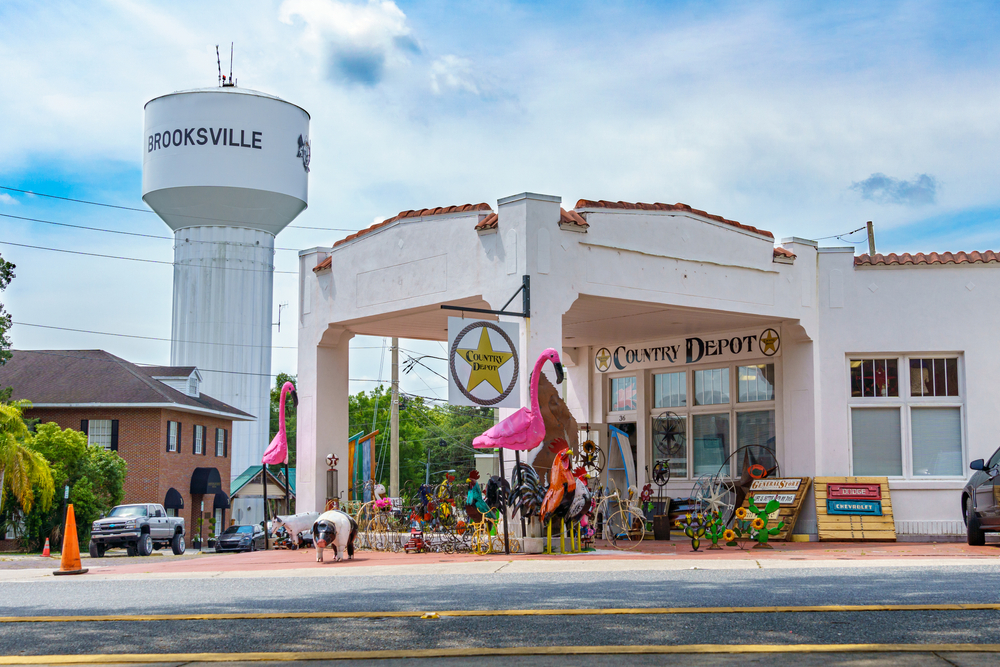
Two sources, The Tampa Bay Times and The Hill, have reported on a faulty legal description resulting in the accidental sale by the town of Brooksville, Florida, of its water tower. Brooksville is a picturesque town west of Orlando and north of Tampa.

According to the reports, the purchaser, Bobby Head, sought to buy a small building with a garage at the water tower’s base for redevelopment as a gym. The building had previously been used as storage for the city. The inquiry about buying the property led to discussions among and action by city leaders declaring the building surplus and subdividing the land. The City approved the transaction at a meeting on April 19. The sales price was set at $55,000, and the closing took place on May 5.

On the day of the closing, the purchaser told city officials that he thought the legal description included more property, but the deed was signed and delivered anyway. (I think I would have taken a breath and checked out the legal description!)

Several days later, Head went to Hernando County Assessor’s office to get an address for his new business location. He was told then that the property he bought included the city’s entire water tower site.

Head agreed to sign a deed to return the water tower to the city, and that deed was recorded on May 14. Once council member said to The Tampa Bay Times that he was not happy that mistakes had been made and he also believed the city had lost needed parking.

One official joked on Facebook, “Last month we accidentally sold the water tower. What should we do today?” The newspaper reports that the redevelopment agency director resigned. The Mayor joked, according to the paper, “We just need to be darn sure this doesn’t happen again.” The papers report that the incident caused quite a community uproar, as we can all imagine.

Thankfully, the purchaser was an honorable person who returned the property within a few days. As we can all attest, not all mistakes in real estate transactions are corrected so easily. I’m sending good vibes from South Carolina and hoping no real estate lawyer was involved in preparing the legal description!

Three strikes, you’re out?

Standard

South Carolina Supreme Court protects Captain Sam’s Spit for the third time

This blog has discussed “Captain Sam’s Spit” in Kiawah Island twice before. Googling that picturesque name will reveal a treasure trove of news, opinion and case law involving the proposed development of a beautiful and extremely precarious tract of pristine beach property on South Carolina’s coast.

In the latest case*, South Carolina’s Supreme Court refers to the property as one of our state’s only three remaining pristine sandy beaches readily accessible to the general public. The other two are Hunting Island State Park and Huntington Beach State Park. I enjoy the blessing of walking the pristine beach of Huntington Beach State Park on a regular basis, so despite having a career on the periphery of real estate development, I am in favor of maintaining these three state treasures.

The South Carolina Bar’s Real Estate Intensive seminar in 2016 and 2018 included field trips to Captain Sam’s Spit, from a distance at least. Professor Josh Eagle of the University of South Carolina School of Law was an excellent tour guide, and how many opportunities do we, as dirt lawyers, have for field trips? The South Carolina Environmental Law Project, located in Pawleys Island, fights these cases. Amy Armstrong, an attorney with that entity, joined our group to explain the environmental and legal issues.

Here are greatly simplified facts. Captain Sam’s Spit encompasses approximately 170 acres of land above the mean high-water mark along the southwestern tip of Kiawah Island and is surrounded by water on three sides. The Spit is over a mile long and 1,600 feet at its widest point, but the focal point of the latest appeal is the land along the narrowest point (the “neck”), which is the isthmus of land connecting it to the remainder of Kiawah Island. The neck occurs at a deep bend in the Kiawah River where it changes direction before eventually emptying into the Atlantic Ocean via Captain Sam’s Inlet.

The neck has been migrating eastward because of the erosive forces of the Kiawah River. The “access corridor”—the buildable land between the critical area and the ocean-side setback line—has narrowed significantly in the past decade to less than thirty feet. Googling this issue will lead to active maps which show the change over time. The width of the neck is significant because the developer needs enough space to build a road. At the base of the neck is Beachwalker Park, operated by the Charleston County Parks and Recreation Commission. Our fieldtrips were conducted on that Park.

Twice before, the administrative law court (ALC), over the initial objection of DHEC, has granted permits for the construction of an extremely large erosion control device in the critical area. In both cases (citations omitted), the Supreme Court found the ALC erred. The current appeal stems from the ALC’s third approval of another structure termed “gargantuan” by the Supreme Court—a 2,380-foot steel sheet pile wall designed to combat the erosive forces carving into the sandy river shoreline in order to allow the developer to construct the road to support the development of fifty houses. The Court again reversed and, in effect, shut down the proposed development, at least temporarily. The economic interests of an increased tax base and employment opportunities do not justify eliminating the public’s use of protected tidelands, according to the Court.

The Charleston Post and Courier has reported that a lawyer for the developer will ask for a rehearing of the latest case. I wouldn’t be surprised to see the litigation continue for another decade, despite rising sea levels and increasing hurricane threats affecting the precarious property. Stay tuned for future news.

*South Carolina Coastal Conservative League v. South Carolina Department of Health and Environmental Control, South Carolina Supreme Court Opinion 28031 (June 2, 2021)