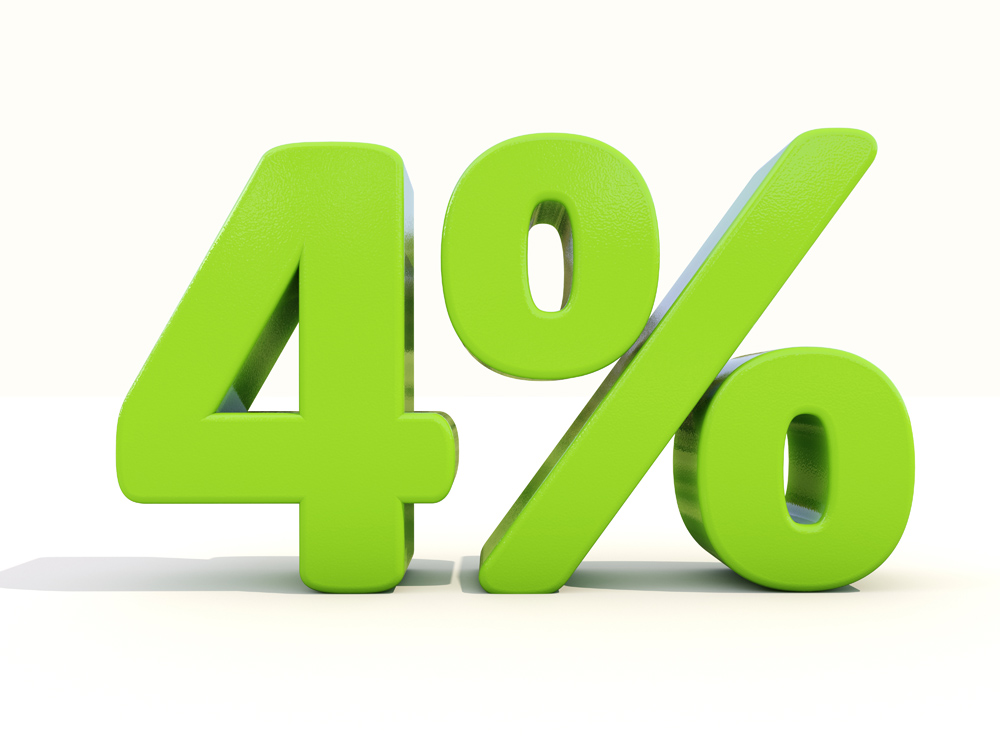
Can non-citizens receive the owner-occupied tax ratio?

Standard

Interesting question discussed on SC Bar’s Real Estate Law Listservundefined

The South Carolina Bar maintains a great listserv for members of the Real Estate Practices Section through which lawyers can ask questions and share information via email. I recommend that South Carolina real estate practitioners join the section and the list. Both provide opportunities for staying in touch with fellow practitioners and keeping up with news and trends.

Last week, a practitioner from the Fort Mill area was advised that the county would not allow the 4% owner-occupied assessment ratio for his clients who had Hispanic names but who presented South Carolina driver’s licenses and vehicle registrations as evidence of their permanent addresses. He asked other practitioners how to appeal.

Several lawyers, mostly from the Charleston area, responded that they were well aware of this issue. Apparently, Charleston County takes a hardline approach on the issue and requires that persons who are not United States citizens be resident aliens/permanent residents to obtain the 4% ratio.

My friend and excellent Charleston real estate practitioner, Beth Settle, pointed us to this Attorney General’s opinion on the topic.

The opinion is dated June 21, 2019 and is addressed to Jerry N. Govan, Jr., a member of the South Carolina House of Representatives. Mr. Govan’s question noted that some county offices are requiring individuals to present proof of U.S. citizenship as a requisite of receiving the special ratio and asked whether South Carolina law, specifically §12-37-10 et seq., requires proof of citizenship. The legislator then asked whether counties are authorized to use investigative methods to determine citizenship.

The opinion agreed with the questioner that South Carolina law provides no “bright line” rule to determine whether a non-citizen is or is not a domiciliary for the purposes of the special ratio and pointed to court decisions from multiple jurisdictions with varying results on this issue. Some courts have held that illegal aliens cannot form the requisite intent to achieve domicile in the United States. Other courts have indicated the determination must be made on a case-by-case basis. Some aliens, according to an opinion from Alaska, are allowed in the country only if they do not intend to abandon their foreign residence. Those restricted aliens would jeopardize their legal presence in the United States if they seek to establish domicile here. Others are not so restricted and may be able to form the intent to remain here without jeopardizing their legal alien status.

No decisions from South Carolina appellate courts have addressed this issue, but the Administrative Law Court considered the question* and concluded that establishing domicile is ultimately a question of fact and largely one of intent. A distinction was drawn between “actual residence” and “legal residence”, and the court stated that an individual remaining in the United Stated without documentation cannot form the requisite intent to make property in South Carolina the domicile for the purposes of the discount.

The burden of proof on this issue falls on the taxpayer. The Attorney General’s opinion concluded that in order to receive the four-percent special assessment ratio, the property in question must be the legal residence of the taxpayer. The determination must be made on a case-by-case basis after investigation by the county officials and ultimately the courts. Generally speaking, the opinion continued, those aliens who are here illegally are deemed unable to establish domicile in the United States. Where the alien is in the United States as a result of DACA, that person cannot qualify. And a tourist without a permanent visa cannot be a permanent resident.

*Richland County Assessor v. Herrera, 2018 WL 5114185 (18-ALJ-17-0006-cc)(October 9, 2018).

Disrupted Disrupters

Standard

COVID-19 is causing the iBuyers’ business model to stall

cell phone home sale small

With COVID-19 spreading, the iBuying frenzy seems to be fading fast. Commerce is slowing and even closing in some locations, especially major cities, making it difficult for iBuyers to determine fair prices for homes. Zillow, Redfin, Opendoor and Offerpad have all withdrawn from the iBuying market for the time being.

The only company not putting on the brakes seems to be HomeVestors, the “We Buy Ugly Houses” company that was in the iBuying space before that term became cool. The companies recently occupying this space never made it to South Carolina, but we saw “We Buy Ugly Houses” signs on telephone poles throughout the state, even in the most rural areas.

Some economists are speculating that COVID-19 may put a nail in the coffin of the “institutional fix-and flip” business model of those companies recently entering the market. The model was considered risky in the best of times. In times of economic uncertainty, it becomes even riskier. Safely buying a home at 95% of the market value requires confidence that the market won’t drop substantially.

HomeVestors, on the other hand, is attempting to grow by selling franchises and advertising that it remains in the market that others are leaving.

Other economists and some of the companies themselves are arguing that iBuying is a viable alternative in a market where it’s difficult to show homes and hold open houses. At this point, the correct answer is anybody’s guess.

The retreat of Zillow, Redfin, Opendoor and Offerpad before they even reach South Carolina is good news to South Carolina closing attorneys and real estate agents who view the iBuying phenomenon as another disruption to our business model as well as another possible means of dilution of control over residential closings by attorneys.

It sounds as if, for now, truly ugly houses may be the only ones subject to iBuying in South Carolina. The disrupters have been disrupted by economic uncertainty.

Tips for doing business … when we can’t do business as usual

Standard

maze medium

Our company has a remarkable network of intelligent, creative, caring agents in South Carolina. I asked our staff to pass along to me the innovative methods they are hearing that our residential closing attorneys are using as they continue to do business in this world infected by COVID-19, a world where business as usual is impossible.

I’m sharing this list with you to pass along some new ideas for your business and request that you share your innovative ideas with me. Let’s talk and continue to figure out ways to keep our clients, our staff and ourselves safe and well.

Some have asked why real estate closing services are considered to be “essential”. The technical explanation is that closings are an ancillary service of financial institutions, and financial services are essential. A better explanation may be that our industry allows access by our customers to the equity in their homes. If consumers are unable to sell or refinance their properties in a time of financial difficulty, then they are denied an avenue to prevent or delay financial difficulties. The same concept can be applied to commercial clients. They need access to their properties during difficult financial times more than ever. Never doubt that our closing services are essential in this environment.

Here are some ideas that our agents are using to conduct safe closings:

Communicate, communicate, communicate!

We have heard that clients are often surprised by the changes to closing procedures. Don’t let that happen. The new rules you establish should be clearly communicated with clients. You can’t control this unusual situation if you don’t clearly communicate the innovative methods you are using

  • Add the new rules to your email signatures.
  • Add the new rules to your engagement letters.
  • Use attractive signs inside and outside your office.
  • Make telephone calls!
  • Add video chatting to your website, Facebook pages and other social media venues.
  • Make sure your real estate agents and lenders understand the new procedures. They deserve extra communication during this time, too!
  • Let clients, real estate agents, lenders and other real estate professionals know about county office closures and other inconveniences that may affect closings.

Move closings to different locations:

  • Close at the client’s car. Allow the client to remain in the vehicle. Hand the client a pen to keep. Watch the execution from a distance and witness signatures at that same distance. Some lawyers are calling these closings “curbside service” and “drive-through closings”.
  • Close on the trunk or hood of the client’s vehicle.
  • Rope off parking-lot spaces for closings. Use attractive signs to mark the designated spaces.
  • Use a tailgating tent in your parking lot or other outdoor location. Fresh air is a huge advantage!
  • Buy colorful, plastic tables and chairs for this purpose.

Limit contact with individuals who are not necessary for closings:

  • Don’t allow real estate agents, lenders and others who are not needed for signing documents into your office.
  • Don’t allow children in your office. If parents must bring children, have one parent remain outside with their children while the other parent signs, then switch.
  • Clearly communicate that extra individuals are not allowed during this difficult time.

Limit the individuals who come into your office for any reason:

  • Don’t allow walk-ins during this time.
  • Stagger closings.
  • Have clients call from their vehicles to check in. Then call them and ask them to come into your office only when they can enter without encountering other individuals.
  • Set up separate waiting rooms if you have space.
  • Separate buyers and sellers.
  • Use video conferencing for activities other than actual closings.

Keep your office de-cluttered and cleaner than usual:

  • Buy pens in bulk and allow one-time use only. Give clients the pens they use.
  • Clean all surfaces clients touch, including conference tables, chairs, doorknobs, elevator buttons, stair railings, restrooms. Cleaning should take place between closings.
  • Use effective, antibacterial cleaning products.
  • Communicate additional cleaning requirements with the individuals who clean your office after hours.
  • Keep hand sanitizer and wipes at convenient locations throughout your office.
  • Remove children’s play areas.
  • Remove magazines and other extraneous items from waiting rooms and conference tables.
  • Wear masks and gloves. Encourage visitors to wear masks and gloves. Consider providing those items to your visitors.
  • Ask visitors to clean hands at the door.
  • Encourage pre-and post-closing hand washing.
  • Pack up glasses and cups. Use only disposable items. Limit food and drink sharing.
  • Clean after visits from delivery services.
  • Increase ventilation by opening windows and adjusting HVAC systems.

Other ideas:

  • Designate drop locations for documents and checks. These locations may be on porches or lobbies. But don’t forget security! We added a new, locked drop box to the exterior of our office.
  • Mail or wire all funds. Don’t allow anyone to wait for checks in your office.
  • Sadly, don’t allow hand-shaking or hugging!
  • Advise anyone who feels sick to stay away! This includes your valuable staff members.
  • Use powers of attorney.
  • Use open spaces for meetings.
  • Use Plexiglass to separate individuals.

All of these ideas, of course, are not useful for every office. Use your best efforts! I heard a horror story about a closing office where staff members came to work despite feeling ill. The result? Individuals from twenty closings were infected. Don’t allow a horror story to occur in your office.

Please share ideas with me. I would love to add to this list to benefit everyone!

Stay safe and well out there!

What’s going on with iBuying during the COVID-19 chaos?

Standard

COVID19 small

This blog has discussed the spread of iBuyers, entities that make offers over the Internet to home sellers in certain residential markets. These sales take place with much less fuss and inconvenience than sales in the normal real estate market. What’s the catch? The sales price may be lower than the price that would have been obtained in the normal selling process. Sellers had to weigh convenience and price.

While we’ve seen the reach of the iBuyers (Opendoor, Offerpad, Zillow Offers and Redfin) spread to our neighboring states of Georgia and North Carolina, we have not yet seen the phenomenon reach into South Carolina.

I refer you to the April 3 article from Forbes that reports Opendoor, Offerpad, Zillow Offers and Redfin have all put their online buying on hold since the first COVID-19 shelter-in-place orders.

Interestingly, though, another company may be stepping up to fill this space. We’ve all seen the sign “We Buy Ugly Houses” posted on light poles, even in very small towns in South Carolina, for many years.

The Forbes article reports that the company behind those signs, HomeVestors, is transitioning to a virtual process and is continuing to buy houses across the nation. The article also reports that HomeVestors is opening new franchises to expand business further.

stay tuned - med WTS

This expansion may be good news to homeowners who are losing their jobs during this crisis and may need to sell their homes to remain financially solvent.

The article quotes the president of HomeVestors who said that nearly half of home sales traditionally occur between March and June, but the safety measures in place to prevent the spread of the virus may have significant impact on that market this year. HomeVestors is attempting to step into that market. The company hopes to provide some peace and continuity in this uncharted territory, according to the article.

Congress is working on online notary legislation

Standard

notary small

Please see the linked March 22 article from HousingWire that outlines the bipartisan movement in Congress led by Sens. Mark Warner (D-VA) and Kevin Cramer (R-NC) to allow for remote online notarization nationwide.

While most of our agents seem to support this effort, we understand some oppose the South Carolina remote online notary law (RON) because they believe they would lose control of closings if it passed. I understand that concern, but point out that neither the state nor federal proposals would change our unauthorized practice of law precedent. In fact, the senators working on the federal version indicate it would not impede consumer choice nor change any state law governing the practice of law.

The federal bill is entitled “Securing and Enabling Commerce Using Remote and Electronic Notarization Act of 2020.” Currently about half the states allow for RON at this point, but South Carolina is not one of them.

Please pay attention to this movement and contact your congressmen whether you support or oppose the legislation.

iBuyers aren’t here yet, but they are close!

Standard

iBuyers

I refer you to this article from The Title Report entitled “iBuyers gaining market share in some markets”.

While South Carolina has been safe from the iBuyer phenomenon so far, I wanted you to see this article because it shows us how close iBuyers actually are to us. The Raleigh, North Carolina, market led the nation in iBuyer market share for the third quarter, according to Redfin.

Nearly 8 percent of homes bought in Raleigh in that period were purchased by iBuyers.

This blog has discussed iBuyers previously. Opendoor, OfferPad, Redfin and Zillow continue to increase their footprints. They buy houses for prices determined by their respective algorithms in markets where they operate. The locations close to South Carolina, so far, are Atlanta, Charlotte, Raleigh-Durham, Jacksonville, Birmingham and Nashville. How far behind can we be?

Selling a home through an iBuyer can be much simpler than the market we currently occupy. The homeowner opens the iBuyer’s website, enters their address and some basic information about the house. Within a few days, the iBuyer will make an offer.

The seller doesn’t have to clean the house, stage the house, store excess furniture, board pets, leave home for open houses or any of the other indignities suffered under our current system. It’s a much easier process.

What’s the catch? The seller may be leaving money on the table. The offer will be less than the amount the homeowner could receive if all the gamers are property played on the open market.

If the offer is acceptable to the seller, he or she will schedule a time for a representative of the iBuyer to visit and assess the home. If maintenance issues are spotted, the seller may choose to complete the repairs or to allow the iBuyer to complete them at the seller’s expense. At that point, a final offer will be made.

The seller is allowed to select a closing date, typically within 60-90 days. The closing date is typically flexible and within the seller’s control. There is no worrying about the contingency of the buyer to sell a house or to obtain financing.

While real estate agents in normal closings might charge a total of 6 or 7 percent for commission, the iBuyer might charge a transaction fee of 7.5 percent. The iBuyer makes most of its money from these transaction fees, not from flipping prices. The homes are subsequently sold on the open market, so there will be a profit. But the iBuyer is not a normal home flipper. Substantial repairs are not made, and substantial profits are not made.

So the dichotomy for the seller seems to be convenience vs. price. If the amount the seller loses in price is worth it because of the convenience, then the seller is a prime candidate to do business with an iBuyer.

How are real estate agents adapting? They are assisting sellers by obtaining multiple iBuyer offers, analyzing and explaining the offers, discussing the options of accepting one of the offers or beginning to market the home in the traditional manner, and coordinating everything with the iBuyer or traditional buyer, including repairs.

We’ll pay attention as this phenomenon grows, and we’ll definitely report when it hits South Carolina.

Dirt lawyers: help guard against elder abuse!

Standard

elderly couple lake smaller

My company recently sent out a memorandum about elder abuse in the financial and real estate industries that made some interesting points.

My father died last September and, although he was as sharp as a tack until the end, he had difficulty hearing and his reactions had slowed. As a result, my brother and I had to carefully and repeatedly (and loudly!) explain to him every move we were making with regard to his care and finances. If he had needed to enter into any type of real estate transaction in the last months of his life, the real estate lawyer should have had antennae up!

Elderly persons should be treasured, not abused! And, as real estate lawyers, we may be in a particular position to guard against abuses.

Elder abuse often happens at the hands of family members or “friends” who, because of the vulnerabilities associated with age, such as mental impairment, are able to employ methods such as theft, fraud, forgery, extortion and the wrongful use of powers of attorney to separate an elderly person from property or funds.

Reflect upon the numbers of stories you have heard in your community about elderly persons falling prey to telephone scams. Those same individuals would not have succumbed in their prime. Even with all mental facilities in place, they don’t hear as well, they don’t keep up with changes in technology, and they are unable to keep up with fraud trends we all hear about every day.

Here are some signs of elder financial abuse that you may be able to detect in your office:

  • Sudden changes in an elderly person’s estate planning documents;
  • Changes made in the title to properties in favor of a “friend;”
  • Home health aide, housekeeper or other person is added to the accounts of an elderly person or is receiving an assignment of proceeds;
  • Family members or trusted “friend” discourages or interferes with direct communications with an elderly person involved in a transaction;
  • The older person seems unable to comprehend the financial implications of the transaction;
  • The older person signs documents without seemingly knowing or understanding what is being signed;
  • A power of attorney is involved. I’ve told this story many times, but we had a wonderful claims attorney with our company who routinely called powers of attorney “instruments of the devil”. Powers of attorney are extremely useful tools in our world, but we should always exercise caution when they are used, especially when an elderly person is involved;
  • Anyone seems to be forcing the elderly person to act;
  • Numerous unpaid bills may be a clue that someone is diverting the money designated for the daily living of the elderly person;
  • Promises of lifelong care in exchange for property;
  • The elderly person complains that he or she used to have money but doesn’t understand why the money is no longer available;
  • The caregiver is evasive about the specifics of the transaction in the presence of the elderly person;
  • The elderly person seems fearful or reticent to speak in front of a family member, friend, loan officer, real estate agent or anyone involved in the transaction.
  • The accompanying family member or caregiver attempts to prevent the elderly person from interacting with others.
  • The elderly person and the family member or caregiver give conflicting accounts of the transaction, the expenditures or the financial need.
  • The elderly person appears disheveled or without proper care even though he or she has adequate financial resources.

Be mindful of these common-sense suggestions when any of your real estate transactions involve elderly persons. Think of them as you would want someone to think of your parents or aunts and uncles. Be careful to protect their interests. Proceed with caution!

Elders may also be the victims of predatory lending. Elders who own their homes and have built up equity over time become targets of predatory loan originators who pressure them in to high-interest loans that they may not be able to repay. Older homeowners are often persuaded to borrow money through home equity loans for home repairs, debt consolidation or to pay health care costs. These loans may be sold as “miracle financial cures” and are often packed with excessive fees, costly mortgage insurance and balloon payments.

Always discuss transactions directly with your elderly clients. Ask them pointed questions to make sure they understand the transaction.

And, as always, employ your instincts and your common sense.

HOA threatens to fine members over negative social media comments

Standard

hoa

Living in a community with a homeowners’ association is not always for the faint of heart. My husband and I attended our very first (and what turned out to be our last) annual meeting when we bought a new property several years ago.

A kindly looking older gentleman raised his hand to ask what appeared to us to be an innocuous question, and the president immediately threatened to have him escorted from the meeting. There were audible gasps…two from the Mannings in attendance. There was never a public explanation of what had just happened, but there was a lot of post-meeting gossip and sniping.

We’ve learned a lot about the personalities of the other property owners since that meeting. One thing we know for sure is to never step between this kindly looking gentleman and his kindly looking female neighbor across the street. It’s not a safe place to be. We don’t even drive our golf cart down the street that separates their houses. (I’m kidding, but we do laugh about that meeting when we drive down that road.)

One lesson we learned for sure is that retired folks who formerly had high-powered jobs up north can be prickly when it comes to their properties. And they have lots of time on their hands to manage things.

We decided we would be good neighbors. We would pay our assessments on time, keep our property clean and up to neighborhood standards, join in clean-up efforts and generally be happy and friendly neighbors.

But we decided we would never actively participate in the governance of the owners’ association.

Some homeowners in a community in Phoenix, Arizona have probably decided on the same course of action. Apparently, board elections got heated in the Val Vista Lakes community, and the neighbors engaged in a heated debate on social media, specifically on the association’s Facebook page. The debate included topics concerning the qualifications of the individual candidates and how the association was spending money.

The administrator of the Facebook page has apparently been instructed to take down the negative comments. But, more drastically, the Val Vista Lakes owners’ association sent out a letter threatening to fine residents as much as $250 per day for posting negative comments on social media.

Some residents have claimed this action would result in censorship.

What do you think, lawyers? Would this fine be enforceable in South Carolina? Would we need to read the formative documents to determine whether the association has the power to levy this fine? Would any of us want to live in that community?

“Carolina Crossroads” may sound like a vacation spot

Standard

But it’s “Malfunction Junction”, which is about to get a much-needed rebuild

malfunction junction

Image courtesy of The State

I’ve lived in Columbia since college with the exception of four years in Winnsboro, where my husband and I landed to split the distance between our jobs. The people in Winnsboro were delightful, but we were chastised routinely because our travel and work routines kept us away from home. The town and church ladies were especially bothered that they couldn’t drop in during the week.

A tornado that temporarily separated our growing family caused us to reevaluate our choices and to move jobs and home to one location. After much debate, Columbia won because it wasn’t easy for a female lawyer to find a small-town job in the 1980s. Let me rephrase that. A female lawyer could find a job in a small town if she didn’t need much pay or respect. But that’s a whole “nother” story, as we say in the South. Suffice it to say the city won.

Although schools and housing prices were much more promising in the Irmo area north of Columbia, we decided we didn’t have the patience to handle the commute that ran through the intersection of I-20 and I-26, commonly called “Malfunction Junction”. So I have never battled that disaster area routinely. But any Friday afternoon escape from “Famously Hot” Columbia to the cool of the North Carolina mountains required bravely timing the travel and negotiating the traffic.

I’ve seen friends and co-workers schedule their travel times to downtown Columbia to avoid hitting that area during rush hour. And I’ve seen them justify the commute because of beautiful lakefront homes and great schools. I get it! I just never had the patience for it! I’ve heard tales of the 12-mile commute taking an hour or more. That would require a big investment in audio books for me!

The Department of Transportation plans to alleviate my friends’ pain, but it’s going to take awhile. If you Google “Carolina Crossroads”, the name the DOT has given the project, you will be able to read about the ten-year plan to fix the problem. Yes, I said ten years. Here is a time-line projection.

Why will it take so long?  First, the properties must be acquired. The DOT says it plans to spend $240 million to acquire real estate including gas stations, homes, apartment buildings and a Motel 6. Dirt lawyers, if you handle condemnations as a part of your practice, this may be a time for you to shine!

The new interchange will add lanes to ease merging issues and will connect I-20, I-26 and I-126. The goal is to reduce the number of accidents and the amount of time commuters spend negotiating the area. Apparently 134,000 cars travel through the interchange every day. The $1.5 billion project is being split into five phases.

The first phase includes Colonial Life Boulevard. The second includes Broad River Road. The third will involve the main interchange of the interstate highways and will include St. Andrews Road and Bush River Road.  The fourth phase will include Harbison Boulevard, and the fifth and final phase will involve widening I-26 west of St. Andrews Road.

The DOT says one of the problems with the long-range project is that contractors are reluctant to bid on the massive project. That’s one reason the project was divided into phases. We began to hear rumblings that the project was coming as early as 2015, but the federal government didn’t sign off until spring of 2019.

I can’t wait to hear the stories about how construction will affect the commute. And our vacations may have to avoid the mountains for the next ten years!  But we’re all looking forward to the project’s completion!

“Curbed” article outlines the experience of iSellers

Standard

computer house digital sales smaller

iSeller may not be a “thing”, but iBuyer definitely is. I invite you to read the February 7 article by Jeff Andrews on curbed.com. This article outlines the experience of sellers who deal with Zillow, Opendoor and similar iBuyers. By extension, this article provides insight to real estate lawyers who want to remain in the real estate closing game after iBuyers make their way to South Carolina.

“iBuyer” is short for “instant buyer.” iBuyers buy houses for prices determined by their respective algorithms in the markets where they operate. The article contains a map showing those locations. South Carolina is not among those locations, but Atlanta, Charlotte, Raleigh-Durham, Jacksonville, Birmingham and Nashville are. How far behind can we be?

Selling a home through an iBuyer can be much simpler than the market we currently occupy. The homeowner opens the iBuyer’s website, enters their address and some basic information about the house. Within a few days, the iBuyer will make an offer.

The seller doesn’t have to clean the house, stage the house, store excess furniture, board pets, leave home for open houses, or any of the other indignities suffered under our current system. It’s a much easier process.

What’s the catch? The seller may be leaving money on the table. The offer will be less than the amount the homeowner could receive if all the games are properly played on the open market.

According to this article, if the offer is acceptable to the seller, he or she will schedule a time for a representative from the iBuyer to visit and asses the home. If maintenance issues are spotted, the seller may choose to complete the repairs or to allow the iBuyer to complete them at the seller’s expense.  At that point, a final offer will be made.

The seller is allowed to select a closing date, typically within 60-90 days. The closing date is typically flexible and within the seller’s control. There is no worrying about the contingency of the buyer to sell their house or obtain financing.

While the real estate agents in normal closings might charge a total of 6 or 7 percent for commission, the iBuyer might charge a transaction fee of 7.5 percent. According to this article, the iBuyer makes most of its money in these transaction fees. The houses are subsequently sold on the open market, so there will be a profit, but the iBuyer is not a home flipper. Substantial repairs are not made, and substantial profits are not made.

So the dichotomy for the seller seems to be convenience vs. price. If the amount the seller loses in price is worth it because of the convenience, then the seller is a prime candidate to do business with an iBuyer.

We’ll pay attention as this phenomenon grows, and we’ll definitely report when it hits South Carolina!