The new Corporate Transparency Act will apply to you and your clients!
This blog recently discussed the new Corporate Transparency Act. I’m repeating that blog in order to provide you with extra piece of information that should be helpful as you work to get ready for this new obligation of many clients. FinCen has recently published a compliance guide that you can read here.
Please refer to the excellent September 2023 article in SC Lawyer entitled, “The Basic Ins and Outs of the Corporate Transparency Act” by Matthew B. Edwards and D. Parker Baker III.
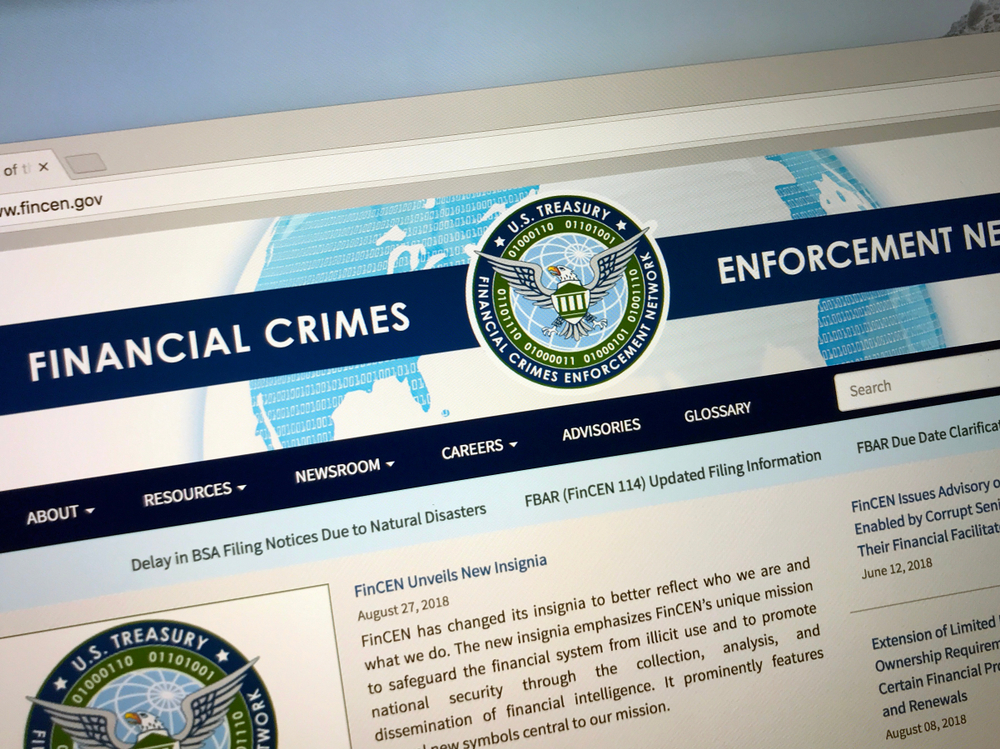
This article provides an analysis of the basics of the Act, which is intended to help prevent money laundering, terrorist financing, corruption, tax fraud and other illicit activities. Many entities will be required to report information concerning beneficial owners to the Department of Treasury’s Financial Crimes Enforcement Network (FinCEN), identifying their beneficial owners and providing certain information about them.
The act may apply to virtually every commercial real estate transaction because of the use of multi-tier entity structures to achieve business objectives. Lawyers will need to review clients’ organizational structure charts to determine entity by entity whether an exemption is applicable. If not, organizational documents, stockholder agreements, operating agreements will have to be reviewed to determine beneficial ownership.
Reporting information will include the name, address, state of jurisdiction and taxpayer identification number of every beneficial owner. Other information may be required, such as passports and driver’s licenses. Penalties for failure to comply will include civil penalties of no more than $500 per day, fines of no more than $10,000 and imprisonment for no more than two years. A safe harbor is included for voluntarily and promptly correcting an inaccurate report within 90 days. FinCEN will issue rules prior the effective date.
Don’t panic. We have time. The effective date is January 1, 2024. For companies formed prior to the effective date, the initial report is due January 1, 2025. For companies formed on or after the effective date, the first report is due thirty days following formation.
I think everyone’s initial advice as to new entities will be to refrain from forming those entities until the effects of the Act are analyzed. Existing entities will need to be analyzed pursuant to FinCEN’s rules during 2024.
Everyone will get through this together, and it’s likely that experts will emerge to help.
CFPB imposes $1.75 million fine for giving “things of value” in return for referrals
This blog often recommends the DIRT Listserv and today is no exception. Professor Dale Whitman reported on August 22 that the CFPB issued an order against Freedom Mortgage Corporation, a residential mortgage loan originator and servicer headquartered in Boca Raton, Florida, for providing things of value—including subscription services, events, and monthly marketing services agreement payments—in exchange for referrals of mortgage loans in violation of the Real Estate Settlement Procedures Act and its implementing Regulation X. The order requires Freedom to stop its unlawful activities and pay a $1.75 million civil money penalty.
Professor Whitman noted that since RESPA Section 8 has been around for 50 years, one might think that such practices are a thing of the past.
These specific violations were noted:
Freedom entered into agreements with local real estate agents for the agents to provide marketing services for Freedom’s mortgage activities. CFPB said the payments were really referral fees for the agents to refer mortgage loan customers to Freedom. Apparently, no “marketing services” were provided.
Freedom gave the agents free access to valuable industry subscription services, which provided information concerning property reports, comparable sales, and foreclosure data. These subscriptions, which were worth thousands of dollars per month, were provided in return for the agents referring mortgage loan customers to Freedom.
Freedom provided entertainment, food, and drinks at parties and other events to the agents that were referring loan customers to it. They also provided free tickets to sporting and charity events. They didn’t make similar distributions to agents who were not referring customers.
Professor Whitman questions whether a lender really cannot throw a pregame party or provide a skybox at a game for real estate agents. He suggests that there must be a de minimus exception. But the order doesn’t give much guidance on the boundaries of Section 8.
I agree with the Professor. If you represent clients that provide settlement services and rely on referrals, you should advise them to be very cautious about providing free services and entertainment persons who make the referrals.
The new Corporate Transparency Act will apply to you and your clients!
Please refer to the excellent September 2023 article in SC Lawyer entitled, “The Basic Ins and Outs of the Corporate Transparency Act” by Matthew B. Edwards and D. Parker Baker III.
This article provides an analysis of the basics of the Act, which is intended to help prevent money laundering, terrorist financing, corruption, tax fraud and other illicit activities. Many entities will be required to report information concerning beneficial owners to the Department of Treasury’s Financial Crimes Enforcement Network (FinCEN), identifying their beneficial owners and providing certain information about them.
The act may apply to virtually every commercial real estate transaction because of the use of multi-tier entity structures to achieve business objectives. Lawyers will need to review clients’ organizational structure charts to determine entity by entity whether an exemption is applicable. If not, organizational documents, stockholder agreements, operating agreements will have to be reviewed to determine beneficial ownership.
Reporting information will include the name, address, state of jurisdiction and taxpayer identification number of every beneficial owner. Other information may be required, such as passports and driver’s licenses. Penalties for failure to comply will include civil penalties of no more than $500 per day, fines of no more than $10,000 and imprisonment for no more than two years. A safe harbor is included for voluntarily and promptly correcting an inaccurate report within 90 days. FinCEN will issue rules prior the effective date.
Don’t panic. We have time. The effective date is January 1, 2024. For companies formed prior to the effective date, the initial report is due January 1, 2025. For companies formed on or after the effective date, the first report is due thirty days following formation.
I think everyone’s initial advice as to new entities will be to refrain from forming those entities until the effects of the Act are analyzed. Existing entities will need to be analyzed pursuant to FinCEN’s rules during 2024.
Everyone will get through this together, and it’s likely that experts will emerge to help.
Refer to the excellent article in July’s issue of SC Lawyer
I’d like to recommend that South Carolina dirt lawyers read and pay attention to an article in the July issue of the SC Lawyer. Rachel E. Carr and Danielle Bennett authored an interesting article entitled, “The Lady Bird Deed: Has the Remainderman Interest Nested or Vested?”
Cutting to the chase, your title insurance company in South Carolina will require the signatures of remaindermen if the life estate owner sells or mortgages property. But let’s look at the background this article sets out.
The Lady Bird Deed derives its name from Lady Bird Johnson, Lyndon Johnson’s first lady. Anecdotally, President Johnson went to great lengths to avoid probate by transferring his assets to his wife. South Carolina’s statutes and case law do not recognize this type of deed.
The Lady Bird Deed attempts to retain more power over the real estate in the life tenant than the typical life estate deed. This “enhancement” language is typically included:
“Grantor reserves unto himself, for and during his lifetime, exclusive possession, use, and enjoyment , right to income of the property, and Grantor further reserves the right to sell, lease, encumber by mortgage or deed of trust, pledge, lien or otherwise maintain and dispose of, in whole or in part, or grant any interest thereon, of the property by gift, sale, or otherwise without consent or joinder of the Grantee, which may terminate the interest of Grantee. Grantee shall be a remainderman in the property described herein and upon the death of Grantor, if the property described herein has not been previously disposed of prior to the death of Grantor, all right and title to the property, then remaining, shall fully vest in Grantee as fee simple subject to such liens and encumbrances which may exist at the time of Grantor’s death.”
What would you do if you saw this language in a deed for property your client intends to purchase? You would likely call your friendly title insurance company underwriter, and that person would most likely ask you to obtain the signature of the remainderman.
As the article points out, South Carolina cases have recognized a life estate coupled with a power of sale. Blackmon v. Weaver* was a 2005 Court of Appeals case involves a life estate and remainder interest established in a will. The will left property to testator’s wife, including this language:
“Second: I give, devise and bequeath all of my property whether real, personal or mixed, whatsoever and wheresoever situation, whether now owned by me or to me or hereafter acquired by me, to my wife, Lana Odom Blackmon for and during her natural life or until such time as she no longer desires the property.
Sixth: That if the desire of my wife to sell any or all of my property and assets then my wife, Mary B. Heath, J.B. Blackmon, III and Jennifer B. Weather, shall share equally in the sale of such assets.”
When a dispute arose between the wife and children, the wife attempted to sell the property. The trial court held that the wife could not sell the property because she was not the fee simple owner. But the Court of Appeals relied on the intention of the testator as expressed in the will and held that the wife had the power to sell the property.
In an earlier case** the will devised to the testator’s wife “complete perfect ownership” during her life. At her death, the property would pass to the testator’s sisters. The Court held that the widow had the power to sell the real estate because the testator’s intent was clear.
But what we don’t have in South Carolina is a case that allows life tenant to sell the property when the life estate is established in favor of the grantor in a deed. So, we do not have authority for the sale of property by the grantor of a Lady Bird Deed.
As I often suggest, please call your title insurance underwriter if you have questions about any unusual language you find in a deed.
Last week, this blog discussed a real estate dispute between a developer and a 93-year-old great-great-grandmother in Hilton Head who said her husband’s family has owned the property since the Civil War. This week, we turn to a similar story in St. Helena Island.
NPR reported on August 3 that residents of St. Helena Island have banded together to protect the culture of the Gullah Geechee people from a golf course development. You can read NPR’s story here.
The story reports that St. Helena Island has a decade’s old zoning ordinance that bans golf courses, resorts and gated communities, which the Gullah Geechee people say threaten their existence. Direct descendants of slaves have farmed and fished St. Helena Island for nearly 200 years, using their own language, culture and traditions.
NPR reports that developer Elvio Tropeano purchased 500 acres and wants to build a golf course despite the zoning ordinance. He contends the golf course would benefit the community by allowing public access and attracting visitors who would become educated about the Gullah Geechee people and spend funds that would support their culture. If he is unable to build the golf course, he threatens to build more than 160 luxury homes. According to the NPR story, some locals believe the subdivision would be worse than the golf course. They prefer to have the land sustained the way it is, unspoiled and resilient.
These stories are certainly not the first South Carolina tales we have heard about disputes between locals and developers and pressures on “heirs property” and other undeveloped, pristine real estate. The pressures seem to be building!
News sources are reporting that a dispute between a developer and a 93-year-old great-great-grandmother has halted the development of a 29-acre, 247-unit subdivision called Bailey’s Cove Subdivision in Hilton Head. Read MSN’s articles here and here.
The Town of Hilton Head has issued a press release dated August 3 stating that it will not issue a Certificate of Compliance or building permits until the dispute between Josephine Wright and Bailey Point Investment Group has been resolved. Both parties are claiming they own property included within the proposed development.
The dispute apparently began when the developer discovered Wright’s satellite dish, shed and screened porch are located on property the developer claims. The June 22 article includes a plat dirt lawyers will find interesting. The developer filed a lawsuit demanding that Wright remove her personal property from its real estate. Wright counterclaimed, alleging the lawsuit was one step of the developer’s “constant barrage of tactics of intimidation, harassment, trespass” to force Wright to sell her home.
MSN is reporting that Wright says her husband’s family, who were escaped slaves freed by Union soldiers, has owned the disputed property since shortly after the Civil War. The stories also report that celebrities are supporting Wright in this dispute: Tyler Perry posted a message on Instagram asking how he can help; Snoop Dogg’s label, Death Row Records, donated $10,000 to Wright’s GoFundMe campaign, and NBA player Kyrie Irving donated $40,000.
Of course, I’d like to know what the title work shows and whether title insurance is involved. We’ll have to pay attention to see how this dispute is resolved.
The preacher started his sermon on Sunday by saying: “I love a good story.” I love a good story, too, and even though this one is about a South Carolina tax sale, not a twin’s stolen blessing from Genesis, it makes for a pretty good tale.
I’ve often said that our courts of appeal will overturn a tax sale on the flimsiest of technicalities. The technicalities in this case are not flimsy, and a claim of slander of title gives us a different slant on the typical tax sale case.
The opinion in Gleason v. Orangeburg County* starts, “This story began with a flawed tax sale, but there were several mistakes for years after.” It’s not a John Grisham-worthy beginning, but it’s not bad for a South Carolina Court of Appeals case.
Bank of America began foreclosure proceedings in 1998 on property owned by Debra Foxworth. When the foreclosure was finalized, the bank sold the property to Wilton Gleaton. The opinion refers to Wilton Gleaton as “Wilton” because his wife will become a later player in the story. When Wilton bought the property, the 1998 taxes had not been paid.
In a classic tale of the left hand not knowing what the right hand is doing, Orangeburg County began proceedings in March of 1999 to collect the delinquent taxes. The County sent Foxworth notices for failing to pay taxes in March and May, shortly before the foreclosure sale to the bank, but long after the bank began foreclosure proceedings. The County sold the property at a delinquent tax sale to James Fields in February 2000.
The County sent three required “Dear Property Owner” letters to give notice of the redemption period. Two of the letters were addressed to Foxworth and the third was addressed to Wilton but mailed to Foxworth’s address.
In an interesting twist, Wilton’s wife, Sara, visited Orangeburg County in January 2001—before the redemption period expired—and went there precisely because she had not received a tax notice in the mail. She paid the 2000 property taxes. That tax bill listed a Charleston address at which neither Sara nor Wilton had ever lived. Sara gave the County her correct address and asked if any other taxes were owed. The County initially told her that no other taxes were due but later informed her the 1999 taxes had not been paid. She paid those taxes the next month, February 2001. In an “asleep at the wheel” move, the County employee did not inform her of the 2000 tax sale to Fields or of the right to redeem the property.
The redemption period expired in February 2001, not long after Sara paid the 2000 property taxes, but before she paid the 1999 taxes. In May 2001, The County issued a tax deed to Fields. The tax deed listed Foxworth as the defaulting taxpayer and “record owner against whom warrant was issued.” The tax deed made no reference to the Gleatons.
The Gleatons paid subsequent taxes as they came due.
In 2006, the County discovered Wilton—the record owner at the time of the 2000 tax sale—had not been noticed. In another interesting twist, the tax collector had Fields convey the property back to Foxworth via quitclaim deed in an effort to “reverse” the tax sale. The Gleatons were not notified about any of this.
In 2007, the Gleatons listed the property for sale. (Dirt lawyers, this is where the facts get “real” for us.) In October 2009, Donnie and Connie Hall contracted to buy the property for $33,000. It’s shocking, I know, but the Halls discovered a title problem! The County’s attorney offered to bring a declaratory judgment on the Hall’s behalf seeking rulings that the tax sale and quitclaim deed were void.
Wilton filed this suit against the County after the Halls backed out of the sale. In December 2014, the master issued an order finding the tax sale was flawed and invalid and the tax deed to Fields was improper. But the master left open the issues of liability and damages and ordered the Gleatons to attempt to sell the property within four months. Wilton died shortly after this order and Sara was substituted as a party. The property did not sell, and the master issued a final order in 2019. He found that the County’s actions were not malicious and “made no publication” that was intended to harm the Gleatons and made no statement that was knowingly false or in reckless disregard of its truth or falsity.
The master found that the only statement slandering Wilton’s title was the quitclaim deed from Fields to Foxworth, and that this deed was done for the purpose of returning the property to the defaulting taxpayer, not for the purpose of damaging Wilton’s title. The master also found that a proper title search would have revealed the 1998 taxes were due and owing at the time of the Gleatons’ purchase.
On appeal, Sara argued:
The tax deed and subsequent deed to Foxworth disparaged the title.
The County knew Wilton owned the property because the deed and mortgage were recorded before the tax deed.
The master erred in failing to find malice because malice, in a slander of title action, includes publications made without legal justification.
The Halls plainly refused to purchase the property because of the cloud on the title.
Citing an earlier case, the Cout of Appeals set out the elements of slander of title as:
The publication
with malice
of a false statement
that is derogatory to plaintiff’s title and
causes special damages
as a result of diminished value of the property in the eyes of third parties.
The Court held the master’s findings that the County’s actions did not result in any publication and did not contain any statement that was knowingly false or made in reckless disregard of the truth were not supported by the evidence. The Court also disagreed with the master’s finding that malice requires an intent to injure. The County’s numerous missteps were at least reckless, according to the Court, stating that the situation should have been resolved in a logical and reasonable manner when the mistakes were discovered.
The case was remanded for the master to consider each element in a slander of title action and the proper standard for malice.
Please note that more than 20 years have passed since this tale of woe began. The County should have discovered and fixed its mistakes when Sara visited in 2001 with the express purpose of paying taxes. And there is no excuse for the County’s continued failure to correct its errors in 2006 when the tax collector discovered Wilton’s ownership of the property.
*South Carolina Court of Appeals Opinion 6003 (July 26, 2023)
In May, this blog discussed the news that State Farm has pulled out of the state of California for new homeowners’ policy applications. I’m updating that blog to add similar concerns in Florida.
My family has a modest second home in North Litchfield Beach. It isn’t close to the ocean. My Fitbit clocks 700 steps to the beach, and most family members prefer to drive a golf cart for that reason. To call it a “raised beach house” is an understatement. Because of flood insurance concerns, the garage level of the house was required to be very tall when we built in 2011.
We can’t paint or power wash with the tallest ladders available to homeowners. If we had a big boat, we could park it in the garage. My point is that the living area of our house is so far above ground, that if it floods, it is likely that inland Pawleys Island and Georgetown County will also flood.
Thinking all the way back to Hurricane Hugo in 1989, my extended Georgetown County family members evacuated to Columbia to stay with us. Much to everyone’s surprise, our property in Columbia suffered more damage than their properties in Georgetown.
Earlier this year, we received a letter from our insurance agency indicating that it would attempt to obtain insurance for us for the upcoming insurance year, but we should be prepared for difficulty because of the frequency of hurricanes in our area. There is no reason our house should be difficult to insure other than its location on the beach side of Highway 17.
I share this information with South Carolina dirt lawyers, particularly those who practice in our coastal counties, for discussion purposes only. I’m not pushing a panic button by any means. But the headlines I read in May about State Farm’s decision to pull out of California as to new homeowners’ applications certainly caught my attention.
State Farm pointed to wildfire risks and construction cost inflation to justify its decision. Everyone is suffering from the latter, and, as to the former, the company didn’t attempt to limit the impact of its decision to those areas most affected by wildfires. Other stated concerns were climate change, reinsurance costs affecting the entire insurance industry, and global inflation. All of those concerns also affect all locations.
The company pulled out of the entire state as to new applications. And some news articles reported that State Farm is the largest insurer based on premium. The fact that the largest insurer pulled out of the third largest state seems impactful.
The announcement did state that existing customers will not be affected and that automobile insurance applications will continue to be accepted.
Now, we’re seeing similar headlines from Florida. Farmers has announced that it is discontinuing new coverage of auto, home and umbrella policies in an effort to manage risk exposure. News articles explain that Farmers is the fourth major insurer to leave the Florida market in the past year. Most companies cite the substantial risk of hurricanes.
There doesn’t appear to be anything we should do at this point, other than to keep our eyes and ears open as to developments in the area of insurance for ourselves and our clients.
On July 12, South Carolina’s Court of Appeals issued an opinion* in favor of multiple property owners in a railroad abandonment case.
The properties at issue abutted a 24-mile railroad line extending from McCormick County to Abbeville County. In 1878, the State chartered the Savannah Valley Railroad Company (SVR) to construct the railroad. Prior title holders granted SVR easements to allow the construction and operation of the railroad. The documents stated the easements would be void in the event the railroad was not erected and established. Each successive title holders’ deed was subject to the easements. SVR conveyed its interest to Seaboard Coastline Railroad Company.
In the late 1970’s Seaboard decided to close the track and seek permission from the Interstate Commerce Commission (ICC) to abandon the line. The ICC granted the request in 1970. The company wrote a letter to the ICC dated February 25, 1980, indicating the track was abandoned as of February 15, 1980.
Calhoun Falls and Savannah Valley Trails (SVT) were the ultimate owners of the railroad’s interests. When SVT began to construct a walking trail on the former line, property owners adjoining the line in McCormick County filed suit in 2016 seeking a declaratory judgment that the properties reverted to them when the track was abandoned. Abbeville County property owners filed a similar suit in 2018.
The trial court issued two orders finding (1) the railroad abandoned the line; (2) when the railroad abandoned the line, the easements were terminated, and the property rights reverted to the adjoining title holders; and (3) the doctrine of laches did not bar the property owners’ claims.
SVT argued on appeal that the trial court lacked subject matter jurisdiction because the abandonment failed to follow the details of the ICC order. The Court of Appeals disagreed, holding that SVT had the burden of proving the railroad’s abandonment was incomplete and failed to meet that burden.
SVT also argued on appeal that laches barred the property owners’ claims. The Court of Appeals noted that SVT failed to plead laches as an affirmative defense, and that the trial court could have declined to address the issue. But, ultimately, the appeals court agreed with the lower court that SVT failed to present evidence that would equip the trial court to make a finding of prejudice to support the laches claim.
Finally, SVT argued that the trial court erred in finding the railroad had abandoned the line. The Court of Appeals noted that the railroad ceased operations, sought permission for abandonment from the ICC, removed the tracks, and transferred its property interests. Further, nothing in the record showed that the railroad failed to comply with the requirements of the ICC. Citing prior cases, the Court stated that to rule otherwise would gut the longstanding rule that an easement is extinguished when the railroad abandons the right of way for railroad purposes.
As a dirt lawyer, I like this opinion! If you run into railroad abandonment issues in your chains of title, consult your friendly, intelligent title company underwriters.
*Myers v. Town of Calhoun Falls, South Carolina Court of Appeals Opinion 5998 (July 12, 2023)
In May, this blog discussed Ani Creation, Inc. v. City of Myrtle Beach,* a case where the South Carolina Supreme Court upheld an ordinance that imposed a zoning overlay district intended to bolster the “family friendly” nature of Myrtle Beach’s historic downtown area. The ordinance targeted smoke shops and tobacco stores and the merchandizing of tobacco paraphernalia, products containing CBD, and sexually oriented material.
The opinion begins, “The City of Myrtle Beach (the city) is a town economically driven and funded by tourism.” The facts indicate that the city received frequent criticism from tourists and residents that the proliferation of smoke shops and tobacco stores repelled families from the area. The city passed a comprehensive plan that aimed at increasing tourism and concluded that all businesses needed to encourage and support a “family beach image”. The city passed an ordinance which created a zoning overlay district known as the Ocean Boulevard Entertainment Overlay District that encompassed the historic downtown area.
The prohibited uses in the district were declared immediately nonconforming when the ordinance was passed on August 14, 2018, but an amortization period was allowed which gave affected businesses until December 31, 2019, to cease the nonconforming portions of their businesses.
The zoning administrator issued citations to the nonconforming businesses. Nine of the 25 affected stories appealed to the Board of Zoning Appeals which found (1) it did not have jurisdiction to declare the ordinance unconstitutional; (2) it could not grant a use variance because it would allow the continuation of a use not otherwise allowed in the district; and (3) the businesses were engaged in one or more of the prohibited uses. On appeal, the circuit court affirmed the Board’s opinion, finding the appellants’ 25 grounds for challenging the ordinance meritless. The businesses appealed directly to the South Carolina Supreme Court.
The appellants raised a “host” of constitutional and procedural challenges, all of which fell on deaf ears at the Supreme Court. The Court held that the ordinance was a valid exercise of the city’s police powers. According to the Court, municipal governing bodies clothed with authority to determine residential and industrial districts are better qualified by their knowledge of the situation to act upon such matters than are the courts, and they will not be interfered with in the exercise of their police power to accomplish their desired end unless there is a pain violation of the constitutional rights of the citizens.
The Appellants petitioned for a rehearing and in an opinion re-filed on June 28, the court again affirmed the Court of Appeals.
A comment on the Dirt Listserv said, “S. Carolina is OK with cancel culture after all.” A store selling sexually oriented materials was removed from Garners Ferry Road in Columbia (about three miles from my house) using similar legal arguments. I was delighted to see that store torn down before I had to explain it to my grandchildren! But I do understand the “cancel culture” argument. What do you think?









 Let's Talk Dirt