I hope no dirt lawyer was involved in this transaction!
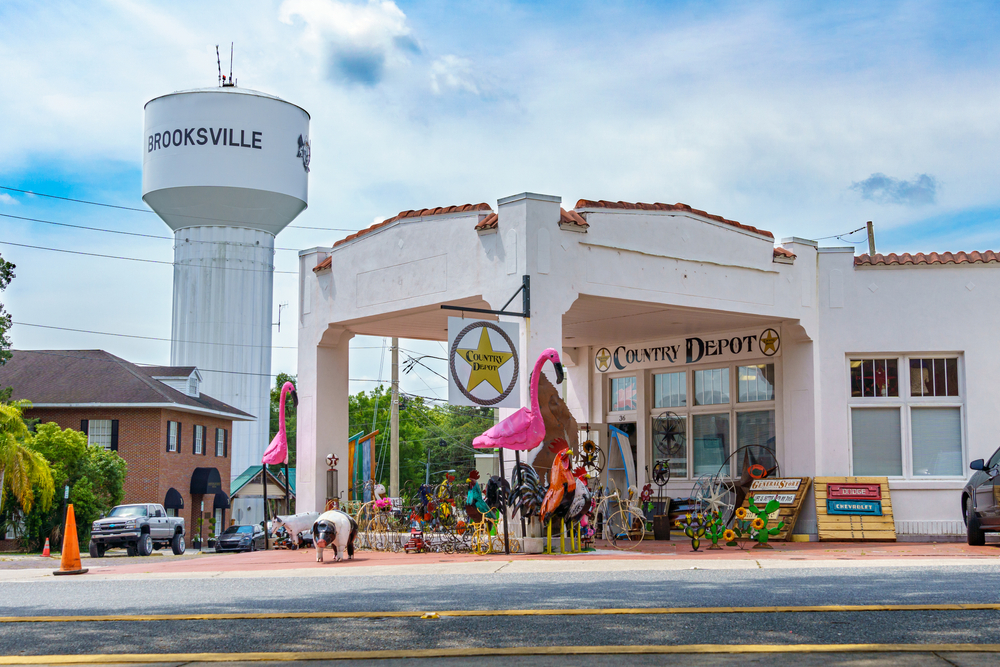
Two sources, The Tampa Bay Times and The Hill, have reported on a faulty legal description resulting in the accidental sale by the town of Brooksville, Florida, of its water tower. Brooksville is a picturesque town west of Orlando and north of Tampa.
According to the reports, the purchaser, Bobby Head, sought to buy a small building with a garage at the water tower’s base for redevelopment as a gym. The building had previously been used as storage for the city. The inquiry about buying the property led to discussions among and action by city leaders declaring the building surplus and subdividing the land. The City approved the transaction at a meeting on April 19. The sales price was set at $55,000, and the closing took place on May 5.
On the day of the closing, the purchaser told city officials that he thought the legal description included more property, but the deed was signed and delivered anyway. (I think I would have taken a breath and checked out the legal description!)
Several days later, Head went to Hernando County Assessor’s office to get an address for his new business location. He was told then that the property he bought included the city’s entire water tower site.
Head agreed to sign a deed to return the water tower to the city, and that deed was recorded on May 14. Once council member said to The Tampa Bay Times that he was not happy that mistakes had been made and he also believed the city had lost needed parking.
One official joked on Facebook, “Last month we accidentally sold the water tower. What should we do today?” The newspaper reports that the redevelopment agency director resigned. The Mayor joked, according to the paper, “We just need to be darn sure this doesn’t happen again.” The papers report that the incident caused quite a community uproar, as we can all imagine.
Thankfully, the purchaser was an honorable person who returned the property within a few days. As we can all attest, not all mistakes in real estate transactions are corrected so easily. I’m sending good vibes from South Carolina and hoping no real estate lawyer was involved in preparing the legal description!
South Carolina Supreme Court protects Captain Sam’s Spit for the third time
This blog has discussed “Captain Sam’s Spit” in Kiawah Island twice before. Googling that picturesque name will reveal a treasure trove of news, opinion and case law involving the proposed development of a beautiful and extremely precarious tract of pristine beach property on South Carolina’s coast.
In the latest case*, South Carolina’s Supreme Court refers to the property as one of our state’s only three remaining pristine sandy beaches readily accessible to the general public. The other two are Hunting Island State Park and Huntington Beach State Park. I enjoy the blessing of walking the pristine beach of Huntington Beach State Park on a regular basis, so despite having a career on the periphery of real estate development, I am in favor of maintaining these three state treasures.
The South Carolina Bar’s Real Estate Intensive seminar in 2016 and 2018 included field trips to Captain Sam’s Spit, from a distance at least. Professor Josh Eagle of the University of South Carolina School of Law was an excellent tour guide, and how many opportunities do we, as dirt lawyers, have for field trips? The South Carolina Environmental Law Project, located in Pawleys Island, fights these cases. Amy Armstrong, an attorney with that entity, joined our group to explain the environmental and legal issues.
Here are greatly simplified facts. Captain Sam’s Spit encompasses approximately 170 acres of land above the mean high-water mark along the southwestern tip of Kiawah Island and is surrounded by water on three sides. The Spit is over a mile long and 1,600 feet at its widest point, but the focal point of the latest appeal is the land along the narrowest point (the “neck”), which is the isthmus of land connecting it to the remainder of Kiawah Island. The neck occurs at a deep bend in the Kiawah River where it changes direction before eventually emptying into the Atlantic Ocean via Captain Sam’s Inlet.
The neck has been migrating eastward because of the erosive forces of the Kiawah River. The “access corridor”—the buildable land between the critical area and the ocean-side setback line—has narrowed significantly in the past decade to less than thirty feet. Googling this issue will lead to active maps which show the change over time. The width of the neck is significant because the developer needs enough space to build a road. At the base of the neck is Beachwalker Park, operated by the Charleston County Parks and Recreation Commission. Our fieldtrips were conducted on that Park.
Twice before, the administrative law court (ALC), over the initial objection of DHEC, has granted permits for the construction of an extremely large erosion control device in the critical area. In both cases (citations omitted), the Supreme Court found the ALC erred. The current appeal stems from the ALC’s third approval of another structure termed “gargantuan” by the Supreme Court—a 2,380-foot steel sheet pile wall designed to combat the erosive forces carving into the sandy river shoreline in order to allow the developer to construct the road to support the development of fifty houses. The Court again reversed and, in effect, shut down the proposed development, at least temporarily. The economic interests of an increased tax base and employment opportunities do not justify eliminating the public’s use of protected tidelands, according to the Court.
The Charleston Post and Courier has reported that a lawyer for the developer will ask for a rehearing of the latest case. I wouldn’t be surprised to see the litigation continue for another decade, despite rising sea levels and increasing hurricane threats affecting the precarious property. Stay tuned for future news.
*South Carolina Coastal Conservative League v. South Carolina Department of Health andEnvironmental Control, South Carolina Supreme Court Opinion 28031 (June 2, 2021)
Real estate lawyers are the “Customers” of title insurance companies in South Carolina. In other parts of the country, title company customers are the consumers and businesses who buy and sell real estate and the lenders who loan funds to accommodate those transactions. But in South Carolina, title insurance companies sell their services to real estate lawyers.
I’ve been on both sides of title company – real estate lawyer equation, having been in private practice for about a decade and in the title insurance business almost three decades. Nothing is more important to the parties involved in real estate than protecting client funds. The scariest word to a title insurance company lawyer is “defalcation”, the misappropriation of funds by a person charged with protecting funds.
How does a title insurance company become responsible for funds in a real estate lawyer’s trust account? Title insurance companies issue Closing Protection Letters to lenders and others who seek the protection of a party with deep pockets for funds held in escrow by local lawyers. The lawyer is the title company’s agent, and the letter protects the lender if the agent fails to follow the lender’s written closing instructions or fails to protect escrow funds, and those failures result in title problems. If a lawyer vanishes with closing funds, the transaction cannot be properly completed, and the lender loses the benefit of the secured mortgage loan, typically after the lender has disbursed the funds to the closing attorney.
I was taught as a baby real estate lawyer that trust funds were sacrosanct. I was to never entertain the prospect that I could use those funds for personal purposes. I remember joking that I knew I was honest the first time I closed a $23 million transaction in the 1980’s. Later, as a baby title insurance company lawyer, I was taught that one of our main responsibilities was to help our attorney agents protect client funds. And, thankfully, almost every lawyer is absolutely committed to the process of protecting those funds.
But there are bad apples.
Harken back to 1995. Our office was contacted several times in the same week about missing closing packages, unrecorded mortgages and other mishaps revolving around closings handled by a single attorney. One call is probably an explainable and easily correctable mistake. Three or four calls indicate a genuine problem.
Calls to this attorney went unreturned. After a couple of days, it was “all hands-on deck” as our office learned that a Columbia lawyer had virtually vanished. We spent weeks in his office pouring over real estate and financial documents and months chasing down leads. Law enforcement and the Supreme Court’s Office of Disciplinary Counsel (ODC) got involved. The lawyer had disappeared, leaving an ex-wife and twin adolescent daughters in Columbia to pick up the pieces. Our office paid out almost $1 million to injured parties. In retrospect, that seems like a small sum based on later tales of woe.
This lawyer was missing for about three years. Then, he mistakenly used his real Social Security Number for a transaction in the accounting practice he had set up on the west coast and, Henry Richardson, the Disciplinary Counsel at the time, flew out west to retrieve him. He was eventually disbarred. We learned through that that he had not fled with $1 million in his pocket, as we had thought. The money had disappeared over the many years of his sloppy law practice. He fled with almost no money at all.
Why remember this case in 2021? Several news stories have been published recently about New York landlord lawyer, Mitch Kossoff, who has allegedly absconded with millions of dollars in escrow funds. (See, for example, “The curious case of the vanishing attorney” from TheRealDeal, May 12, 2021 and “Manhattan real estate lawyer Mitchell Kossoff facing N.Y. and U.S. criminal probes” from Reuters, May 26, 2021.)
I sincerely hope this lawyer turns up with the funds before innocent clients are hurt. In the meantime, clients have turned to the courts for help. One interesting case involves the lawyer’s mother, who alleges her son forged her signature to take out business loans. Counsel for the lawyer says he is not a fugitive, and that he will subject himself to the jurisdiction of the courts. This is definitely an interesting story that we’ll continue to follow.
This blog discussed on April 22 Lexington County Council’s move to suspend all new subdivision applications for six months. The Council indicated it planned to review its standards during the six-month moratorium. The ordinance applied to applications to develop ten or more lots for new housing, subdivisions with lots of less than half an acre, and developments with some “attached land use activities.”
There has been quite a lot of activity on this topic since the ordinance was initially passed.
In a suit brought by The Building Industry Association of Central South Carolina, Circuit Court Judge Debra McCaslin on May 4 struck down the ordinance, stating the closed-door executive session violated the Freedom of Information Act. The County argued that the ordinance was proper as an emergency measure because of the impact of new subdivisions on schools, roads and county services.
On May 6, the Council reinstated the moratorium but eliminated subdivisions of less than half an acre.
Completed applications will continue to move through the system.
We have seen other counties and municipalities impose similar freezes. Notably York County and Hilton Head Island have taken similar action in the past.
We are in the middle of a “sellers’ market”, with inventory in housing being a major impediment to residential sales. This moratorium is likely to exacerbate that situation in the midlands.
This blog reported in early April that the Centers for Disease Control and Prevention (CDC) had extended the national moratorium on residential evictions through June 30. The U.S. District Court for the District of Columbia issued an order on May 5 vacating the moratorium, but later in the day temporarily stayed its own ruling to give the Court time to consider the merits of the arguments on both sides. The result of the stay is that the eviction moratorium remains in place for the time being.
The suit* resulting in these remarkable rulings was brought on November 30 by two trade associations, the Alabama and Georgia Associations of Realtors, and by individuals who manage rental properties. The complaint raised several statutory and constitutional challenges to the CDC order. Both parties filed motions for summary judgment. The plaintiffs’ motion was granted on the grounds that the CDC had exceeded its authority by issuing the broad moratorium. The Department of Justice filed an emergency appeal within hours.
The Court asked for a defense response this week and a reply from the government by May 16, so it is likely that a new order will be issued soon. But with the moratorium’s expiration date of June 30, a new ruling will have little, if any, effect.
In addition to the national moratorium, some state and local laws restricting evictions remain in place.
The Court’s order vacating the moratorium pointed to the unprecedented challenges for public health officials and the nation caused by the COVID-19 pandemic. The difficult policy decisions, like the decision to impose the moratorium, have real-world consequences, according to the Court. The Court stated that it is the role of the political branches, not the courts, to assess the merits of such policy decisions. The Court perceived the question before it to be very narrow: does the Public Health Service Act grant the CDC the legal authority to impost a nationwide eviction moratorium? The Court held that it does not.
*Alabama Association of Realtors v. United States Department of Health and Human Services, United States District Court for the District of Columbia, No. 20-cv-3377 (DLF).
Those of us who were in the real estate industry in 2008 when the music stopped in that crazy game of musical chairs we seemed to be playing never want to see that scenario repeated.
It was frightening.
Our incomes plummeted, we had to reduce staffs, great employees left the business (many never to return), real estate lawyers dipped into their retirement and other savings to keep afloat. Real estate lawyers switched to other practice areas. I recently asked a lawyer of retirement age about his plans. His response was that he has no plans to retire because he is still making up the income lost in the crash.
Our business is crazy again.
We hear of houses routinely closing at above listing price in South Carolina. I read a national statistic that suggested more than 40% of houses are going to contract at more than the listing price. Leading up to 2008, I can vividly remember being amazed that contracts on houses were being sold, sometimes more than once, before a closing could take place. We spent lots of time figuring out whether “flips” were illegal based on their facts. I am a member of a female lawyer page on Facebook, and someone posed the question yesterday asking how other lawyers are closing these multiple-contract transactions.
Why are we here now? Inventory is low. Builders are unable to keep up with the demand created, in part, by the angst of staying at home during COVID leading to appetites for better living space. Many have left cities for areas of less population, and, as always, the sunny South sees a constant influx of those looking for better weather. Mortgage rates are low. The economy is good. These factors are converging and generally keeping everyone in the industry hopping.
Will the bubble burst again?
I have read everything I can find on what the experts are saying on this topic, and it appears that most economic and housing experts believe we are in much better shape this time around. The main protection appears to be responsible lending. Leading up to 2008, it seemed that anyone who could hold a pen could get a mortgage. It now appears that loans are being made to more credit-worthy borrowers with decent down payments.
We will see a softening in the market at some point. Mortgage rates will rise resulting in less affordability in the market, and mortgage applications will decline. But that kind of cyclical activity is normal. Our business is accustomed to handling those typical economic and seasonal cycles. Everyone will probably welcome a break in the activity.
I hope and sincerely believe the experts are calling this situation correctly, so hold on for the ride and look forward to the break.
The Consumer Financial Protection Bureau (CFPB) issued a notice on April 5 proposing an Amendment to Regulation X that would require a temporary COVID-19 emergency pre-foreclosure review period until December 31, 2021, for principal residences. This amendment would, in effect, stall foreclosures on principal residences until January of 2022. The press release, which can be read here, requests public comments on the proposal through May 10, 2021.
The press release states nearly three million borrowers are delinquent in mortgage payments and nearly 1.7 million will exit forbearance programs in September and the following months. The rule proposes to give these borrowers a chance to explore ways to resume making payments and to permit servicers to offer streamlined loan modification options to borrowers with COVID-related hardships.
Under current rules, borrowers must be 120 days delinquent before the foreclosure process can begin. Anticipating a wave of new foreclosures, the CFPB seeks to provide borrowers more time for the opportunity to be evaluated for loss mitigation.
Many provisions of the CARES Act apply only to federally backed mortgages, but the CFPB seeks, by this proposed rules change, to set a blanket standard across the mortgage industry.
Job losses during the pandemic have caused many Americans to be behind in their rent, and the Centers for Disease Control and Prevention announced on Monday, March 29, that the federal moratorium on evictions has been extended through June 30. The announcement was made just two days before the moratorium was set to expire.
The theory behind the moratorium is that the pandemic severely threatens individuals in crowded settings like homeless shelters. Keeping those individuals in their homes is a step toward stopping the spread of COVID, according to the theory. The moratorium was initially issued in September of 2020 and has been extended twice previously.
Renters must invoke the protection by completing a form available from the CDC website, by signing the form under penalty of perjury, and by delivering the form to the landlord. The form requires the renters to state that they have been financially affected by COVID-19 and can no longer pay rent. Legal aid attorneys have argued that this process is too difficult and that landlords are able to exploit loopholes. For example, if a lease has expired, a landlord might argue that eviction is not a result of non-payment of rent. Legal aid attorneys prefer that the moratorium be automatic.
Landlord trade groups have been opposed to the moratorium, stating that landlords should have control of their properties.
The CFPB and Federal Trade Commission issued a statement announcing that they will be monitoring and investigating eviction practices considering the extended moratorium. The agencies’ indicated they will not tolerate illegal practices that displace families and expose them and others to grave health risks.
More than $45 billion in rental assistance has also been set aside by Congress. This money will benefit landlords as well as tenants. Renters are now able to apply for federal rental assistance through application portals opened in March.
Golf course redevelopment is clearly a hot topic in the real estate industry, and this is my fourth blog on the topic. The first blog discussed the decade-long litigation surrounding two golf courses in Myrtle Beach that eventually allowed for redevelopment despite strenuous objections of neighbors. The second blog discussed the national trend of neighbors objecting to golf course redevelopment on “NIMBY” (not in my back yard) grounds. This blog discusses a golf course closer to home, in Blythewood, The Golf Club of South Carolina at Crickentree.
An article in The State newspaper by Jeff Wilkinson discussed the bankruptcy, foreclosure and eventual planned redevelopment of Crickentree. The article states that E-Capital, the national investment firm that owns the mortgage on the golf course, announced this bad news by email to the neighboring homeowners. A public meeting followed where an attorney for that firm told neighbors that the intent is to subdivide the golf course into small lots and build 450 homes. Basic math would indicate the planned density will be much greater than that in the surrounding neighborhood.
The property had to be purchased through the bankruptcy proceeding and then rezoned in order to accommodate a residential subdivision on property now zoned for recreational use. And, of course, the neighbors are quite concerned about potentials hits on their property values.
According to Mr. Wilkinson’s article, the Columbia area may suffer from an oversaturation of the market with golf courses. Recently, he said, the former Rawls Creek of Coldstream golf course in Irmo closed, and its owner, the Mungo Homes Co., donated the 116-acre property to the Irmo Chapin Recreation Commission. The commission plans to link the 4.5 miles of cart paths to the Three Rivers Greenway river walks in Columbia and Lexington County. Donating golf courses for recreational purposes avoids possible rezoning and litigation issues that neighbors may raise.
Many golf communities were built in areas with good schools and work opportunities, making them particularly valuable for residential redevelopment. Developers generally do not want to walk away from that value.
So, what prohibits the development of these properties into residential subdivisions? Zoning is one of the challenges. Many golf courses are zoned for commercial uses to accommodate clubhouses, restaurants, pro shops and bars. Some, like Crickentree, are zoned for recreational purposes. But the main stumbling block may be the NIMBY attitude of neighbors. Residents near golf courses prefer that the properties be turned into parks, open spaces and natural preserves.
In the Deerfield Plantation cases in Myrtle Beach, the golf courses and surrounding residential subdivisions were originally developed beginning in the late 1970’s. The plats contained notes to the effect that the streets were dedicated for public use but the golf courses were to be maintained privately and were specifically not dedicated to public use.
The covenants gave the lot owners no rights, property, contractual, or otherwise, in the golf courses. A Property Report that was delivered to all prospective lot purchasers described the costs of golf memberships, which were not included in lot prices, and stated that to be allowed to use the golf courses, members would be required to pay initial dues and annual dues and fees. The real estate agents made it clear during the sales program that the mere purchase of a lot did not give a lot owner any right or entitlement to use the golf courses. The deeds of the lots did not convey any easements or other interests in the golf courses.
One plaintiff, who was also a real estate agent, testified that he was never told the golf courses would operate in perpetuity and that the real estate agents never told other potential purchasers that the golf courses would always exist on the properties.
What caused the golf courses to fail? When the golf courses opened, there were 30 – 40 golf courses in the Myrtle Beach area. By the time the golf courses closed, there were nearly 125 courses. Property taxes in the golf courses increased from $7,800 per year to $90,000 per year. And then the economy tanked. These three factors have occurred across the country to varying extents.
Now, let’s look at South Carolina law. In one of the Deerfield orders, Thomas J. Wills, Special Referee, examined the law of implied easements in South Carolina. I’m summarizing and eliminating the citations for this brief discussion. The Order states that implied easements are not favored by the courts in South Carolina and must be strictly construed. The intent of the parties controls the existence and scope of implied easements, and the best evidence of that intent is the recorded documents. While case law in South Carolina is clear that lot owners in subdivisions hold easements in streets shown on plats by which their lots are sold, the order states that this rule does not extend beyond access, which is necessary and expected for residential purposes. Finally, the order states that no implied easements in views, breezes, light or air exist in this state.
After many years, these Myrtle Beach golf courses will be redeveloped into new residential subdivisions. It may take many years before the Crickentree property will be in a position to be redeveloped. Will we see more of this litigation in South Carolina? Probably. While the law in South Carolina appears generally to favor redevelopment in these cases, there is no doubt that the facts in some of the situations may give rise to implied easements in adjacent lot owners, even in the face of our law. As long as we have NIMBY attitudes of those who live near defunct golf courses, we will continue to see litigation in this area.
Recently, there has been news that Indian Wells Golf Course in Garden City may be replaced with 488 new homesites in the near future. Founders Group International plans to built 150 duplexes in the area, in addition to single family homes. Stay tuned!
Can and should a consumer buy protection against title theft?
Several years ago, a real estate lawyer asked whether title insurance companies should offer protection against “title theft”…the protection touted by the companies who routinely advertise their services on the radio. This question prompted us to research the services of those companies and analyze whether title insurance companies should offer the same service.
The advertisers who bombard the airwaves with warnings about title theft say thieves can steal homes by forging the names of homeowners on deeds, then reselling or mortgaging the property to hijack the equity. The thieves would purportedly pocket the proceeds, leaving the homeowner without title or with new mortgage payments. The companies promise to monitor title to protect against such devastating losses.
My understanding of the product being offered at that time was that the company would regularly check the land records to see whether the homeowner’s name appeared on any deed or mortgage. The homeowner would be notified of any “hits”. If the homeowner responded to the notification that the instrument in question was, in fact, a forgery, then the company would prepare and file in the land records a document to alert future buyers and lenders of the forgery. I was told that the product did not include attorneys’ fees for clearing titles.
But is “title theft” a thing? Does a forged deed convey real estate? No! Does a forged mortgage require the true owner of the real estate to make payments? No! But can a forger wreak havoc for a property owner? Yes, indeed!
I’ll never forget the name, Matthew Cox or the telephone call that tipped us off that we had a serious mortgage fraud situation here in Columbia. Long before the housing bubble popped beginning in late 2007, an attorney called to let us know what was going on that day in the Richland County ROD office. Representatives of several closing offices were recording mortgages describing the same two residential properties in Blythewood, as if the properties had been refinanced multiple times in the same day by different closing offices.
At first, we thought our company and our attorney agent were in the clear because our mortgage got to record first. South Carolina is a race notice state and getting to record first matters. Later, we learned that deeds to the so-called borrower were forged, so there was no safety for anyone involved in this seedy scenario. Thousands of dollars were lost.
Next, we learned about the two fraudsters who had moved to Columbia from Florida through Atlanta to work their mischief here. The two names were Matthew Cox and Rebecca Hauck. We heard that Cox had been in the mortgage lending business in Florida, where he got into trouble for faking loan documents. He had the guts to write a novel about his antics when he lost his brokerage license and needed funds, but the novel was never published. With funds running low, Cox and his girlfriend, Hauck, moved to Atlanta and then Columbia to continue their mortgage fraud efforts.
We didn’t hear more from the pair until several years later, when we heard they had thankfully been arrested and sent to federal prison.
The crimes perpetuated by Cox and Hauck were made easier by the housing bubble itself. Housing values were inflated and appraisals were hard to nail down. And closings were occurring at a lightening pace. The title companies who had issued commitments and closing protection letters for the lenders were definitely “on the hook”. And the important thing about title insurance is that coverage includes attorneys’ fees for defending titles. I don’t believe the property owners in this case had any coverage but clearing the mortgage issues eventually cleared their title problems.
Would the title theft products have been valuable to the homeowners in this situation? The companies may have notified the owners of the forged deeds and may have filed some kind of notice of the forgery in the land records, but that is all they would have done. Nothing would have prevented the forged mortgages. I am now informed that, under some circumstances, attorneys’ fees to clear title may be included with the title theft products, so perhaps today, the owners would have some protection with a title theft product. These products require “subscriptions” and periodic payments.
A far better alternative is the coverage provided by the ALTA Homeowners Policy of Title Insurance which requires a one-time payment at closing. This is the policy we commonly call “enhanced” coverage. The cost of this policy is twenty percent higher than the traditional owner’s policy, but it includes protection for several events that may occur post-closing. Forgery is one of those events. And, again, title insurance coverage includes attorneys’ fees.
Dirt lawyers who are asked about the title theft products should advise their clients that they can check the land records, most of which are online, to discover whether anyone has “stolen” their titles. And, better yet, they can buy title insurance coverage for peace of mind.







 Let's Talk Dirt