Into the mystic: Fannie and Freddie predict what is in store for housing in 2017.

Standard

businessman-crytal-ball

In a sign that the average cost of houses is increasing across the country, the conforming loan limit for loans to be purchased by Fannie Mae and Freddie Mac will increase in 2017 for the first time in ten years.

The Federal Housing Finance Agency has announced the maximum conforming loan in most parts of the country (including South Carolina) will increase from $417,000 to $424,100. Stated another way, a borrower will not have to qualify for a “jumbo loan” unless the amount to be borrowed exceeds $424,100.

This change should help qualified buyers, particularly in our coastal areas where home prices are higher, obtain mortgages backed by Fannie Mae and Freddie Mac, even though credit remains tight and interest rates are likely to increase.

This is the time of the year when all of us involved in the housing industry are charged with looking into the proverbial crystal ball and projecting how we think the real estate market for the new year will compare with the current year.  For what it’s worth (and this and $5 will buy you a cup of coffee at Starbucks), I’m projecting around a 3 percent increase for next year in South Carolina. Let me know what your crystal ball is disclosing!

Cyber Incident Preparedness for Closing Attorneys

Standard

And what to do if you suspect a compromise

With the increase in wire fraud that is happening in closing offices around the country, our company recently shared two documents that I thought would be beneficial to pass along to all South Carolina dirt lawyers .

The first document is a Public Service Announcement from the FBI dated August 27, 2015 concerning Business Email Compromise (BEC). BEC is defined as a sophisticated scam targeting businesses working with foreign suppliers and businesses that regularly perform wire transfers. Legitimate e-mail accounts are compromised through social engineering and computer intrusion to conduct unauthorized wire transfers.

We have seen this happen in more than one law firm in South Carolina!

cyber-fraud-theif

This PSA states that the total number of victims from October 2013 through August 2015 was 8,179 and the total exposed dollar loss was $798,897,959!

The second document was prepared by Linda Grahovec, the Director of Education and Marketing for our company. This document provides two cyber incident checklists, one for use in preparing, and the other for use if your office is attacked.

Here are three pieces of advice for all closing attorneys:

  1. Use an e-mail system that requires two-factor authentication;
  2. Never wire funds based on the content of an e-mail. Always assume e-mail has been compromised, and validate the information by phone. A good practice would be to refrain from sending wiring instructions by e-mail.
  3. If you suspect fraud, contact the bank immediately.

Please remain vigilant! Read everything you can on this topic, and continue to update and guard your systems. One incident could easily put a law firm out of business. Title insurance companies are excellent sources of information and training on these topics! Call on them!

What’s Happening with Our Nation’s Malls?

Standard

Three recent Realtor® Magazine articles explore the rise and fall of our nation’s malls. I highly recommend that you read the interesting articles entitled “Dying Suburbia Malls Become Housing Mecca” (October 7); “Will the Death of Malls Save the Suburbs?” (October 6); and “The Nation’s Malls are Getting Major Redo” (July 19) for the full story. The October 6 article, the most comprehensive, was written by Clare Trapasso.
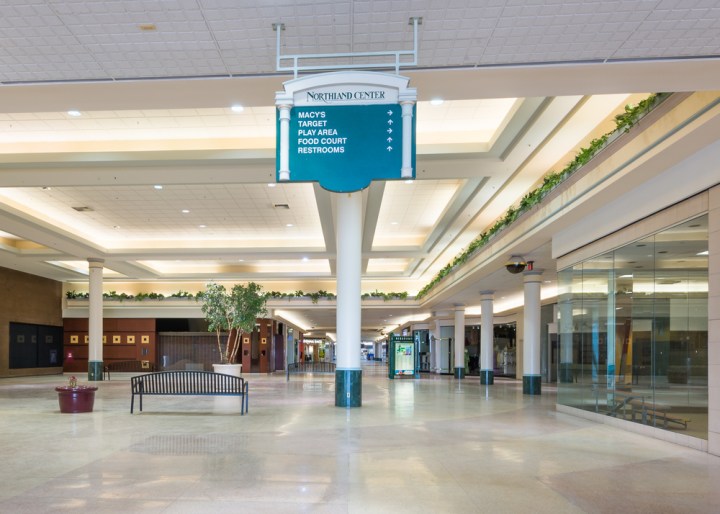
empty-mall

Northland Center, largest mall in the world when it opened in 1954, is now closed.

Summarizing, enclosed malls are basically a post-World War II American phenomenon. These hulking projects vary in size but may be as large as 1.2 million square feet of shopping, dining, movie and other recreation space. In 1970, there were around 300 enclosed malls across the country. By 1996, this number had increased to around 1,040.  Now major stores are closing, and many malls are going dark.

The October 7 article quotes Ellen Dunham-Jones, an urban design professor at Georgia Tech, with the statistic that around 200 malls have closed down in the past two years.

What happened to our malls? It’s a simple answer: the internet.

More and more shoppers are skipping brick-and-mortar retailers to shop online. The malls that are surviving appear to be those with high-end shops that provide luxury experiences shoppers can’t get online. Dunham-Jones pointed to valet parking and chic boutiques with fitting rooms that can take pictures from different angles.

Landlords who once courted department store anchors are now looking for funky boutiques and innovative restaurants. The prediction is that more and more enclosed malls will close, and the question becomes, what will happen to the underlying real estate?

These articles, targeting Realtors®, indicate readers may be renting and selling these properties for mixed-use purposes, including housing! Some malls are being converted into public parks, office space, medical complexes, sports facilities, micro-apartments and condominiums. The theory is that a person can live in an apartment or condo in one of these retrofitted malls and walk to shopping, movie theaters and doctors’ offices.

Some developers like the idea of transforming these acres of flat real estate with existing infrastructure. Malls often contain 50 to 100 acres, including the massive parking lots, and that’s the size of many planned communities and subdivisions. In some areas desperate for housing space, malls may provide a sensible solution.

In one California location, a 30-acre “green roof” is being considered, which would include almost 4 stay tunedmiles of public trails, vineyards and a wine bar.

It sounds as if future potential uses of our dying malls may only be limited by the imagination of developers. The developers I know and love have great imaginations, so stay tuned!
Good News for Condo Financing (and King Tut)

Standard

Obtaining loans for SC’s coastal condominiums will become easier

The Housing Opportunity through Modernization Act (H.R. 3700) was signed into law by President Obama on July 29. This law will act to ease restrictions on mortgage financing for condominiums. The law reforms the process used by the Federal Housing Administration (FHA) to determine if condominium unit owners will be in a position to qualify for FHA insurance.

In 2009, FHA changed the rules for qualifying for insurance, leaving most condominium home buyers without the opportunity for FHA insured mortgages. The new law will result in some improvements for home buyers who view condominiums as an affordable housing option.

Under the new law, the FHA must issue guidance regarding the percentage of units that must be occupied by owners in order for the condominium project to be eligible for FHA mortgage insurance. The current requirement is 50 percent owner occupancy. In the event the FHA fails to issue guidance within ninety days of the effective date of the legislation, the required percentage for owner occupancy automatically becomes 35 percent.

Steve Martin King Tut
“Got a condo made of stone-a”


The new law amends the National Housing Act to modify certification requirements for condominium mortgage insurance to make recertifications of condominium projects substantially less burdensome than original certifications. The FHA is required to consider lengthening the time between certifications for approved properties and allowing information to be updated rather than resubmitted.

It will be interesting to see how the FHA implements the new law. Changes to FHA regulations and existing agency guidelines should be expected soon.

The National Association of Realtors has been a proponent of the new law and praised its passage in a press release as a victory for real estate agents and home buyers.

This law affects housing in other ways. It modifies HUD’s rental assistance programs, including Section 8 low-income (voucher) and public housing programs. In addition, it modifies the Department of Agriculture’s single family housing guaranteed loan program.

The expectation is that the new law will make home ownership for first-time buyers (and old King Tut in his “condo made of stone-a”) a little easier in the current economic environment.

The SC Bar Warned Us!

Standard

And then it happened to me.

phishing dangerJune 9th’s E-Blast from the SC Bar contained the following warning:

Alert: Phishing emails targeting lawyers
SC Bar members are cautioned to be aware of emails indicating that a complaint has been made against the lawyer or firm, or that they contain a special message from the Bar president. Such emails are not coming from the Bar and would be an attempt to phish members. Delete them immediately. Phishing emails are fraudulent emails that may contain links to phony websites or may request that you share personal or financial information by using a variety of techniques.

There may be clues, including a suspicious “from” email address. The email may include directions to click on a link, which purports to be a copy of the complaint or of the “special message.” Do not click this link, as it could be an attempt to put “ransomware” on the affected computer. Bar members are reminded that any official grievance would come via U.S. mail from the Supreme Court and that any important Bar announcement would appear in E-Blast or would be sent by an individual Bar staff member.

And on June 20, I received the following e-mail:Microsoft Outlook - Memo Style

A “complaint” is enough to strike fear in the heart of any lawyer. The scammers rely on a stress-induced knee-jerk reaction result in clicking on the link. Clicking on the link is the first reflex in our fast-paced world. Fortunately, we have received warning after warning about this kind of phishing activity.

The most obvious clues in this particular scam were:

  1. The e-mail was from “complaint Dept” and the address was complaint.depts@outlook.com. Nothing there reflects the SC Bar.
  2. The name of our bar association is the South Carolina Bar. The South Carolina Bar Association is a common misnomer.
  3. I don’t have a “law practice”. I work for Chicago Title Insurance Company.
  4. The South Carolina Supreme Court handles disciplinary complaints, not the SC Bar. And the Office of Disciplinary Counsel uses snail mail.

A huge thanks to the SC Bar for the warning!  Be careful out there!

Trulia’s Blog Paints a Rosy Picture of Housing in SC for 2016

Standard

Charleston is identified as the second hottest market in the country! Columbia is seventh!

_SC FlagIt’s budget time for me and for many real estate professionals. We are reading everything we can uncover on economic forecasts, and for me, the focus is real estate in South Carolina. Today, an interesting blog entitled “Housing in 2016—hesitant households, costly coasts, and the bargain belt” popped up in my newsfeed in Facebook. The blog, dated December 3, was written by Ralph McLaughlin of Trulia, the online residential real estate site for buyers, sellers, renters and real estate professionals.

As a part of its annual forecast for housing, Trulia commissioned Harris Poll to conduct a survey in November of about 2,000 Americans concerning their hopes and fears on housing. The survey indicated that the American Dream of home ownership is alive and well and continues its resurgence since the economic downturn.  The blog states that the percentage of Americans who dream of owning a home is up 1 point to 75% and up 2 points among millennials to 80%. But 22% of Americans believe it will be harder to get a mortgage in 2016.

Hesitant households in the title of the article is a reference to the obstacles consumers perceive to buying a home:  down payments, credit history, qualifying for a mortgage and increasing home prices are the top four.

Costly coasts are the expensive metro markets in the West and Northeast. Trulia is expecting those markets to cool because affordability has decreased, homes are staying on the market longer, and saving for a down payment is taking decades. In addition, consumers in those markets are pessimistic about housing.

The good news for us in The Palmetto State is that we are located in the so-called bargain belt, the highly affordable markets in the Midwest and South, where the survey shows consumers are upbeat about housing and where Trulia is expecting growth housing.

Trulia also identifies ten markets with the strongest potential for growth in 2016, and two of them are ours:

  1. Grand Rapids, Wyoming
  2. Charleston, South Carolina
  3. Austin, Texas
  4. Baton Rouge, Louisiana
  5. San Antonio, Texas
  6. Colorado Springs, Colorado
  7. Columbia, South Carolina
  8. Riverside-San Bernardino, California
  9. Las Vegas, Nevada
  10. Tacoma, Washington

Everyone paying attention is aware that the Federal Reserve has expressed a commitment to raising interest rates either by the end of the year or early in 2016, and we have seen the stock market respond each time Janet Yellen speaks on this topic. But if this projection and others that indicate the market in South Carolina will be strong in 2016 are correct, we should expect a strong 2016. Perhaps by the end of the first quarter, we will begin to feel the worst of the TRID transition is behind us, and we will be ready to embrace the growth we are anticipating.  Let’s all look forward to the ride!