
Goodbye old friend

Standard

And hello 2017!

I bought a car on the first business day of 2017.

For most folks, buying a car is not a big deal, but I am definitely not a car person!  I drove my mother’s last car for almost eleven years after her death in 2006 and was embarrassed to shed a few tears at the dealership when I sentimentally traded it in on January 2. That car has 200,000 miles on its odometer! It’s still in great running condition, and I hope it finds a good home with someone, maybe a teenager, who needs safe and inexpensive transportation. Before my mother’s car, I drove a car I bought from a deceased friend’s estate. Are you detecting a pattern in my vehicular history?  Until this week, no car dealership had made a dime on me in the past 15 years!

My colleague and friend, Tom Dunlop, on the other hand, is definitely a car person. He currently drives a bright red late model Mercedes which he will upgrade this spring for the mere reason that two years have passed. His dealership loves him! In addition to trading every two years, Tom takes donuts to the staff when his car is serviced. What a nice guy! We’ve enjoyed that shiny red Mercedes as our lunch vehicle and can’t wait to see what Tom decides will be our new fancy ride in the spring.

new-year-new-startWhy is this car talk relevant to dirt law in 2017? It’s relevant because our success in the housing industry this year may depend on whether Americans and specifically South Carolinians are really home ownership people.

There are some reasons for concern. Interest rates are climbing. The mortgage interest rate deduction is under attack in Congress. The future of the CFPB may be precarious under the new administration and because of pending litigation challenging its constitutionality.  Some financial advisers are recommending renting as a better economic alternative for many Americans. Some retirees are being advised to sell the large homes where they raised their families in exchange for nifty, low-maintenance town homes, condominiums and even rental apartments.

But unlike my personal lack of thirst for new cars, I believe many Americans and many South Carolinians have an enduring thirst for new and upgraded residences. And I believe their thirst is most often quenched only by purchasing those residences. We have been taught that home ownership is an excellent investment vehicle coupled with a tax advantage. This advice goes back several generations. This wisdom is so ingrained that the counsel to retirees to rent shocked me! I had to read it from several sources to believe it was serious and sound advice for some folks.

And, thankfully, the economy is continuing to improve. Zillow is reporting that the U.S. housing market has regained all the value it lost during the housing crisis. South Carolina is particularly poised for success. Charleston is one of the fastest growing markets in the country. Hilton Head is digging out and rebuilding from Hurricane Matthew. The Rock Hill/Fort Mill area is growing toward Charlotte rapidly. It is impossible to ride around Myrtle Beach, Greenville and even Columbia without dodging construction activity. My own office’s numbers have improved during 2016, and I budgeted up for 2017. I suspect most South Carolina dirt lawyers are looking for a better year in 2017 than in 2016 assuming they can maintain their momentum and sustain the excellent staffing that momentum requires.

I am optimistic!  Here’s hoping Americans and South Carolinians continue to be home ownership people. And here’s hoping 2017 is a healthy, happy and prosperous year for you!

The housing industry is crying Bah! Humbug!

Standard

Congress may eliminate mortgage interest deduction

Mike Goodwin, the “Bow Tie Comedian” based here in Columbia, mike-goodwin-bowtie-comedianentertained us during lunch at our recent Chicago Title seminar. A joke that bubbled up through his very funny presentation was a line his mother used to keep him on the straight and narrow during his childhood, “what you NOT gonna do is…..”

For example, she would say, what you NOT gonna do is to stand there and hold that refrigerator door open while you try to decide what you want to eat. During one lull in the laughter, Mike said to us, “what you NOT gonna do is sit there and not laugh at my jokes.” (So we laughed.)

While some of us believe America is about to be made great again, some of us might like to borrow Mike’s line to deliver a Bah! Humbug! message to Congress:  What you NOT gonna do is to eliminate, or effectively reduce the effectiveness of, the mortgage interest deduction. Many homebuilders, lenders and real estate agents (and South Carolina dirt lawyers) believe that’s one thing we don’t need 2017.

The mortgage interest deduction is a major driver of the housing market. One reason American dreamers strive for home ownership is to take advantage of this tax break. That, along with the property tax deduction, the points deduction, the PMI deduction and the home office deduction, make owning a home a wise move from a tax standpoint. Eliminating or reducing the effectiveness of the home interest deduction, which many consider as American as apple pie, might put a damper on the improved economy we have been experiencing in 2016.

But that approach is definitely going to be under consideration by Congress, and players in the housing industry are preparing to defend the deduction. The plan under consideration involves not a direct elimination of the deduction, but an indirect attack via an increase of the standardized deductions, now at $6,300 for a single taxpayer and $12,600 for married taxpayers filing jointly. By doubling these standard deductions, many taxpayers would have no need to take the mortgage interest deduction.

The mortgage interest deduction is the largest deduction currently available to homeowners, allowing a write-off of interest from up to a $500,000 loan for a single taxpayer and up to a $1 million loan for joint filers. The deduction is especially important during the early years of a mortgage when the majority of payments are applied to interest rather than principal.

megaphone-businessman-2

“Congress … what you NOT gonna do is … “

If a single taxpayer pays mortgage interest of $8,000 in the first of home ownership, for example, that amount exceeds the current standard deduction of $6,300, and that taxpayer would itemize to claim a better tax break. If the standardized deduction is doubled, itemization is much less likely.

President-Elect Trump’s nominee for Secretary of the Treasury, Steven Mnuchin, has stated that the administration is planning to create the largest tax change since Reagan. Simplifying the tax code is one of the stated objectives, and a larger standard deduction is one method of simplification. In addition to the mortgage interest deduction, the charitable deduction would be affected in a similar manner.  Some say that as the standard deduction goes up, the incentive to give is reduced.

Any step that would reduce incentives for homeownership would likely encourage renting rather than buying. Home values might suffer, and the housing industry might suffer as well.

All Americans are interested in the changes that are about to happen, and those of us in the housing industry may be more interested than most! I have already seen prognosticators reducing their optimism about 2017, but I just got off the phone with a local wise man. He said that I should relax. 2017 is going to be a banner year, he said, because America is going to be great again. I hope he’s right!

Wells Fargo distributes new settlement agent memo

Standard

wells fargo 2

Wells Fargo circulated a new Settlement Agent Communication on December 15, addressing several points that may be of interest to South Carolina closing attorneys. 

  • The Seller Closing Disclosure must be delivered to Wells Fargo prior to closing, and Wells’ performance reports of settlement agents will soon include proper receipt of the Seller CD.
  • Wells Fargo is adamant that the Borrower Closing Disclosure must be the form provided to the closing attorney by the lender. Wells will not tolerate substitutions or additions to the Borrower CD.
  • Closing attorneys are encouraged to communicate with the lender before, during and after closing to insure the accuracy of signing and disbursement dates on the borrower CD.
  • Closing attorneys are instructed to refrain from adding per diem interest charges in the payoff calculations of a Wells Fargo first mortgage when that mortgage is being refinanced with Wells. These payoffs will be net funded and will be the responsibility of the lender.
  • When a title insurance policy is delivered to the lender electronically, there is no need to also provide a paper copy.

The memo also contained a brief RESPA update indicating that despite the July 11 ruling against the CFPB by the D.C. Circuit Court of Appeals in the PHH Corp. v. CFPB case, Wells will continue to adhere to the 2015 bulletin distributed by the CFPB indicating Marketing Service Agreements are in disfavor.

New DOI rule: SC title insurance agents must be fingerprinted (Lawyers included!)

Standard

Listen up, South Carolina dirt lawyers!

All title insurance agents must be fingerprinted for their next license renewals! The Department of Insurance has passed a new rule, effective January 1, 2017, requiring fingerprinting for all resident producers.

The DOI published a bulletin which you can read here. South Carolina Law Enforcement Division has established a contract with IdentoGo by MorphoTrust to handle the fingerprinting process. All title insurance agents will need to go to this company’s website, www.IdentoGo.com, to set up an appointment to be fingerprinted. Your zip code will be used to find the most convenient location.

fingerprints

It is important that you do not wait until the month your license renews to begin this process. The bulletin advises that scheduling and processing may take up to ninety days. The cost for fingerprinting is $50.50.

Every lawyer’s first question is going to be, can’t they use my fingerprints from my Bar application?  The answer, we have been told verbally, is absolutely not. The DOI is emphatic that it will not accept fingerprinting from any other agency nor any other vendor. Every lawyer’s second question is going to be, does this apply to my staff members who are licensed agents?  It does.

Nonresident producers are not required to be fingerprinted.

As a reminder, licenses are renewed in your birth month. If you were born in an odd-numbered year, your next renewal will be in 2017.  If you were born in January or February of an odd-numbered year, you may be late if you haven’t already begun this process.  For those born in even-numbered years, you are safe until 2018.

Good luck!  Call your title insurance company if you have questions or need assistance.

Into the mystic: Fannie and Freddie predict what is in store for housing in 2017.

Standard

businessman-crytal-ball

In a sign that the average cost of houses is increasing across the country, the conforming loan limit for loans to be purchased by Fannie Mae and Freddie Mac will increase in 2017 for the first time in ten years.

The Federal Housing Finance Agency has announced the maximum conforming loan in most parts of the country (including South Carolina) will increase from $417,000 to $424,100. Stated another way, a borrower will not have to qualify for a “jumbo loan” unless the amount to be borrowed exceeds $424,100.

This change should help qualified buyers, particularly in our coastal areas where home prices are higher, obtain mortgages backed by Fannie Mae and Freddie Mac, even though credit remains tight and interest rates are likely to increase.

This is the time of the year when all of us involved in the housing industry are charged with looking into the proverbial crystal ball and projecting how we think the real estate market for the new year will compare with the current year.  For what it’s worth (and this and $5 will buy you a cup of coffee at Starbucks), I’m projecting around a 3 percent increase for next year in South Carolina. Let me know what your crystal ball is disclosing!

What’s in Store for Dodd-Frank and Seller Financing?

Standard

The Washington Post and The New York Times are both reporting on potential restructuring of the financial system when the new administration takes over in January.

We all heard President-Elect Donald Trump call the Dodd-Frank Act a “disaster” during his campaign. The Washington Post article reports his transition team has a stated goal, “to dismantle the Dodd-Frank Act and replace it with new policies to encourage economic growth and job creation.” What, exactly, does this mean?  At this point, we don’t know.

But The New York Times article states Representative Jeb Hensarling, a Texas Republican who chairs the House Financial Services Committee, has long been an opponent of Dodd-Frank and has introduced his idea for reform, the Financial Choice Act. “Choice”, according to the article, stands for Creating Hope and Opportunity for Investors, Consumers and Entrepreneurs.

financial-systemIt seems clear that the Republican controlled Congress will work hard to make sweeping changes to this legislation that has basically rocked our collective worlds with the implementation of new forms and rules for closings. We promise to keep everyone up to date as this drama unfolds. We can only hope that, from a closing standpoint, the changes won’t be as sweeping as those we have just tackled!
In other CFPB news, the Bureau is investigating seller financing situations involving National Asset Advisors LLC, National Asset Mortgage LLC and Harbour Portfolio LLC. Orders involved in these investigations can be read on CFPB’s website.

We should pay attention to these enforcement proceedings because seller financing for residential owner-occupied residences has become a concern in South Carolina as a result of the interplay of the federal and state SAFE Acts, HUD’s final rule, released in 2011, and Dodd Frank’s Consumer Financial Protection laws.

The interplay between these laws appears to require licensing and registration of mortgage loan originators for mortgages of owner-occupied residences other than the sale of the seller’s residence. Clients who fail to become licensed as loan originators or fall into an exemption may find they are unable to close, and may, along with the attorneys who closed the transactions, be subject to claims and litigation.

The CFPB has broad enforcement powers, including the power to impose civil monetary penalties ranging from $5,000 to $1 million per day. South Carolina’s legislature could improve this situation greatly by addressing certain inconsistencies between our version of the SAFE Act and the federal version. Again, we will attempt to keep everyone up to speed on this issue as it develops.

Cyber Incident Preparedness for Closing Attorneys

Standard

And what to do if you suspect a compromise

With the increase in wire fraud that is happening in closing offices around the country, our company recently shared two documents that I thought would be beneficial to pass along to all South Carolina dirt lawyers .

The first document is a Public Service Announcement from the FBI dated August 27, 2015 concerning Business Email Compromise (BEC). BEC is defined as a sophisticated scam targeting businesses working with foreign suppliers and businesses that regularly perform wire transfers. Legitimate e-mail accounts are compromised through social engineering and computer intrusion to conduct unauthorized wire transfers.

We have seen this happen in more than one law firm in South Carolina!

cyber-fraud-theif

This PSA states that the total number of victims from October 2013 through August 2015 was 8,179 and the total exposed dollar loss was $798,897,959!

The second document was prepared by Linda Grahovec, the Director of Education and Marketing for our company. This document provides two cyber incident checklists, one for use in preparing, and the other for use if your office is attacked.

Here are three pieces of advice for all closing attorneys:

  1. Use an e-mail system that requires two-factor authentication;
  2. Never wire funds based on the content of an e-mail. Always assume e-mail has been compromised, and validate the information by phone. A good practice would be to refrain from sending wiring instructions by e-mail.
  3. If you suspect fraud, contact the bank immediately.

Please remain vigilant! Read everything you can on this topic, and continue to update and guard your systems. One incident could easily put a law firm out of business. Title insurance companies are excellent sources of information and training on these topics! Call on them!

What’s Happening with Our Nation’s Malls?

Standard

Three recent Realtor® Magazine articles explore the rise and fall of our nation’s malls. I highly recommend that you read the interesting articles entitled “Dying Suburbia Malls Become Housing Mecca” (October 7); “Will the Death of Malls Save the Suburbs?” (October 6); and “The Nation’s Malls are Getting Major Redo” (July 19) for the full story. The October 6 article, the most comprehensive, was written by Clare Trapasso.

empty-mall

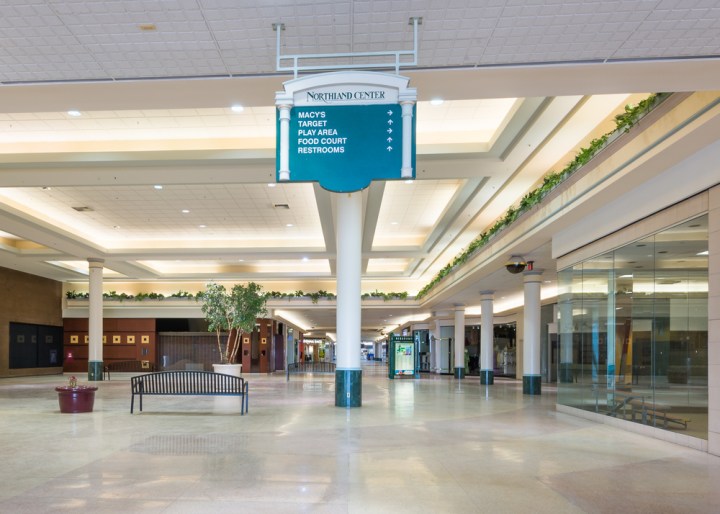
Northland Center, largest mall in the world when it opened in 1954, is now closed.

Summarizing, enclosed malls are basically a post-World War II American phenomenon. These hulking projects vary in size but may be as large as 1.2 million square feet of shopping, dining, movie and other recreation space. In 1970, there were around 300 enclosed malls across the country. By 1996, this number had increased to around 1,040.  Now major stores are closing, and many malls are going dark.

The October 7 article quotes Ellen Dunham-Jones, an urban design professor at Georgia Tech, with the statistic that around 200 malls have closed down in the past two years.

What happened to our malls? It’s a simple answer: the internet.

More and more shoppers are skipping brick-and-mortar retailers to shop online. The malls that are surviving appear to be those with high-end shops that provide luxury experiences shoppers can’t get online. Dunham-Jones pointed to valet parking and chic boutiques with fitting rooms that can take pictures from different angles.

Landlords who once courted department store anchors are now looking for funky boutiques and innovative restaurants. The prediction is that more and more enclosed malls will close, and the question becomes, what will happen to the underlying real estate?

These articles, targeting Realtors®, indicate readers may be renting and selling these properties for mixed-use purposes, including housing! Some malls are being converted into public parks, office space, medical complexes, sports facilities, micro-apartments and condominiums. The theory is that a person can live in an apartment or condo in one of these retrofitted malls and walk to shopping, movie theaters and doctors’ offices.

Some developers like the idea of transforming these acres of flat real estate with existing infrastructure. Malls often contain 50 to 100 acres, including the massive parking lots, and that’s the size of many planned communities and subdivisions. In some areas desperate for housing space, malls may provide a sensible solution.

In one California location, a 30-acre “green roof” is being considered, which would include almost 4 stay tunedmiles of public trails, vineyards and a wine bar.

It sounds as if future potential uses of our dying malls may only be limited by the imagination of developers. The developers I know and love have great imaginations, so stay tuned!

Just in Time for Halloween, SC Supreme Court Declines Frightening Request to Compel Random Lawyer Trust Account Audits

Standard

pumpkin

The South Carolina Supreme Court amended the rules that govern lawyer discipline on October 25.* The big news here is not the very minor amendments that were adopted but rather the major requested amendments the Court declined to adopt.

The Commission on Lawyer Conduct and the Commission on Judicial Conduct proposed a rule amendment that would have imposed mandatory random audits of lawyer trust accounts. Without comment, the Court declined to adopt this rule change after “careful consideration”.

The Court also declined without comment an amendment that would have required a new position, a presiding disciplinary judge to act as a hearing officer to preside over disciplinary and incapacity hearings.

I have no idea why the Court made these decisions, but my guess is that the motivation revolved around the additional funds that these proposals would have required.

*Appellate Case No. 2015-0002336

Dirt Lawyers: Prepare to Advise Clients Struck by Disaster

Standard
hurricane-matthew-georgetown

Georgetown, South Carolina (Image by abcnews.go.com)

Just prior to the destruction brought on by Hurricane Matthew to our beloved state on October 8th, I saw two funny quips, which proved that humor is not always lost in the face of disaster. A friend posted on Facebook a football metaphor, hoping Matthew’s aim would be “wide right”.  That didn’t happen. And a preacher friend of a friend put up a sign at his church:  “Mark, Luke and John, please come get your boy.”  That didn’t happen either.

What did happen, according to CoreLogic was $4-6 billion in damage from wind and storm surge damage in all states affected by Matthew. CoreLogic’s media advisory, which compares the destruction of Matthew to Katrina in 2005, Sandy in 2012, Floyd and 1999 and David in 1979, can be read here.  The damage from Katrina, for example, was in the range of $35-40 billion. Of the $4-6 billion damage from Matthew, 90 percent of insurance claims are expected to be related to wind and 10 percent to storm surge, according to the article.

hurrican-matthew-myrtle-springmaid

Springmaid Pier rubble, Myrtle Beach, South Carolina (Image by myrtlebeachonline.com)

Our hearts are breaking for our family members, friends and neighbors who have lost so much in this disaster. Some have not yet been able to return home and don’t know the extent of the damage at this point.

It was just one year ago that South Carolina was forced to begin recovery efforts from the 1,000 year-flood, and those efforts are far from complete. I said in a blog about the flood, and I will repeat here that for those of us old enough to remember, this disaster feels incredibly like the aftermath of Hurricane Hugo in 1989.

As we think back to the beautiful areas of South Carolina that were hardest hit then and reflect on those areas today, it seems that almost all of them are better and stronger and more beautiful than they were before the disaster. South Carolinians are strong and resilient, and we are stronger today than we were last year.

hurrican-matthew-charleston-market

Historic City Market under water in Charleston, South Carolina (Image by abcnews.go.com)

Dirt lawyers are in a unique position to advise clients who are not familiar with the assistance that may be available to them. I challenge each of us to pass along the information that will assist in recovery efforts.

For example, Fannie Mae and Freddie Mac wrote press releases reminding mortgagors of the options available for mortgage assistance in the affected areas. Those press releases can be read here and here.  FEMA resources are outlined here.

As always, I have confidence that South Carolina real estate lawyers will rise to the occasion and provide the best advice available for their clients. I am proud to be associated with this dedicated group of lawyers.